Exterior renovations: when is a building permit required?
You own a property and are planning to make the most of your outside space. Whether you want to store your car and tools in a garage, extend your living space with a veranda, or simply relax by the pool or on the terrace, exterior renovations are regulated. Some will require a simple planning declaration, while others will need a building permit application. Here is what you need to do to comply with the law.
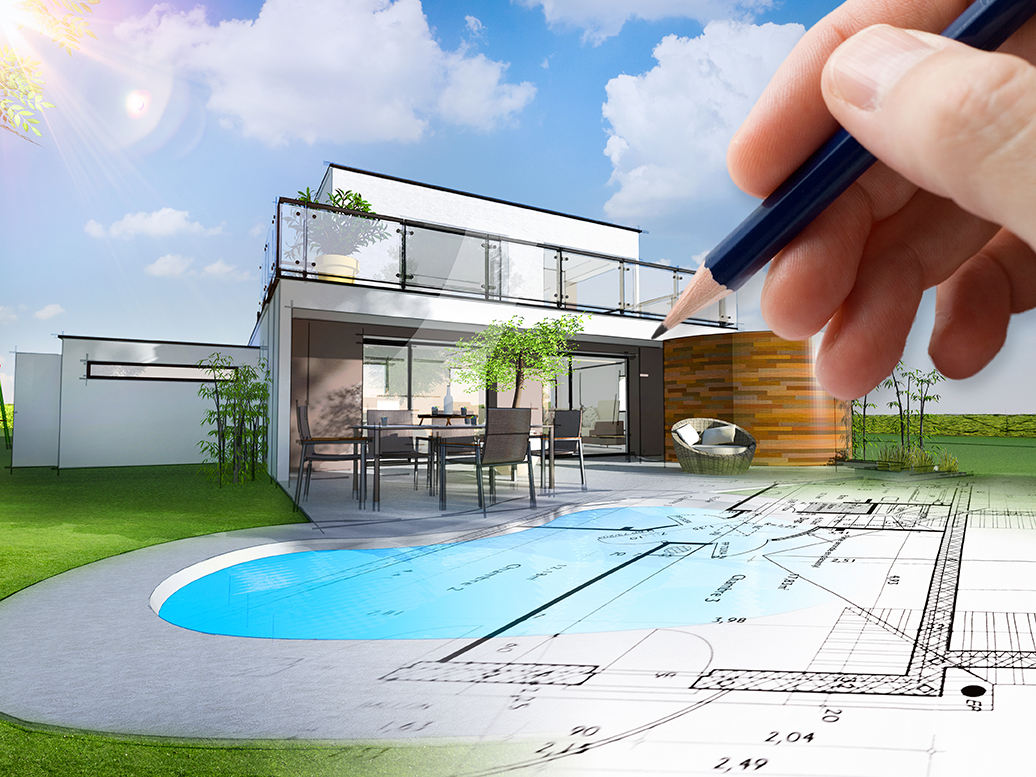
You own a property and are planning to make the most of your outside space. Whether you want to store your car and tools in a garage, extend your living space with a veranda, or simply relax by the pool or on the terrace, exterior renovations are regulated. Some will require a simple planning declaration, while others will need a building permit application. Here is what you need to do to comply with the law.
Simple planning declaration or building permit?
First and foremost, the distinction between a prior planning declaration and a building permit will depend on the size of your project. The Town Planning Code, in articles 421 and following, sets out several cases:
- For “small projects”, with a size of less than 5m²: no procedure is required.
- For projects between 5 and 20m² (40m² in urban areas), a prior planning declaration is required.
- For projects exceeding 20m² (40m² in urban areas), a building permit application is required. The same applies to projects with a height exceeding 12m.
Please note that you must also use the services of an architect if your project exceeds 150m² of floor area.
Two levels of requirement
Simply put, a prior planning declaration (DP) is a town planning authorisation that may be required for work not subject to a building permit. This notably allows the local council to plan, in the medium and long term, the structures and work needed for managing the commune (water drainage, waste management, creation of green spaces, etc.).
It may also oppose work that undermines the town planning policy or the aesthetic coherence of the commune.
Towards a communal overall project
Before 2000, communes were subject to the Land Use Plan (POS) which defined town planning rules for construction or modification of existing structures. Since 2000, communes have had a Local Town Planning Plan (PLU), which is more ambitious than the POS by defining the overall development project for the commune with a concern for sustainable development.
As such, it must be compatible with town planning, housing and urban transport policies. It takes into account, among other things, residents’ needs for facilities, the overall aesthetics of the commune and the general quality of life for its inhabitants. It is for the local council to develop, manage and modify its PLU according to the commune’s development. It sometimes happens that small towns group together around the same strategy and develop a joint overall PLU for better intermunicipal synergy.
Please note: if your house is in a classified or protected area, you must also consult the Buildings of France to check the materials, forms and sizes authorised.
The different projects subject to regulation
Pool
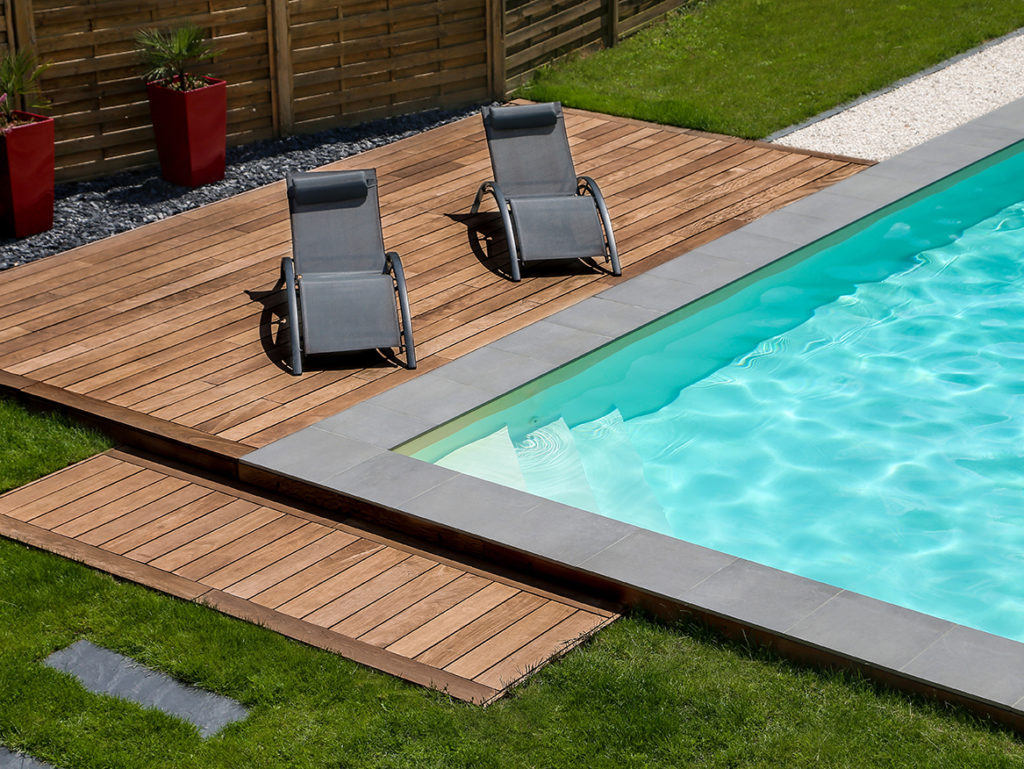
Building a pool in your garden, whether above-ground or with foundations, requires a building permit application in the following cases:
- if the pool basin alone exceeds 100m²;
- if the basin is between 10 and 100m², and covered by a fixed or mobile shelter that exceeds 1.8m in height;
- if the pool is indoors or if the pool shelter or technical room exceeds 20m².
Conversely, in the case of a basin of less than 10m² (jacuzzi) with a cover of less than 1.8m in height, no declaration is required.
Terrace
It is the terrace surface area that will determine whether you need a prior planning declaration or a building permit, according to the rules set out above. However, in the case of elevation exceeding 60cm above ground level, a permit application will be required even if the terrace measures less than 20m².
Fencing
Whether the fence is a hedge, wire mesh or a wall, a prior planning declaration will be required if:
- the PLU requires it;
- the height of the fence is greater than or equal to 2 metres.
Please note that the fence must be installed on your land and not on the boundary line with the neighbouring property. In the case of a hedge, a distance from the neighbouring property must also be respected depending on the height of the planting. Allow two metres for a tree or hedge likely to exceed two metres in height, and fifty centimetres otherwise.
Garage/ Veranda/ Extension/ Garden shed/ Photovoltaic panels
These renovations simply follow the basic rule regarding the surface area and height of the project. Depending on their size, they are therefore subject to either a prior planning declaration or a building permit.
Exterior renovation
When exterior renovation (maintenance or repair) does not alter the appearance of your house, it is not subject to any declaration. This is notably the case for restoration or replacement of a roof in the same way, replacement of doors and windows, replacement of a gutter, repair of a chimney.
However, if the renovation involves a change to the external appearance of your house (colour, form, type of coating), authorisation is required: it will be subject to a prior planning declaration or a building permit application, depending on its scale and characteristics.
As you will have understood, for exterior renovations, the size of the project is the key to determining the procedure to follow. Whatever your obligations are under the general rules, it remains essential to consult the PLU of the commune where you are installing to ensure proper compliance with the town planning rules set out there. What is permissible in one commune in terms of colours or materials is not necessarily so in the neighbouring commune. All information and the contextual list of procedures are available from your local council: contacting them should ideally be the first step in your project!