Renovating your home yourself: really a good idea?
When a property renovation project arises, it can be tempting to proceed on your own, to save money. However, it is essential to understand the concrete risks associated with such a project carried out by a non-building expert, and why it may be...

When a property renovation project arises, it can be tempting to proceed on your own, to save money. However, it is essential to understand the concrete risks associated with such a project carried out by a non-building expert, and why it may be wiser to call in professionals: architects, craftsmen, coordinators for the project setup as well as its execution and monitoring.
To summarise, self-renovation will only be a good idea if you actually have the necessary time to carry it out, and you consider yourself sufficiently comfortable, or even an expert, with all the key points we will list here.
Defining a renovation project is no small feat
First of all, in defining the work that should be carried out, an expert’s eye is often very useful, on several levels.
To optimise the renovation plan
Whether you have just acquired a property to renovate, or decided to give your home a facelift, there is necessarily a significant gap between the current state of the property and what it could become in the long term. While you may have relevant ideas for improving the practicality and aesthetics of the property in addition to repairing worn elements, you are not a professional.
An architect is trained to bring a creative touch and optimise spaces. They can advise on the best way to proceed, layout ideas more in line with your needs, and let their creativity create an atmosphere that suits you.
Other professionals will also bring real added value, thanks to their experience: building companies, project engineers and estate agents in particular, can imagine possibilities that escape you, while taking technical constraints into account.
To integrate the most relevant and modern materials
Speaking of technicality, materials play an essential role in a renovation: their choice will determine the final cost, the aesthetics of the renovated areas, and the insulation of the property, which is so important in these times of energy transition.
Professionals are aware of the latest innovations and can indicate the best quality/price ratio, while ensuring on one hand coherence between the materials installed, and on the other hand the aesthetic aspect for those that remain visible.
To make the project viable as a whole
The transformations that generally accompany a full renovation project require bringing all technical elements into coherence: routing of fluids, ventilation/airing, elimination of thermal bridges, etc.
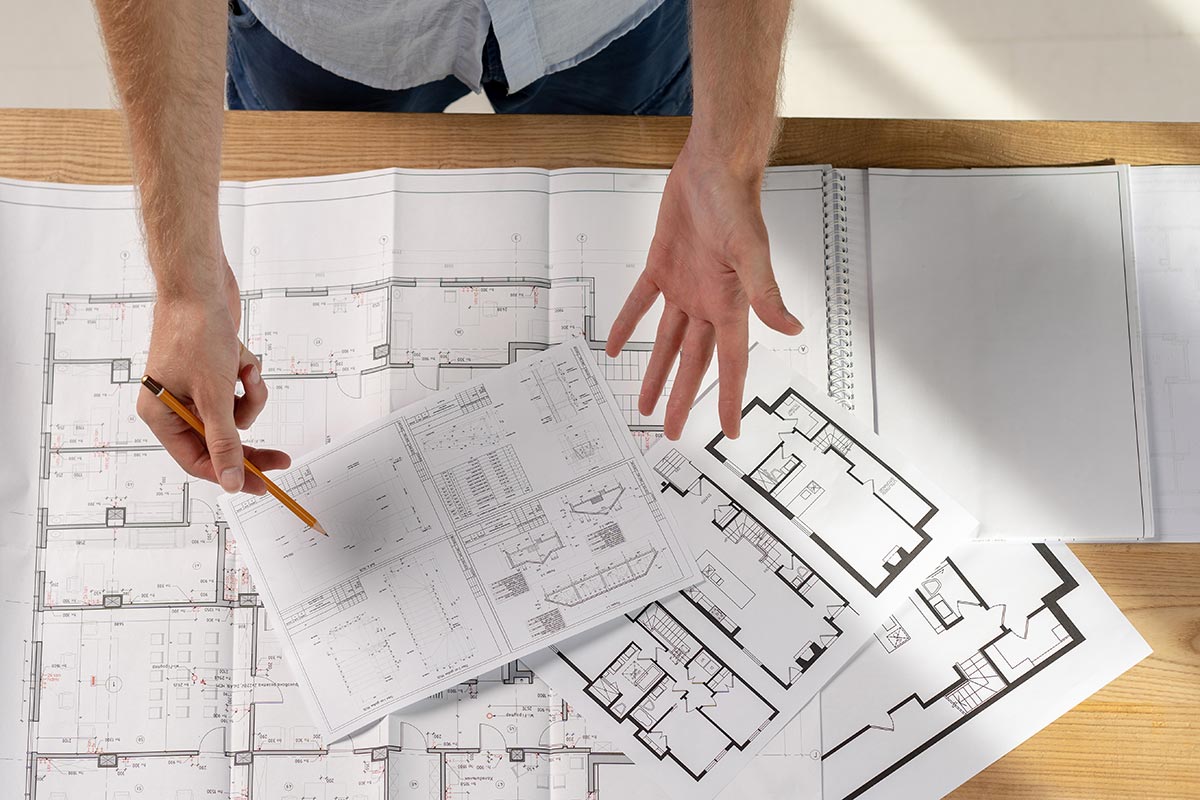
Correctly translating the project, in order to commission a company or carry out the transformations yourself, means putting it into plans. Without calling on a professional, there is a great risk of forgetting certain elements or not spotting inconsistencies.
5 mistakes not to make
Let us clarify our points with some concrete pitfalls that could penalise you if you decide to renovate your home yourself.
#1 Underestimating timelines
One of the main traps of self-renovation lies in setting a “reasonable” deadline for completing the work. Without being an experienced professional, it is most often risky to set timing objectives, and dangerous to make professionals’ interventions dependent on the end of your own task.
With self-renovation, you should expect the work to take time, far longer than with companies. While a full renovation carried out by professionals generally lasts one to two months, self-completed renovations often stretch over several years.
#2 Prioritising savings at the expense of quality
When buying for oneself, we think of our wallet. While this reflex may be beneficial for our budget, it can also penalise the renovation!
Choosing materials that are too low-end will certainly affect their durability, if not their effectiveness in fulfilling their purpose. A property renovation is made to last several decades, so it is advisable not to (too) stint on the means.
To find the right quality/cost balance, a professional’s experience is the best advice you can find. If you do not use a company for project management, at least contact your estate agent: some of them, like the agents of the Sextant Immobilier network, have renovation support expertise and can guide you.
#3 Forgetting to check the compatibility of elements
Some installations, which you might find advantageous, prove incompatible with others. A frequently encountered example is the installation of exterior cladding, allowing additional insulation without affecting interior space, but which is not compatible with all windows: beware of the error that could prove costly!
Other scenarios may arise, with technical or aesthetic consequences to avoid. Load constraints also need to be verified to ensure the safety of the building and its occupants.
#4 Not complying with standards
Electricity, ventilation, plumbing, fire protection: a residential property must meet certain safety standards often requiring the installation of specific equipment, or precise sizing of certain rooms.
This is an essential point: aside from the potential damage caused and safety issues, a risk resulting from a shortcoming during renovation may not be covered by insurance.
#5 Planning to renovate alone
Finally, renovating alone has certain limitations, when tasks require the presence of two or more people: transporting heavy materials, installing large elements, etc.
Do not forget the essential elements apart from the renovation site!
Alongside the site itself, many concerns must find a precise answer, and complicate the task for non-expert people.
Requesting the necessary authorisations
Putting together authorisation application files, for example, is complex. A building permit notably requires precise cross-section plans of the land and dwelling, facade and roof plans, a descriptive specification of the project to be carried out, and completing specific forms.
Specific equipment
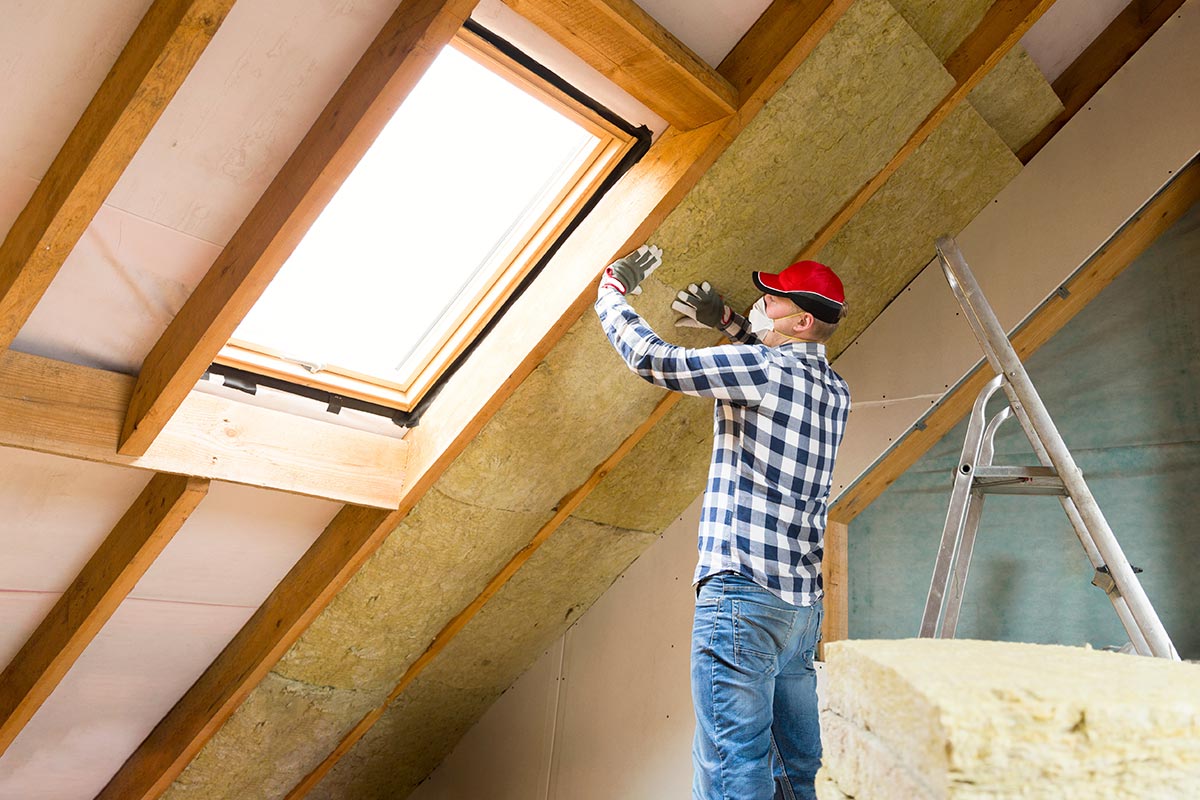
Furthermore, carrying out work to a quality standard involves equipping yourself with suitable equipment, which proves costly and drastically reduces the economic benefit of proceeding yourself. Hand and power tools are concerned of course, but depending on the type of work, it also involves specific electrical equipment, plumbing tools, ladders, or even scaffolding to install!
Calling in professionals, to renovate in the best way
Ultimately, renovating quickly and well is certainly a matter for professionals, given the many pitfalls awaiting a DIY-enthusiast whose profession is something else entirely. However, it is possible to orient the strategy while limiting costs.
Calling in a professional to plan the renovation
The first difficulty of a renovation including redesign and improvement of energy performance, relates to defining the work to be carried out. Do you have the necessary skills to identify thermal weak spots? To imagine all possible space optimisations? To integrate the latest technologies into your plans?
There is a strong chance you do not, and consequently your renovation will lack substance if you do not have a professional intervene to design it in the best way. Architects, project engineers and estate agents are then able to provide you with advice and tools.
Sharing the work with a building company
For the actual carrying out of the work, it is always possible to arbitrate between those for which you feel comfortable, and those better left to experienced craftsmen, for reasons of complexity, quality of finishes, or to benefit from a ten-year guarantee and an invoice for insurance purposes in case of damage.
It is thus, for example, that many homeowners leave structural or technical work to companies such as roof refurbishment, insulation installation, electricity and plumbing, and then carry out the less demanding finishes themselves: painting, floor fitting, etc.
The key point: supervision by an experienced property professional
One thing is certain: having an experienced and knowledgeable eye both in construction and aware of the improvements that will bring real added value to your home, in terms of comfort and market value, is an asset you should not do without.
For budget management, you have the possibility – and this is a new development on the market – to call on your Sextant property adviser. This professional who already assists you with your property life project, can now help you prepare your renovation project: defining the project, validating your ideas, carrying out technical measurements related to energy performance, costings for adapted solutions, putting you in touch with trusted building professionals, and supporting you with financing your project thanks to state aid.
Renovating yourself is a commendable desire, which however has certain limits that you can easily overcome with the intervention of your Sextant property adviser, the first property network to make a strategic shift towards energy renovation and to train its advisers on these key topics to offer an ever more comprehensive service. Energy costs, legal obligations: energy renovation is no longer an option today, so contact your mandate-holding agent right away!