A Little More About Bordeaux
Who has never heard of Bordeaux?
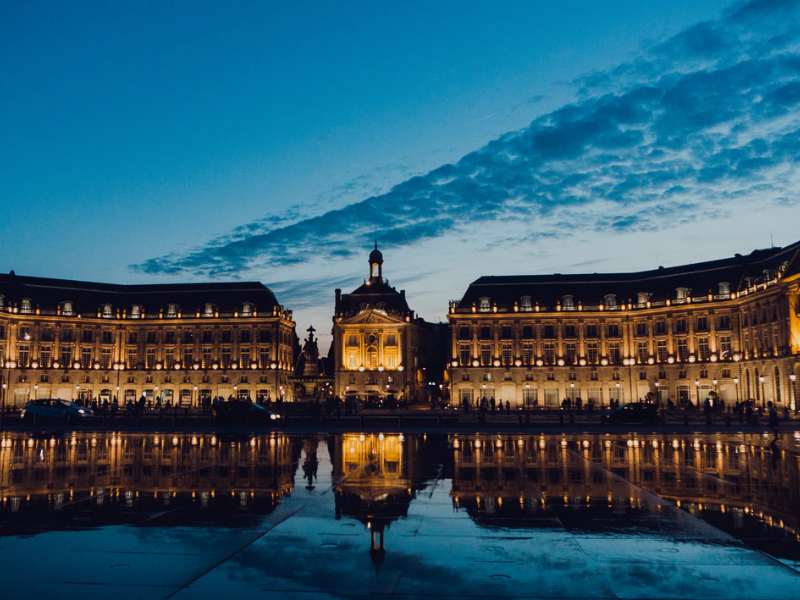
Who has never heard of Bordeaux?
Today the Gascon town is known to all, especially for its flagship product: wine. Bordeaux wine, and particularly red wine, is indeed one of the city’s main attractions. Oenological tourism and wine fairs flourish in summer in this magnificent city steeped in history.
The Bordeaux vineyard is one of the most renowned in the world, if not the most well-known. And it is not this year that Bordeaux’s long winemaking tradition will come to an end, since France regained its position as the world’s leading wine producer in 2014.
The reputation of wines from this region was built gradually between the period of the Roman Empire and the 18th century. Great names such as Yquem, Haut-Brion, Mouton-Rothschild, Lafite, Latour, Margaux are today widely recognised by connoisseurs and specialists. All these legendary wines are regulars at Michelin-starred restaurants and auctions. The quality and complexity of Bordeaux wines are due primarily to the region’s geological diversity. Each wine estate (the famous “châteaux” in French) has its own history and its own specificities. The oldest and most prestigious estates are generally passed down from generation to generation in the heritage of great families, as is the case for the Rothschild family estate.
And what about your own wine now? What if it were your own bottles, produced from your own vineyard, with your name on the label? And what pride to become an authentic wine producer?
Also, in times of crisis, investing in vineyards is an investment that can pay off well if you decide to export your production. You will also have the opportunity to take part in folk wine activities like the harvest with the help of locals and your family. Entertainment guaranteed!
See our vineyards available for sale in Bordeaux: Vignoble 1 Vignoble 2
The production of Bordeaux wines is predominantly composed of red and rosé wine (89% of production), although there are also some very good white wines. The grape varieties used are merlot, cabernet sauvignon and cabernet franc for red wine, and sauvignon, semillon and muscadelle for white wines. The Bordeaux region has approximately 40 protected designations of origin (AOC) and protected geographical indications (AOP). The Bordeaux region is the region that sells the most AOC wines by volume in France.
How to navigate Bordeaux wine labels: The Bordeaux vineyard is made up of 6 main sectors located along the Gironde estuary. On the south side, there is the Médoc sector, just below it Graves and then Sauternais. On the other side of the river, we find Blayais and Bourgeais, then Libournais and finally the Entre-deux-Mers sector. These 6 sectors host the 40 appellations previously mentioned (such as Sauternes, Pauillac, Pomerol, Saint-Émilion, Saint-Julien, etc.). These 40 AOC wines often take the name of the town around which the vineyard grows. There are then over a thousand “Châteaux”, which is the domain name of the vineyard. There are thus often several châteaux in the same communes and these châteaux therefore share the same appellations. For example, the renowned Château Latour shares the Pauillac production with Château Lafite Rothschild and Château Mouton Rothschild. These three châteaux are located near the town of Pauillac.
The best vintages for Bordeaux wines are the years 1900, 1929, 1949, 1961, 1982, 1990, 2000, 2005 and 2009. Included in the ranking of the most expensive Bordeaux are Pomerol from Château Pétrus (expect to pay no less than $2,700 for a bottle of 2005), Margaux from Château Margaux, Pauillac from Château Latour, Pauillac from Château Lafite Rothschild and Mouton Rothschild, Saint-Émilion from Château Cheval Blanc, Pessac-Léognan from Château Haut-Brion, Pomerol from Château Le Pin, and finally Saint-Émilion from Château Ausone.