Ranked: the world's 10 tallest towers!
Synonymous with luxury in the countries where they rise, but above all, complex architectural challenges for their architects, the world's tallest towers never cease to amaze us. Competition pushes them ever higher, with elegant and surprising forms: they transpose human ingenuity into concrete (and costly!) structures housing some of the most sought-after palaces on the planet.
Synonymous with luxury in the countries where they rise, but above all, complex architectural challenges for their architects, the world’s tallest towers never cease to amaze us. Competition pushes them ever higher, with elegant and surprising forms: they transpose human ingenuity into concrete (and costly!) structures housing some of the most sought-after palaces on the planet.
We have chosen here to take into account towers already open to the public, but also the most advanced projects that should become sensational points of interest in the years to come. The ranking of the world’s 10 tallest towers, here we go!
#1 The Kingdom Tower in Saudi Arabia
Let’s start with a tower also called the Jeddah Tower, whose construction is not yet completed and whose future is uncertain. It is in Jeddah, Saudi Arabia, that American architect Adrian Smith is planning the construction of this tower intended to become the tallest in the world, at over a kilometre high!
Over 4,000 workers and a budget estimated at €1.7 billion are the resources deployed for this slenderly designed building. The interior must include 59 lifts, a five-star hotel and luxury residences at over €25,000 per square metre, all the same.
Bad news: the construction site is currently abandoned. While completion was planned for 2021, financial problems, the arrest of the owners and the health crisis related to Covid-19 have brought an end (temporarily?) to a project that we hope will one day be completed.
#2 The Dubai Creek Tower in the United Arab Emirates
The second building in our ranking, the Dubai Creek Tower located in the city of the same name, is again a project under construction. Initial delays have already pushed its opening to 2025, so we will not speculate on when you might be able to sleep there, eat or take part in the many activities that will be on offer.
Designed to rival Saudi Arabia’s ambition, this tower should also exceed 1,000 metres in height, but its exact size is currently a closely guarded secret. A budget of €900 million must enable the raising of its many floors and the installation of restaurants, hotels and a public viewing area at its top. The metal foundations, already completed, already weigh twice as much as the Eiffel Tower!
This project is not isolated either: an entire district is being developed around it, covering over 6 square kilometres and therefore much larger than Dubai’s current centre. In addition to residential spaces, it will feature large green areas and shops, all accessible on foot.
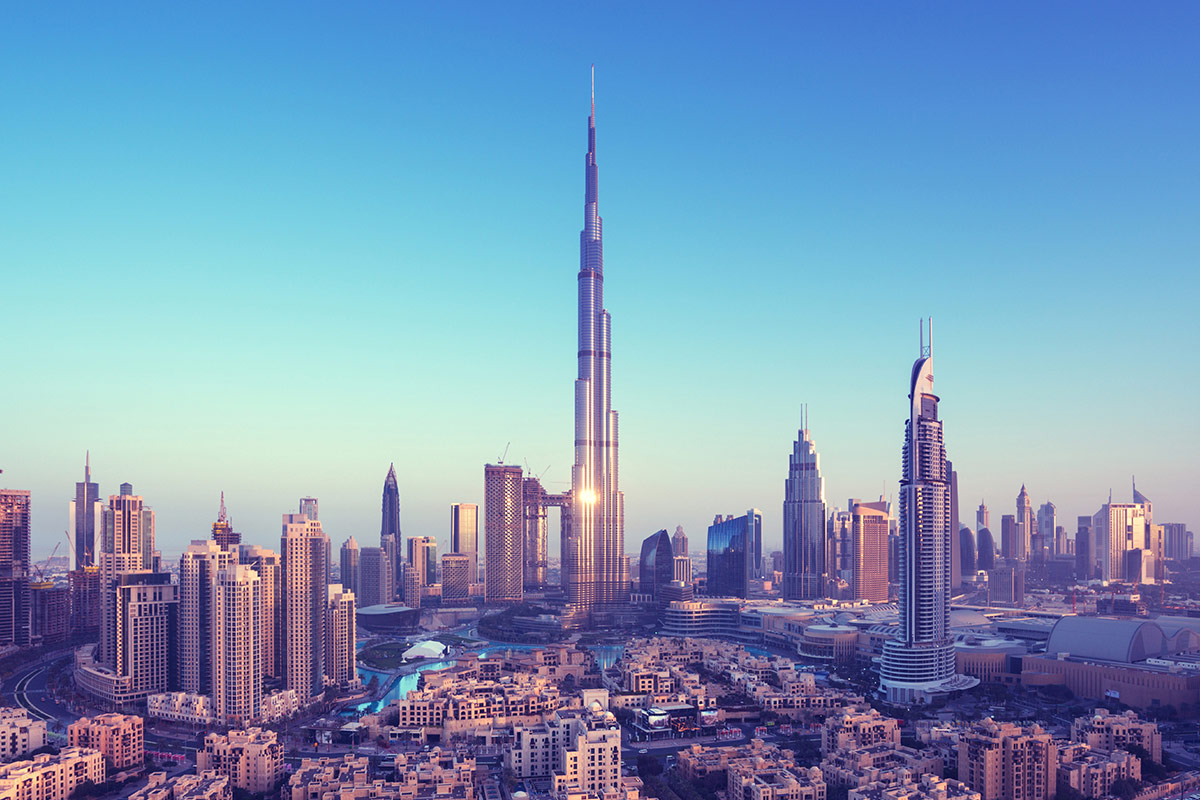
#3 Burj Khalifa in Dubai
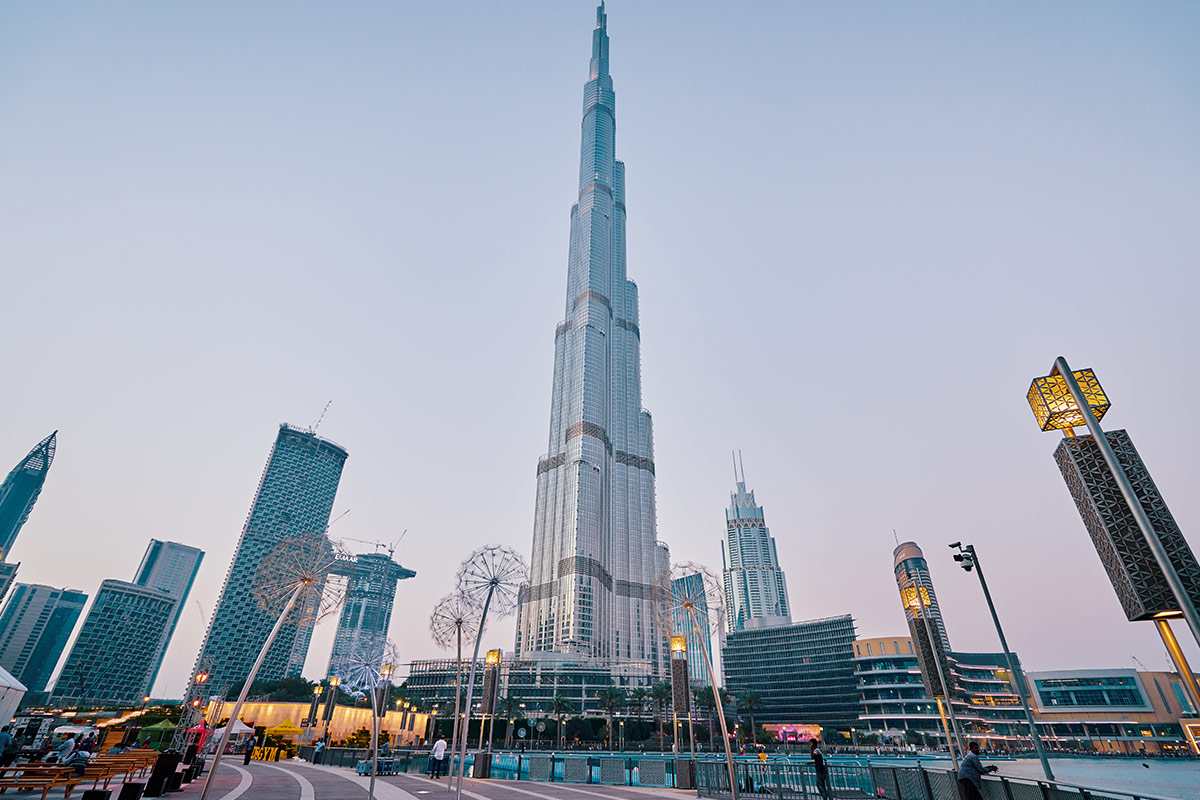
We have now reached the world’s tallest completed tower: its 828 metres were built over six years and inaugurated in 2010. The 163 floors can accommodate 35,000 people, within offices, luxury hotels, apartments, shops and a mosque. The tourist can enjoy breathtaking views of Dubai by accessing the observation deck located at 555 metres high: it will still cost them €120.
The Burj Khalifa is also synonymous (as long as the aforementioned competitors are not completed) with staggering figures: 39,000 tonnes of steel, 142,000 square metres of architectural glass, as much aluminium as contained in five Airbus A380s, as well as 57 lifts, the fastest reaching a speed of 11 metres per second. Hair-raising!
#4 Merdeka 118 in Malaysia
This building is still under construction in the Malaysian capital, Kuala Lumpur, but should open before the end of 2022. Since its spire was installed in November 2021, the building has become (temporarily) the world’s second tallest completed structure with its 679 metres. Its architecture is characterised by a glass facade integrating triangular forms, in reference to traditional Malaysian art.
Designed by architect Fender Katsalidis, the tower houses within its 118 floors, a 236-room luxury hotel, offices and apartments. The pharaonic project costing $1.25 billion has been criticised in the country: some would have preferred this money to be used for nobler causes.
#5 Wuhan Greenland Tower in China
We award fifth place to this tower for the architectural achievement of its design and its initially planned height of 636 metres. Normally completed this year, the 97-floor building has had some setbacks in its construction, and the air restrictions imposed by the Chinese government forced the architects to rethink the final phase to constrain the tower to no more than 500 metres: it will ultimately be 475.
The skyscraper will house offices, apartments and a luxury hotel. The entire building was designed to be environmentally friendly, consuming less energy than conventional offices. Wastewater will be recovered for reuse in the air conditioning system, a major consumer of this precious resource. Innovative!
#6 The Tokyo SkyTree in Japan
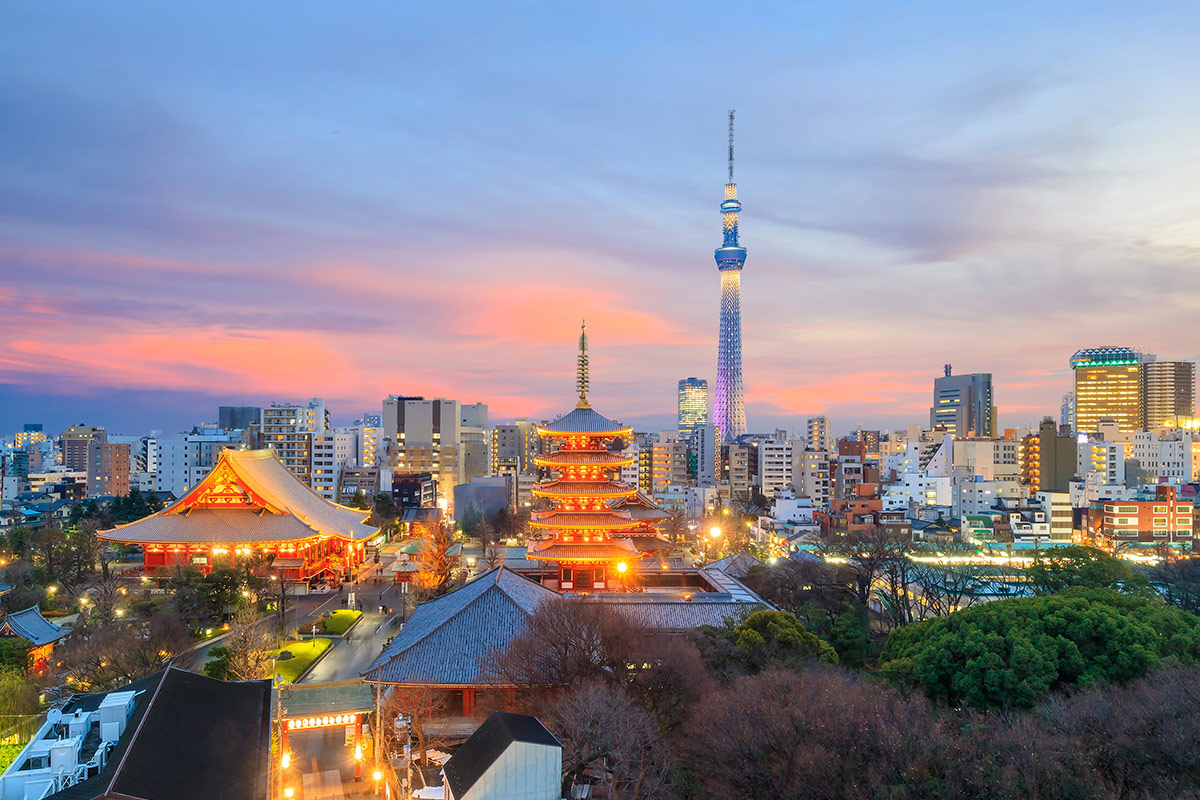
Inaugurated in 2012, this broadcasting tower has two observation decks that are among the most important attractions in the Japanese capital. Inaugurated in 2012, it still ranks today in third place provisionally among the tallest completed buildings in the world, with a peak at 634 metres.
For anecdote, the height leaves nothing to chance since in Japanese, 634 is a number that can be pronounced “musashi”. The province of Musashi corresponds to the former name of the Sumida district where the Tokyo SkyTree is located, and the river of the same name flows nearby.
The tower offers respectable facilities, such as the possibility to feel “floating” on a translucent glass floor, temporary exhibitions, 300 shops and, of course, a breathtaking panorama: visitors can climb up to 450 metres high and, on clear days, see Mount Fuji.
#7 The Shanghai Tower in China
Only two metres shorter than its Japanese competitor, The Shanghai Tower thus reaches 632 metres. Notably, the tower was designed to produce more energy than it consumes. The rainwater harvesting system and wastewater recycling for the air conditioning system are also among its strong points.
It has 128 floors, a luxury hotel and, of course, offices. That’s not all! No fewer than nine gardens brighten the place while the car park can accommodate 2,000 vehicles. Its 106 lifts are reputed to be the fastest in the world and the fastest will surprise tourists with its 20.5 metres per second!
#8 Canton Tower in China
This television tower is a hyperboloid structure inspired by the first realisation of this type, which we owe to Russian architect Vladimir Choukhov. Reaching 604 metres thanks to its antenna, it is equipped with an open-air observation platform and a large horizontal wheel going around the roof, for thrill-seekers. Notably, two enormous water tanks of 100,000 litres placed at the top, are designed to reduce oscillations in the event of a typhoon.
Within the structure, a museum, a shopping centre, car parks, panoramic restaurants with a rotating floor and gardens can accommodate 8,000 visitors per day.
#9 The Clock Tower in Saudi Arabia
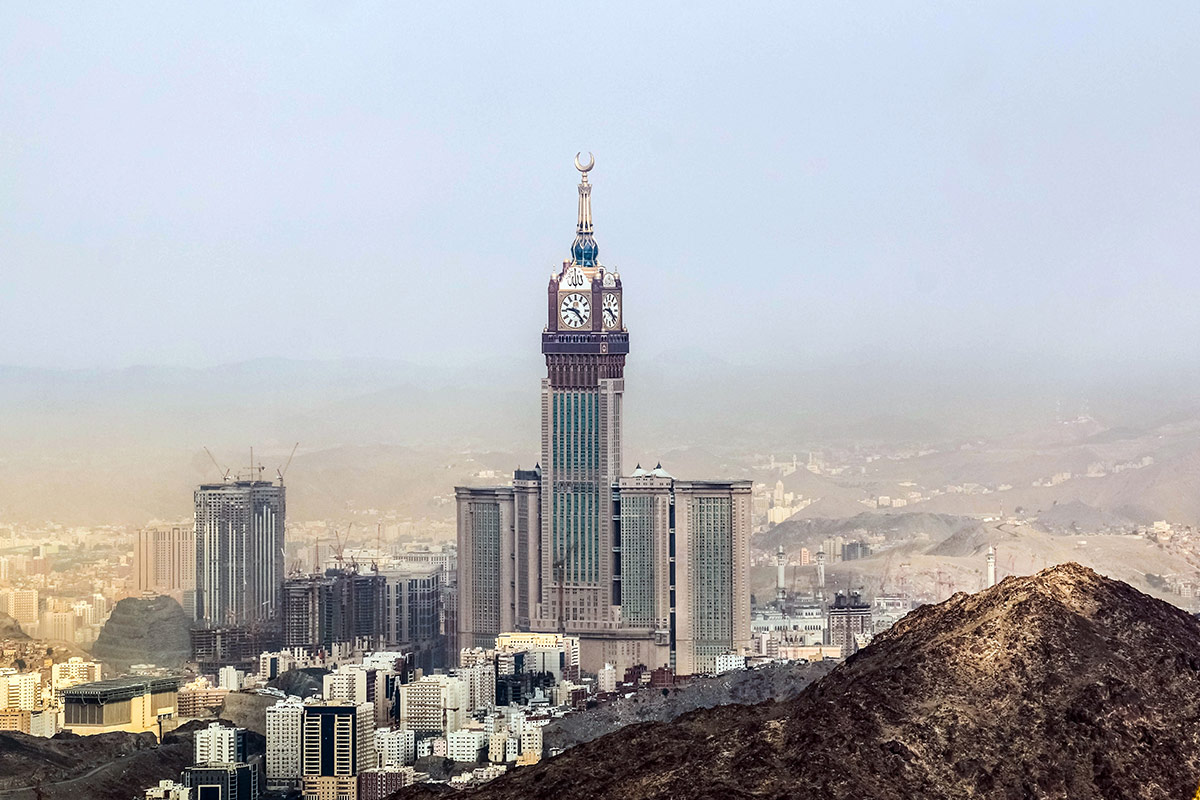
Dominating the Grand Mosque in the heart of Mecca since 2012, the clock tower is the tallest building of a group of seven skyscrapers forming a luxury residential district. Its height of 601 metres earns it a place in our ranking, although some personalities, like journalist Mahmoud Sabbagh, regret the “Manhattanisation” of the district, out of step with the spiritual spirit of the place.
The particularity of the clock tower is that it displays four clock faces 46 metres in diameter (that is six times larger than those of the famous Big Ben) which allow the prayer times to be given to Muslims who have come on pilgrimage. The clocks would be visible up to 17 kilometres at night, and 12 kilometres during the day. Impressive!
#10 Ping An International Finance Centre in China
In last place, we find the Ping An tower, headquarters of the insurance company of the same name, whose height of 599 metres remains more than respectable. With its observation platform placed at 562 metres, it still has the possibility of giving quite a vertigo to any visitor!
The 115-floor building was designed to withstand the most difficult climatic conditions. Its particular shape makes it possible to reduce by 35% the nuisance of very strong winds and its stainless steel cladding will protect it from sea air erosion.
We hope that our enumeration has sparked desires for discovery in you. Let us also specify that the ranking is likely to evolve quite quickly. Many projects, even more recent than the two fabulous programmes appearing at the top of our list, are under construction. Like, for example, the Lakhta Center 2 which will give Saint Petersburg a building exceeding 700 metres.