Property Purchase: 10 Reasons to Choose Older Properties!
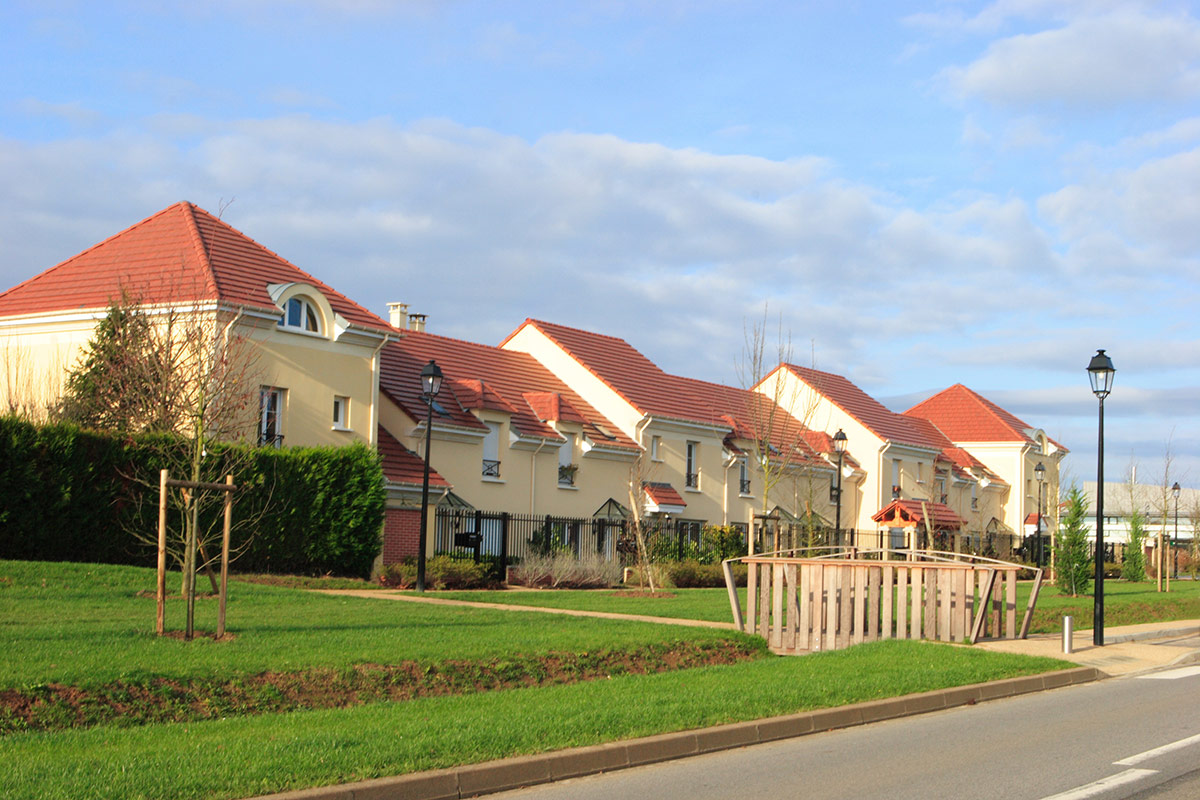
If you are planning to acquire a property, you will certainly have considered the possibility of buying new. Building or buying off-plan as part of an existing development programme offers certain advantages, notably a reduction in solicitor's fees and, of course, the assurance that no one has occupied (and deteriorated) the property before your arrival.
If you are planning to acquire a property, you will certainly have considered the possibility of buying new. Building or buying off-plan as part of an existing development programme offers certain advantages, notably a reduction in solicitor’s fees and, of course, the assurance that no one has occupied (and deteriorated) the property before your arrival.
The calculation is not so straightforward, however, and older properties have multiple strengths that can enrich your reflection and ultimately, steer your choice differently. Let us explore 10 reasons why buying an older property seems the better option.
#1 Reduce the acquisition budget
It is a proven fact: the acquisition budget for an older property will always be lower than that for an equivalent purchase in new build. A buyer (inevitably) mindful of the cost of their investment, if not absolutely convinced of the advantages of new build, will therefore prefer to turn to older properties whose price will be 20 to 30% lower and will more than cover the difference in solicitor’s fees applicable.
Another advantage of older properties: they may require refurbishment, alterations or even partial or full renovation. These are all arguments for negotiating the price further and achieving an acquisition amount that is ultimately very low. This makes for a healthy capital gain on resale if the cost of works added to the acquisition price corresponds to an amount lower than the final value of the property on the market.
Additionally, this is an option available to buy-to-let landlords to reduce their initial investment and therefore, optimise the profitability of their project from the outset.
#2 Benefit from a much larger choice
The older property market offers the chance to find properties of all kinds, from all eras and with countless features. By contrast, new build developments are (relatively) rare and offer fairly similar features, corresponding to **contemporary construction standards and tastes deemed suitable for the greatest number, which may not be yours.
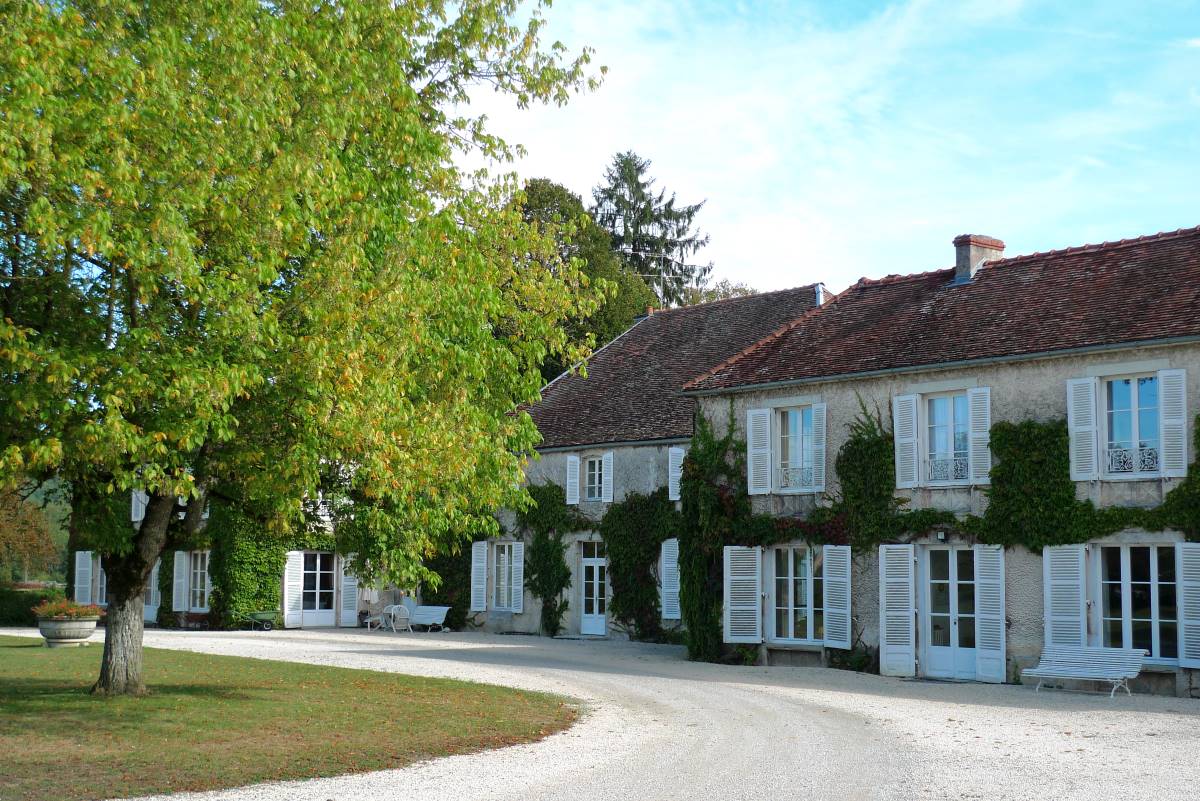
Many buyers prefer the charm of period property to the coldness of new build, and quite right too, as they are then free to conduct a thorough search allowing them, why not, to access a property almost designed for them among the thousands for sale at any given moment in each area. Provided, of course, that their budget allows such a purchase but if it is limited, a new build purchase would in any case be inadvisable.
#3 Multiply geographical possibilities
Most new build developments are located on the outskirts of urban areas, within derelict areas awaiting regeneration or directly on agricultural or previously natural land. While this leaves plenty of scope for the housing estates sought by some families, a buyer wishing to live close to urban life may not necessarily find what they are looking for. Similarly, a new residential development in the town centre may be appealing but will not necessarily be located where you want to be. This is the drawback of new build: developments are rare and therefore, offer few geographical possibilities.
Older properties are, by their very nature, scattered across the entire country and every residential area, from the capital to the hamlet. Each one may come up for sale regularly and will give a buyer the chance to move into the desired neighbourhood or street with, at worst, a little patience.
#4 Buy something concrete
Buying off-plan can prove rather reassuring. While the technical outcome of the construction is guaranteed and all elements described in the plans must be present and correctly completed or installed, other elements for assessing the property, just as essential for a future owner, cannot be foreseen in advance.
This applies to the general feel within the property, both visual, the temperature or the lighting, which may differ from what was imagined. For an owner-occupier, joy can then give way to regret and make buying new a step they do not wish to repeat.
The older property allows you to appreciate all the characteristics of the property and make your choice based on a place where you feel comfortable, which stems from criteria that are sometimes entirely subjective.
#5 Reduce your ecological footprint
Building new homes pollutes: this is an obvious fact that is becoming increasingly difficult for households concerned about reducing their impact on the environment to accept, particularly as they do not wish to contribute to the increasing concretisation of our land.
Even if renovation is necessary, an older property will never consume as many materials as a new build and its ecological footprint will be far less pronounced. However, care must be taken to improve the insulation if necessary, to avoid excessive heating consumption, harmful to the environment as well as to energy bills.
#6 Move in more quickly
For an older property purchase, a maximum period of 3 months is allowed by solicitors to proceed with payment of the property and therefore, for the keys to be handed over by the former owner. New build, on the other hand, leaves the completion date uncertain, which is measured in months or even years: on average 12 months of construction work for off-plan handover, a period that may be extended for various reasons.
The planning permission may be granted with delays, the contractors’ work may be dependent on the weather or the timely delivery of materials, etc. In short, construction delays are common and while they may give rise to compensation, the future owner’s patience can also be severely tested.
In older property, the calculation is therefore more precise and the period is inevitably shorter. A pressed buyer or one without an obvious temporary base during construction will certainly opt for an existing property.
#7 Be able to transform the property more easily
A new build will rarely be transformed by its first occupant and this, even if they did not dictate the plans (housing estate houses, leasehold flats). Yet, the selection criteria will certainly have been based on a price, a location or the overall aesthetics of the property.
Interior layout, bedroom size, the fitted kitchen may represent secondary assessment elements on the plans, which will however take on full importance once the property is occupied. Allocating a supplementary budget to redesign the property is generally not the case and even seems illogical.
An older property will, by contrast, more readily lend itself to renovation, opening the door to all modifications so the property meets all the particular expectations of its new owner.
#8 Multiply style possibilities
As mentioned, new build properties are all similar, or nearly so: smooth white walls, grey, black or white tiled floors, spaces designed in a similar way… While this may appeal to some, others will want to mix materials, benefit from the possibilities offered by nooks and crannies, cornices and fireplaces, period parquet flooring to renovate – or not! In short, many buyers will prefer to create an interior that reflects them and for this, new build leaves little room for imagination.
The trend may drive the desire to mix styles. Thus, a brick wall, cornices or exposed ceiling beams, for example, will harmonise perfectly with a kitchen with lacquered fronts or an ultra-modern wood burner.
Making the atmosphere cosy and welcoming is essential for feeling at home! It should be noted, however, that it remains possible to simulate a period look without transforming the structure of a new build property: a wall embellished with facing bricks, a floor covered in chevron parquet can lend a certain charm.
#9 Receive renovation grants
In terms of funding and aside from the lower purchase price, buying older with a view to renovating also leaves the possibility of further reducing the bill through grants and funding assistance.
First, let us specify which grants are accessible in 2022, most often subject to conditions:
- The Ma Prime Rénov’ scheme, granting financial assistance to reduce the renovation bill. The property must have been completed over 15 years ago and the contractor used must be a recognised environmental guarantor (RGE).
- The Energy Efficiency Certificates (CEE), through which energy supply companies allocate grants to households carrying out works to improve the property’s energy performance. The process is to be carried out on the energy supplier’s website whose offer is selected by the owner, before even signing a quote with a contractor who must also hold RGE certification.
- Other financial grants may be awarded by local authorities, check with your local council to discover what is available according to your location.
Additionally, certain schemes facilitate the funding of renovation works:
- The interest-free eco-loan, with a maximum amount of between £7,000 and £50,000 depending on the type of works carried out, to be taken out with a bank that offers it, to renovate a property over 2 years old.
- The reduced-rate works loan, granted by Action Logement for a maximum of £10,000 at the preferential rate of 1%.
- The renovation advance loan, available since early 2022 with Crédit Mutuel and La Banque Postale, allowing owners deemed insolvent to defer repayment to the date of property resale.
- Reduced VAT, directly applied by contractors on their invoices.
#10 Potentially realise a significant capital gain
Finally and thanks to all the savings made on the acquisition of an older property that we have listed, realising a sometimes significant capital gain can be considered. Even if bought at the right price and if it is in perfect condition, an older property can benefit from value growth relatively quickly given property inflation. A new build property, on the other hand, initially acquired 20 to 30% more expensive, will have to wait for equivalent inflation to be resold at the purchase price.
On the older property market, a property that has benefited from quality renovation can also be resold in the higher range of its valuation, insofar as the works and alterations carried out make it an exceptional property or at least, are likely to trigger a love-at-first-sight reaction.
If we have convinced you, all that remains is to start searching for the property that will win you over, not without adding your own touch of course!