2023: the right year to renovate your property
Renovating a property you own is a concern that every homeowner should have, regularly. To sell, maintain the condition of the property and even rent it out effectively, there are many reasons to incur expenditure of this kind – which does not constitute a total loss of money, as we shall see.

Renovating a property you own is a concern that every homeowner should have, regularly. To sell, maintain the condition of the property and even rent it out effectively, there are many reasons to incur expenditure of this kind – which does not constitute a total loss of money, as we shall see.
A renovation can take a different form depending on when it is undertaken: laws change, available grants vary from year to year, and more generally, a renovation that is not carried out in time is likely to incur additional expenditure linked to wear and tear that could have been avoided.
2023 appears to be a favourable time to undertake the renovation of your property: here are the reasons why.
New legal obligations
First of all, housing policy is moving towards a major focus on energy transition and the necessary modernisation of our homes. Several measures come into force this year.
The energy inefficiency threshold affects rentals
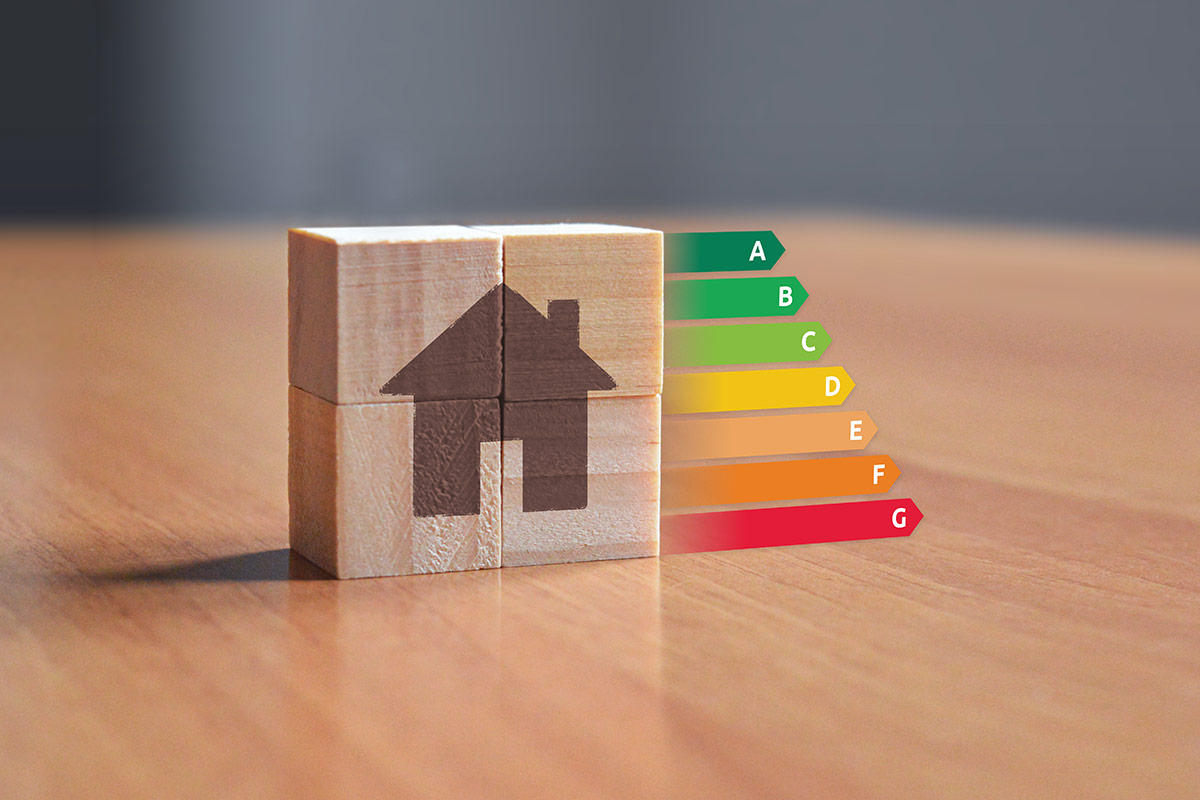
Some properties requiring renovation have thus been prohibited from rental since 1 January 2023, due to their excessive energy consumption. An inefficiency threshold penalises properties whose energy performance diagnosis (EPC) reveals consumption exceeding 450 kWh / m². Most of the properties affected fall into the EPC category G, which will become entirely prohibited for rental in 2025.
An energy audit becomes mandatory when selling a property
From 1 April 2023, all properties rated F or G on the EPC must undergo a mandatory energy audit prior to sale. Properties in categories E and D will follow in 2025 and 2034 respectively.
Provided for by the Climate and Resilience Law promulgated in August 2021, the measure has seen its implementation postponed several times in 2022. Please note that it only applies to single-ownership properties (individual houses or entire buildings). Furthermore, all properties already under contract as of 1 April 2023 are exempt from the requirement.
Introduction of the Housing Information File
Its implementation is also due to the Climate and Resilience Law. Since 1 January last year, an owner building a property or carrying out renovation work affecting the energy performance of a property they own must maintain an information file.
Specifically, this involves keeping a list of materials used that have a direct impact on the energy performance of the dwelling (mainly thermal insulation materials), and providing details on heating or cooling equipment, as well as their energy labelling.
Finally, the file must contain the EPC carried out, as well as any document demonstrating compliance with thermal and environmental regulations and other labels.
Mandatory assistance from a renovation facilitator
Assistance by a professional approved by the State may become mandatory when applying for grants for works whose invoice exceeds £4,000 (€5,000) VAT inclusive. This translates into help with defining the project (needs assessment, carrying out a diagnosis), and support during its implementation.
Find details of this measure on the government website and contact France Rénov’ to determine your eligibility. Please note that the assistance may be free if a local authority in whose territory the property is located has implemented a funding scheme.
Optimising the value of your property
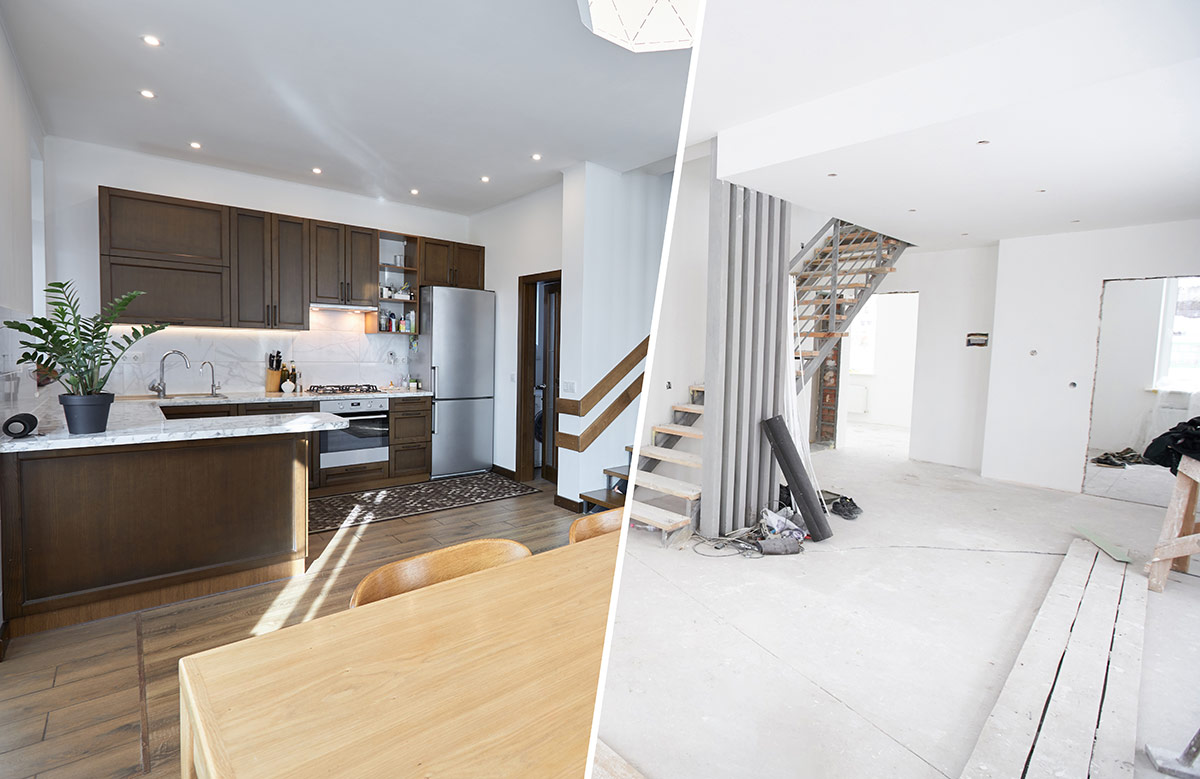
In a context of rising interest rates and what appears to be a likely continuation of property price decreases in 2023, having a property in perfect condition and featuring comfort characteristics that meet modern expectations is essential. Within this framework, a full or partial renovation is also necessary.
If the objective is to sell in the short or medium term, this will ensure the property’s attractiveness and the maintenance of a price justified by the features. With the tightening of lending criteria, it is also more complicated to offer a property requiring renovation on the market, as it will entail significant expenses, the precise amount of which remains unknown. The selling price will therefore be, without fail, heavily negotiated.
In the case of renting the property, it is also a matter of finding tenants easily and being able to select a very strong application. A renovated property will also reduce turnover, as tenants will feel comfortable there. Furthermore, unless there are rent controls, this allows for higher rental income and thus, to partially offset renovation-related expenses over time.
Strengthening renovation grants
To encourage owners to renovate their homes – and help those who find themselves obligated to do so – subsidies and tax incentives are being strengthened once again:
Via the MaPrimeRénov’ scheme
The Finance Law provides for a 15% increase in 2023 in budgets allocated to ecological and energy transition. Specifically, the MaPrimeRénov’ scheme benefits this year from an additional budget of £420 million (€500 million), reaching a total budget of £2.06 billion (€2.45 billion). The aim is notably to allocate higher grants and thus, encourage owners to target greater improvement in their energy performance.
In line with this decision, the income thresholds for modest and very modest households benefiting from MaPrimeRénov’ increase by 6.3%. New people thus become eligible, while others move to a different category and may receive higher grants than in 2022, for the same income. The government has made available an online simulator to check eligibility and the level of subsidies achievable, please do not hesitate to consult it.
Through the doubling of the property income deficit
Finally, and until the end of 2025, the amount of property income deficit attributable to renovation works is simply doubled. This is a strong incentive for owners, particularly landlords, whose renovation-related expenses will thus be reduced and the achievement of the objective set for them by law in terms of energy performance, facilitated.
This means that £18,000 (€21,400) can each year be deducted from taxes (instead of £9,000 (€10,700) previously) and carried forward if necessary over 10 years. The window of opportunity is 3 years and a renovation can take time: it is best to undertake it from 2023! Find more information on this development by reading our dedicated article on the doubling of the property income deficit.
In 2023, renovating your property becomes less costly, if not easier. The surge in energy prices adds to legal incentives: everyone has every interest in transforming their home into a model of energy performance!