Ukraine war: what consequences for the French property market?
The current geopolitical context has consequences for most areas of our lives, even if they are not immediately obvious. Property is no exception and the war is significantly changing the landscape, through more or less direct consequences. Households as well as…

The geopolitical context has consequences for most areas of our lives, even if they are not immediately obvious. Property is no exception and the war is significantly changing the landscape, through more or less direct consequences. Households as well as stone professionals would do well to factor in these changes to adapt their respective projects. Let us attempt to decipher what, in the short term, should impact the French property market.
A fall in property purchasing power
Everything looks set to cost more for households, particularly regarding property. Their concern is therefore legitimate, regarding their capacity to realise their projects and therefore, to keep the property market moving.
Rising cost of living
The government describes it as significant, even runaway, inflation: the final price of many so-called “essential” goods is rising sharply. If some increases were already raising questions months ago (the price of fruit and vegetables, wood and energy in particular), the Russia-Ukraine conflict appears to be carrying a strong worsening of inflation: many products made in the east or requiring raw materials from the east are struggling to reach our shores and are therefore seeing their prices rise mechanically.
As for energy, it is not only that needed to heat and light us, even if this is problematic and requires increasing state intervention to protect household budgets. Many manufactured products notably require oil to be produced – plastic is a case in point – and the soaring pump prices also impact industries forced to raise their prices accordingly.
Households’ disposable income is thus reduced, after paying more expensive electricity and gas bills, and buying more expensive products in store.
Soaring material prices
Copper, wood, tiles, steel and others: let us focus in particular on the increase in material prices, which affects the world of property to a large extent. Russia and Ukraine are major steel suppliers, the price of which is soaring with the conflict but which is required for making reinforced concrete. Russia is also the world’s second-largest producer of aluminium whose cost per tonne exceeds the historic threshold of 4,000 dollars: the price of windows and pergolas is strongly impacted by this, when shortages are not raging.
Overall, new-build housing developers are suffering from more expensive and sometimes uncertain supply. This is enough to penalise the profitability of contracts already agreed and cause significant price rises in the coming months.
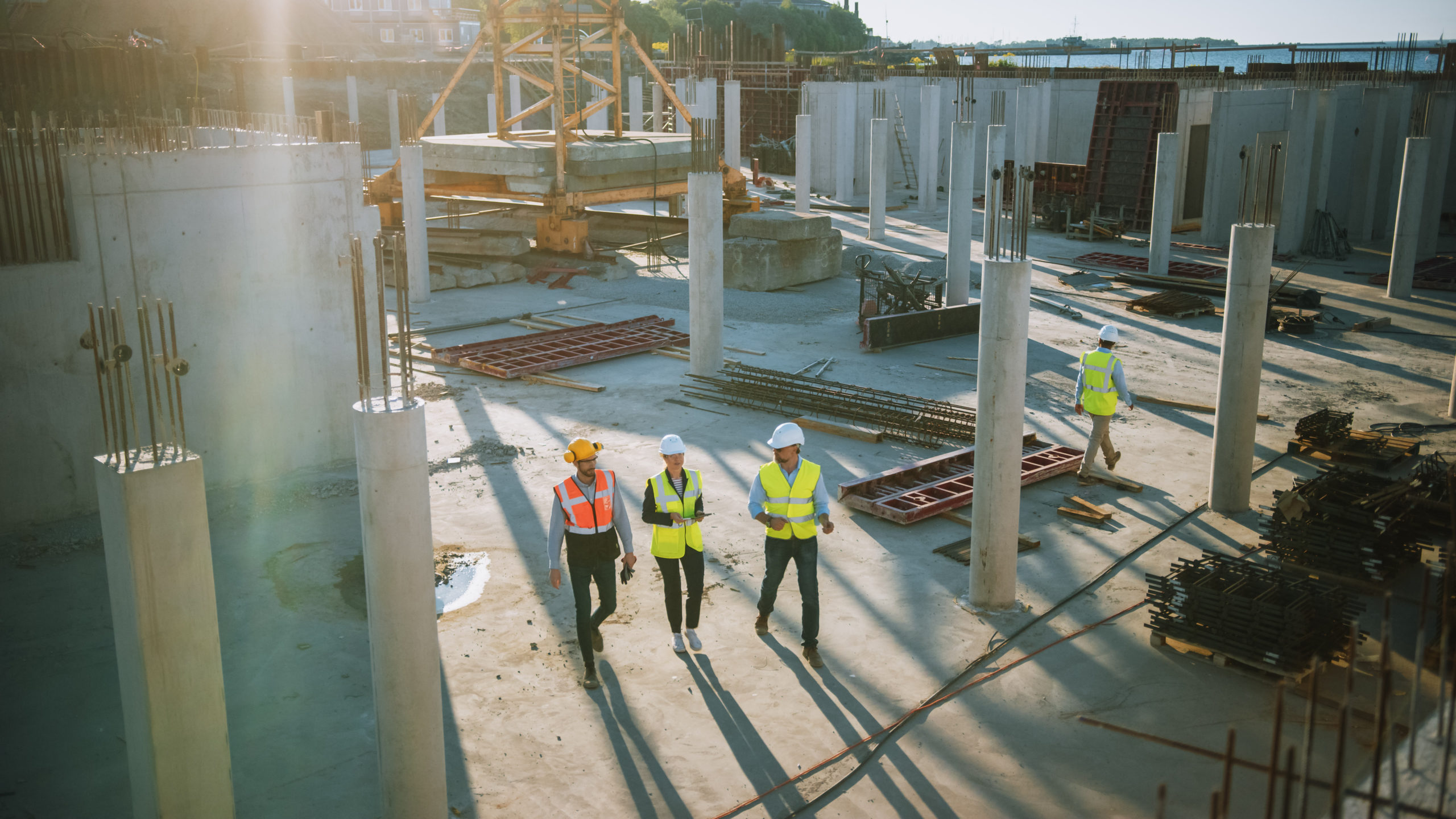
It is however households who often bear the full force of the financial consequences: individual house construction contracts (CCMI) include a price indexation clause based on the BT 01 index, which measures the rise in construction costs and keeps increasing. A surplus cost of several thousand euros may thus be claimed by the developer, in good faith.
On the older properties side, rising material prices will inevitably jeopardise renovation projects, without counting that they risk slowing down renovations already underway. Many property transactions also involve acquiring a property to renovate: geopolitical uncertainty breeds caution which is already slowing this market. Households may also opt for a wait-and-see attitude, anticipating a possible return to normal at the end of the conflict and falling prices. The reasoning is the same for those who fear a collapse of the various markets.
Credit rate increases
Finally, we note a positive movement in mortgage rates, which continues under inflationary pressure, aggravated notably by the geopolitical situation. after remaining at historically low levels even in 2020, the opposite trend is observed and looks set to continue. Between January and March 2022, rates rose by twenty to forty basis points, with the average twenty-year rate going from 1.10% to 1.40% gross. The nervousness of the banking market faced with the geopolitical crisis is leading to this increase continuing, which can only reduce household purchasing power.
Beyond the authorised debt-to-income ratio, which will not take account of price inflation in the short term, households faced with rising prices will encounter increasing difficulty in honouring their mortgage payments, with a not insignificant risk of default. Banks are aware of this and are adopting policies designed to protect themselves from this: rate increases but also requiring residual savings after the deposit, for example.
Fall in real rental yields
Investment also suffers from the war, as profitability is affected by inflation. If an investor is counting on a 3% yield and inflation is approaching 4% as is currently the case, their real gain becomes negative. Raising rents is not the best idea, as the tenant already faced with price increases could default.
In concrete terms, property purchasing power is decreasing and the war in Ukraine, while not necessarily the origin of all the phenomena, is however strongly worsening the situation.
A deterioration in the social climate
The economy is directly linked to the country’s social climate, this is a fact. An impoverishment of all (or most) actors can only make cohabitation more difficult.
Household morale at a low ebb
A logical but more subjective consequence of all the facts mentioned above: household morale obviously suffers from the reduction in consumption possibilities and making projects. Prudence will lead to saving while the essentials of daily life cost more: it is leisure that will suffer.
Add to this the concrete concern felt facing an armed conflict whose final scope is still uncertain and whose consequences have not all been considered: household morale will certainly be affected. Yet hope and positivity are the foundations from which any property project arises.
Probable tensions within businesses
Another potential effect of war-related concern: a limitation of the possibilities offered to employees during salary negotiations. If understanding may be the rule in general, it is conceivable that this could lead to a climate of tension after the presidential elections and if the situation – and the conflict – last too long.
Let us also highlight the increased risk of redundancy plans and the reduction in the number of hires, facts which are obviously unfavourable for the property market.

A logical slowdown in the number of transactions
All these elements lead to a very logical conclusion: the number of property transactions in 2022 should see a sharp decline. If the figures still have to prove this, we can note that 2021 was a year of all-time records and that the objectives of property professionals for 2022 are therefore certainly (too) ambitious.
In 2021, no fewer than 1,178,000 transactions were recorded in the older sector: a historic peak. This includes notably close to 140,000 individual house sales and 116,700 new-build homes reserved by individuals (less than in 2019 but the number of building permits granted has fallen significantly).
Even before the outbreak of the Ukrainian conflict, the beginning of 2022 showed signs of slowing property activity. Various elements may explain this, such as the application of the RE2020 standard which alone leads to a 7% to 10% increase in construction costs and which probably explains why many projects accelerated their completion in 2021. Adding to this the material price issue, the impact on household budgets considering a new-build could go as far as making the project unviable. Enough to clearly dampen spirits, to say the least.
Some of these unrealised projects could however see households转向acquisition in the recent older sector, with subsidiary consequences. On one hand, this could limit the decline in transaction numbers, but on the other hand it would deprive some households of the possibility of buying in the older sector at a reasonable budget due to increased competition. There would also be a reduction in property supply, through the fall in new-build construction numbers.

How to sell your property in such a context?
For buyers, only a higher budget than usual to proceed with the desired acquisition may prove to be the saviour. But for sellers, let us finish on a positive note, with some advice to give yourself the best chances of selling your property quickly and at the desired price.
First, ensure you put on the market a property requiring as little work as possible, as this would generate immediate concern in the minds of potential buyers for all the reasons mentioned above.
Then, if you can, wait a few weeks before putting it on the market, for the situation to become clearer: in the event of an end to the conflict, the sums saved through wait-and-see behaviour could be released at once and property activity would see a clear boost. You would then have a better chance of selling quickly, and would not suffer from the longevity effect of your advertisement (a property seen too often holds less appeal).
Finally, maximise the quality – and qualities – of the property for sale. In the context of supply struggling to find buyers, only the best-presented properties will easily find a buyer: depersonalise, repaint tired walls, replace worn floors, etc. Without forgetting to work on the visual potential of your garden with the arrival of the finer weather. Make your property a model, at low cost, and this will earn you money!
Let us add a word for investors, who would do well to turn to investments promising a yield higher than the current record inflation. Non-professional furnished letting for example, whose yield rate can reach 7%.