Property sale: what surveys need to be carried out?
If selling a property is on the agenda, you are no doubt aware that certain steps need to be taken, including preparing a complete file for the notary, identifying your property's strengths for marketing purposes, and its mandatory analysis through various surveys. On this last point, obligations vary according to the age of the property, the region in which it is located, and the materials it is made from. It should also be noted that in a leasehold, surveys relating to common parts may be required, such as an asbestos survey and even if the private parts do not contain any.

If selling a property is on the agenda, you are no doubt aware that certain steps need to be taken, including preparing a complete file for the notary, identifying the strengths of your property for marketing purposes, and its mandatory analysis through a number of surveys. On this last point, obligations vary according to the age of the property, the region in which it is located, and the materials it is made from. It should also be noted that in a leasehold, surveys relating to common parts may be required, such as an asbestos survey and even if the private parts do not contain any.
A tip: have these surveys carried out as soon as possible, otherwise you risk having to delay your sale or, worse, see it fall through. A technical survey file must therefore be prepared and annexed at the compromise stage, then at the authentic deed, which protects you from any recourse regarding the points studied. Here is an overview of all surveys that may be mandatory, and their validity periods.

The area survey under the Carrez Law
This must be carried out by a professional surveyor when selling a leasehold dwelling, whether an apartment or a house. Please note: a housing estate is not a leasehold because the land is acquired with the house, which is not the case in a leasehold.
For the resale of an individual dwelling, the Carrez Law survey is not required, but the buyer may claim a reduction in the purchase price if they find that the actual floor area is more than 5% less than that advertised.
For the calculation of the floor area under the Carrez Law, any surface area with a ceiling height of more than 1.80 metres must be taken into account. Walls and partitions, as well as certain rooms such as sheds and garages, are deducted, but the interior of cupboards meeting the height criterion is counted. The survey remains valid as long as no alteration modifies the floor area or layout of the property.
The Energy Performance Certificate
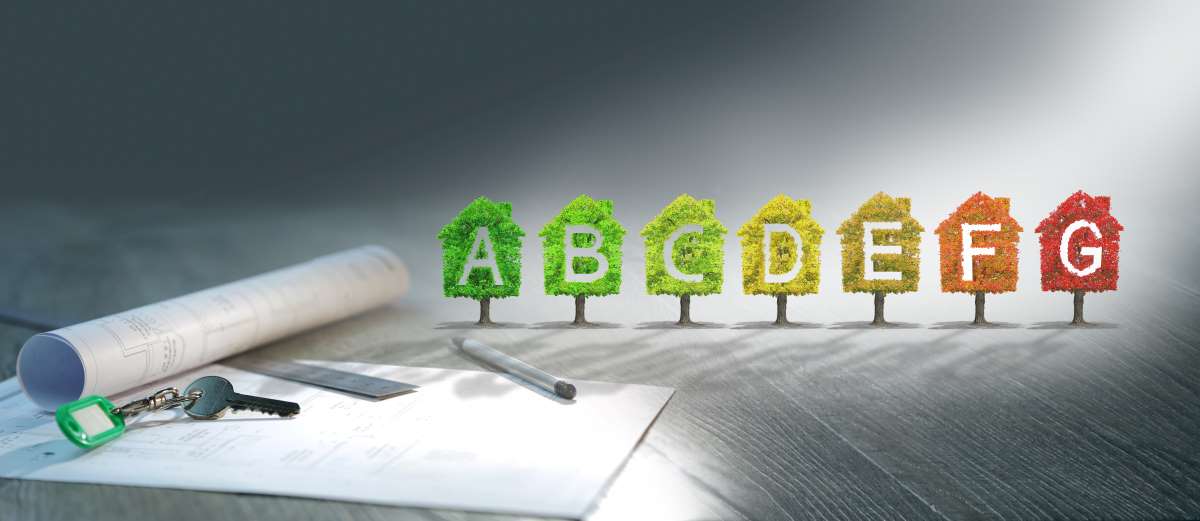
The rating on the A to G scale of the EPC has, since 2011, been mandatory in all property sale advertisements. This process aims to quantify the energy requirement to estimate the energy cost of occupying the property.
Through a technical analysis of the constituent materials, insulation and the heating system (heating and hot water production), the surveyor determines the number of kWh of primary energy per square metre per year that the dwelling consumes. It should be noted that the worst-rated properties (E, F and G) will soon be banned from rental, and leaseholds will have to implement a multi-year work plan to improve their rating.
The asbestos survey
Mandatory for any property whose building permit was granted before 1st July 1997, the asbestos survey certifies the presence – or absence – of asbestos in the constituent materials of the building.
It must be carried out in individual dwellings as well as in collective housing, where the search must be conducted in both private parts and common parts. The validity of the survey is permanent if it was carried out after 1st January 2013.
The lead survey
This only needs to be carried out if the dwelling was built before 1949. The lead exposure risk report – or simply lead survey – has permanent validity if the legal threshold is not exceeded. If it is, it will only be valid for one year.
Lead is mainly found in old paints, and in water pipes. As it gradually breaks down into dust, it can be ingested by humans and cause, particularly in children, conditions such as lead poisoning. If the survey detects lead, we therefore recommend that you have it removed!
The termite survey
This document only has validity of 6 months and for good reason: termites can infest a dwelling at any time and cause major damage to any wooden structure. However, there is no need to panic; the first step is to check whether your property is located in an at-risk area.
By prefectural decree, certain regions require the survey to be carried out. In France, a large south-western quarter is affected, as well as a few departments further north (in Brittany, Île-de-France, Seine-Maritime or Pas-de-Calais, for example). Some overseas territories are also affected, such as Guyana or Réunion.
The pollution risk status certificate (ERP)
Also valid for 6 months, this survey formerly called Risk Servitudes and Soil Information State Survey (ESRIS), aims to inform a buyer of any risk of occurrence of events harmful to the dwelling and whose causes cannot be controlled. The analysis will therefore vary according to the location of the construction and will provide information on:
- Natural risks: flooding, drought, seismic risk, forest fires, avalanches, etc.
- Technological risks: oil, chemical and biological.
Previous natural disaster orders are mentioned, in order to provide an indication of the level of risk involved.
The gas safety check
Any dwelling equipped with an installation more than 15 years old operating on natural gas must, before resale, undergo a safety check through this survey, which is valid for 3 years. Besides explosion risks, it is essential to ensure there is no gas escape such as carbon monoxide, which can cause fatal poisoning.
The electrical inspection
In the same way, an electrical installation more than 15 years old must be monitored to prevent any risk of direct contact with current, or fire. Electrical standards are constantly evolving, and the selling owner is not asked to carry out any restoration works. The survey is rather intended to provide complete information on the state of the installation to the buyer, who will freely decide on the renovations to be carried out for their own safety.
The individual sewage system survey
Since 2011, any dwelling not connected to the mains sewerage system must, before resale, undergo a check of the installation and septic tank.
Information on dry rot
Dry rot is a fungus that feeds on wood, and it is therefore troublesome to find in a house roof structure. Its potential damage is such that it is nicknamed the “dry rot of habitation”. It develops rather in humid environments, and it is common to find it after water damage if the dwelling is uninhabited or poorly maintained.
The legal obligation is information and not a survey: a owner or tenant spotting traces of dry rot is required to declare it to the town hall. In areas defined as at-risk by the prefect, information must also be given to the buyer regarding the risk involved.
If having this number of surveys carried out can prove to be a costly, time-consuming and restrictive process, it must be acknowledged that as a buyer it is reassuring to obtain a complete report on the state of the property acquired. If you are a seller, also ensure that the surveys carried out at the time of your purchase are no longer valid, otherwise you may have new ones carried out unnecessarily!