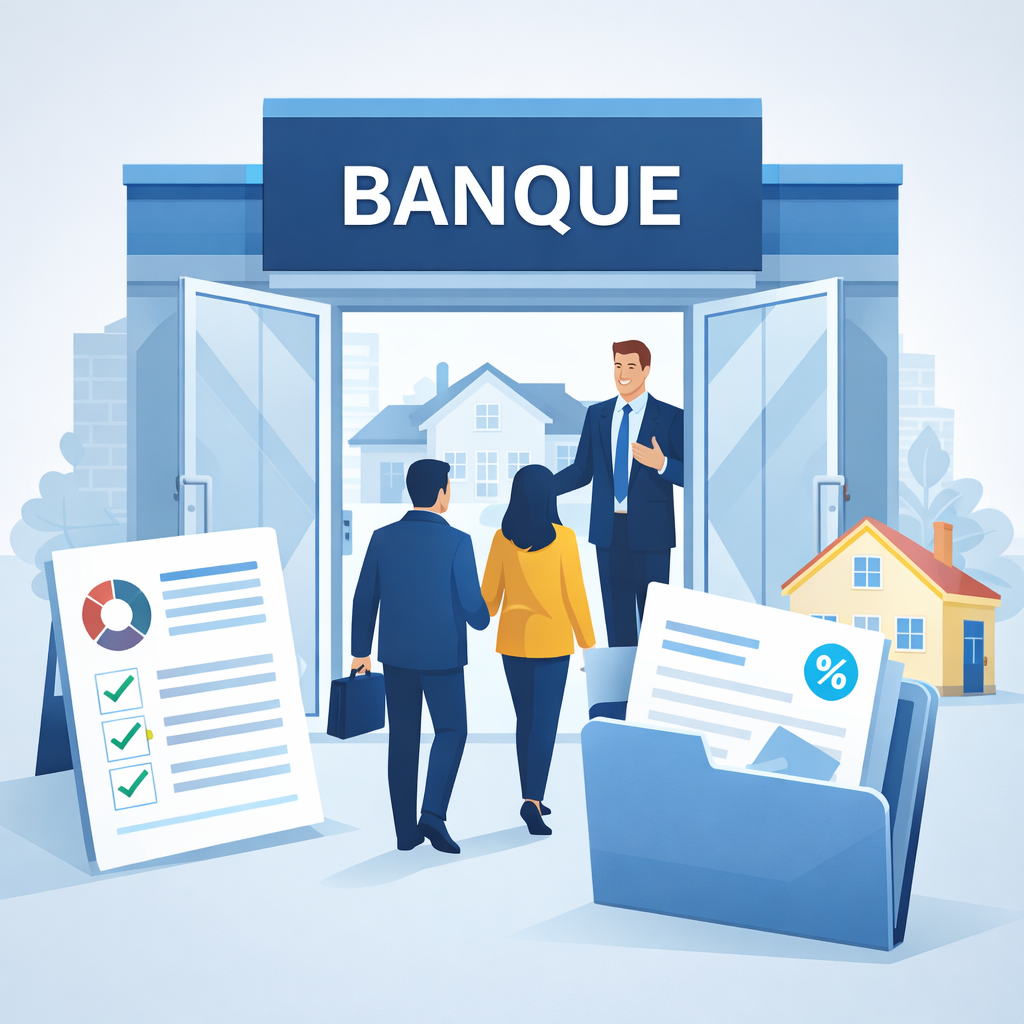
Property purchase: is a down payment essential?
A closer look at the role and importance of a personal down payment when purchasing property in the current economic climate...
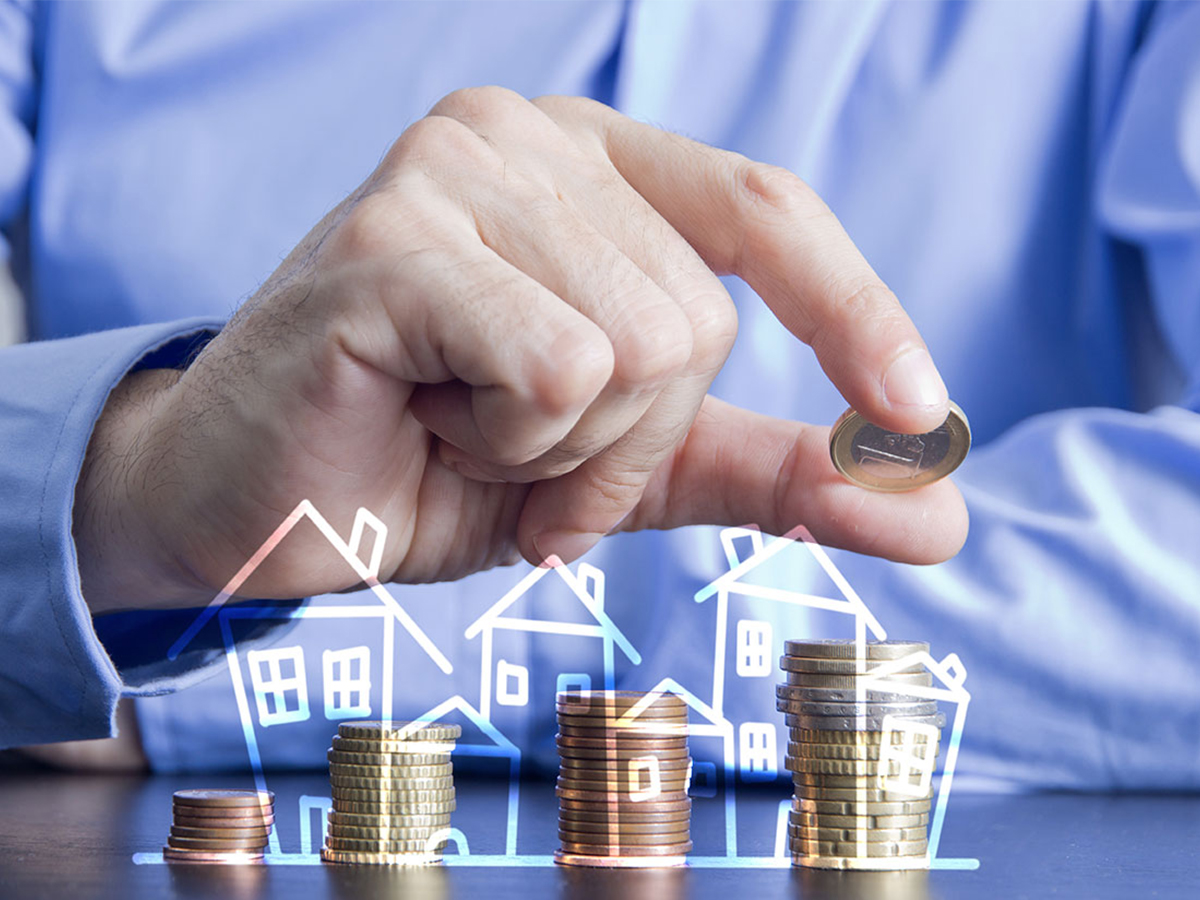
You are searching for the home of your dreams and beginning to imagine how to finance it? A bank loan will most often be essential, and obtaining one requires meticulous preparation. This includes a sum of money from your own resources, known as a personal down payment. Let us examine its role and importance in the current economic context.
Why a personal down payment?
Beyond the mathematical considerations related to your repayment capacity, the down payment primarily serves to reassure the bank. This financial commitment demonstrates that you are serious about your approach and capable of repaying the loan you are requesting. Moreover, your ability to save shows that you have sound money management: you will not take out a loan that exceeds your means and ultimately cannot be repaid.
To be taken seriously, your down payment must constitute a minimum of 10% of the total property purchase amount. This reassures the bank that you are able to fund the notary fees and the guarantee fund. A more substantial down payment will often allow you to negotiate more favourable conditions, such as a lower borrowing rate.
Borrowing without a down payment remains possible, provided you have an exemplary application: a request generating the lowest possible debt-to-income ratio and positive management of your bank accounts.
Sources of the down payment
Personal savings
You spend less than you earn and your bank account grows each month: you are a good candidate and you are building savings (in your current account or in dedicated accounts such as a savings plan). If this is not the case or if you wish to maximise your savings capacity, consider reviewing your expenditure to eliminate or reduce unnecessary expenses. Repay your consumer credit (and avoid taking out new loans), review your phone and energy contracts, for example.
Savings can also come from your company through profit-sharing and employee savings schemes. All of these approaches can enable you to build a genuine down payment over a few years.
Capital gains
A second way to generate a sum of money for purchasing a property is to sell another one. The capital gain you derive from this, or the difference between the sale price and the amount you still owe, will support the purchase of your new property.
If the property has not yet been sold, obtain a reasonable estimate of the sum it will bring you. You can then calculate the budget available for your search.
Other loans
If you find your new home before selling the existing one, you may need to take out a bridging loan: the bank considers that you will effectively sell the property and grants you a loan for the amount you will derive from the sale. Please note, for security the bank generally bases this on a sale price corresponding to 60% of the valuation carried out by a property professional. This loan is used as down payment for your new purchase.
Aided loans are also considered as down payments, such as the zero-interest loan or the Action Logement loan.
The down payment in the current banking context

Banking policies on credit have naturally been impacted by the health crisis linked to coronavirus and the financial insecurity that results for many people. However, an economic crisis was already anticipated, and recommendations to tighten credit conditions were already being made in 2019. These are more relevant than ever at the end of 2020, and banks will prioritise the strongest applications.
A down payment higher than the aforementioned 10% can therefore prove an essential advantage for borrowing quickly and on attractive terms. Without this, your request could be refused or delayed in favour of more robust applications. And the higher your down payment, the less risky your profile will be considered.
To give an indication, a personal contribution equivalent to 30% of the total purchase amount (or more) will ensure you have the attention of your banking partner. This will be essential if your application also has one or more weaknesses. Finally, a more substantial down payment reduces the loan amount and therefore the debt-to-income ratio: a ratio exceeding 33% is unlikely to be accepted at present, with remaining disposable income constituting another crucial factor in the assessment.
To borrow for a property purchase during this uncertain period, put every chance on your side: care for your management and maximise your down payment by every means available. If you encounter difficulties, a personal loan from one of your relatives could provide the necessary funds without constituting a known liability to your bank. All that remains is for you to proceed!