Lavardin: one of France's most beautiful villages
The occupation of the Lavardin site dates back to Prehistory as excavations show the presence of Neolithic axes, arrows and tools. Inhabited by Gauls, the fortified site of Labricinum became a Gallo-Roman village, as evidenced by the traces of a temple of Mercury. Towards the end of the...
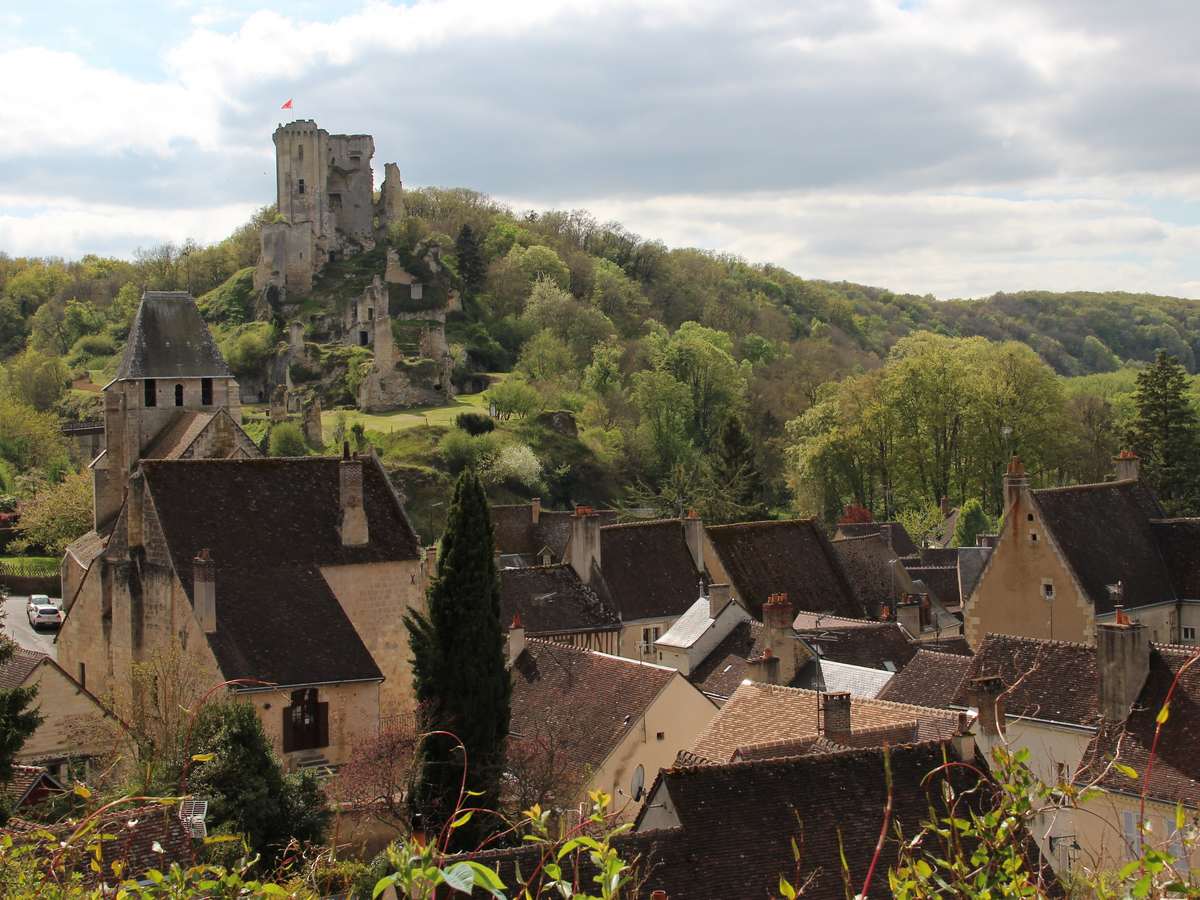
The occupation of the Lavardin site dates back to Prehistory as excavations show the presence of axes, arrows and Neolithic tools. Inhabited by Gauls, the fortified site of Labricinum became a Gallo-Roman village, as evidenced by the traces of a temple of Mercury.
Towards the end of the 8th century, the region was Christianised under the influence of Richemer, a monk from Tours. He first settled near the primitive castle, Turris dominica, the Lord’s Tower, before founding a hermitage further away, thus giving its name to the commune of Saint-Rimay. However, it is Saint-Julien whom the chronicles cite as the first founder of a church.
Lavardin was fortified at the end of the 10th century as part of a line of fortification erected in the Loir valley to fight against the Normans at the wish of Charles the Bald. The Count of Vendôme, Bouchard, then ceded this stronghold to Foulques Nerra, Count of Anjou. One of the vassals of the Count of Anjou, Hugues d’Amboise, godson of Hugh Capet, came into possession of this fortress and this lordship at the end of the 10th century by marrying the heiress.
His nephew Salomon founded the Saint-Gildéric Priory in 1030. In the 11th century, Salomon II had the first stone keep built in this fortress to protect the peasants of the lordship. These lived, outside wartime, in caves carved into the rock. Indeed, for several decades the Lordship of Lavardin was at war with that of Montoire. It was during a battle between Hamelin de Montoire and Aimeric de Lavardin in the plain of Villavard that the legend behind the pilgrimage of the Black Virgin of Villavard originated.
During the war between Henry II of England and Philip Augustus, Richard the Lionheart besieged Lavardin Castle in 1188. The King of France came to the aid of the militias of Montoire and Lavardin who had allied together, and they forced the English troops to lift the siege.
Around 1380, Jean VII, Count of Vendôme, launched the reconstruction of the castle. In 1448, it welcomed King Charles VII and Agnès Sorel. He was received at Lavardin by the Count of Vendôme Jean VIII who had completed the restoration of the castle. From Lavardin, the king managed the reconquest of Le Mans – which fell on 15 March – and there signed a truce with the English. The Count of Vendôme, disgraced by Louis XI, made Lavardin Castle his final residence, dying there in 1477.
In 1581, more than 300 inhabitants were victims of an epidemic (of plague) before finding themselves in the conflicts between Protestants and Catholics. In 1589, Henry IV besieged the Catholic garrison of Lavardin and he had to send the Prince of Conti to conduct a second siege and resolve the situation. Following this capture, the castle was dismantled (1589) and the stones were used by the inhabitants for their constructions. The domain was sold and forgotten for centuries.
In the 19th century, Napoleon III considered reconstructing the castle, but he preferred that of Pierrefonds. During the war of 1870, the military engineers blew up three arches of the bridge to block the enemies and the Germans pillaged the village. The bridge was restored by the troops of Von Moltke.