Everything you need to know about the property title
A document of capital importance, the property title confers a legal right to a property and attests to its possession by a natural or legal person. Necessarily in writing, it sets out the owner's rights to the building but also to the land plot and may be...
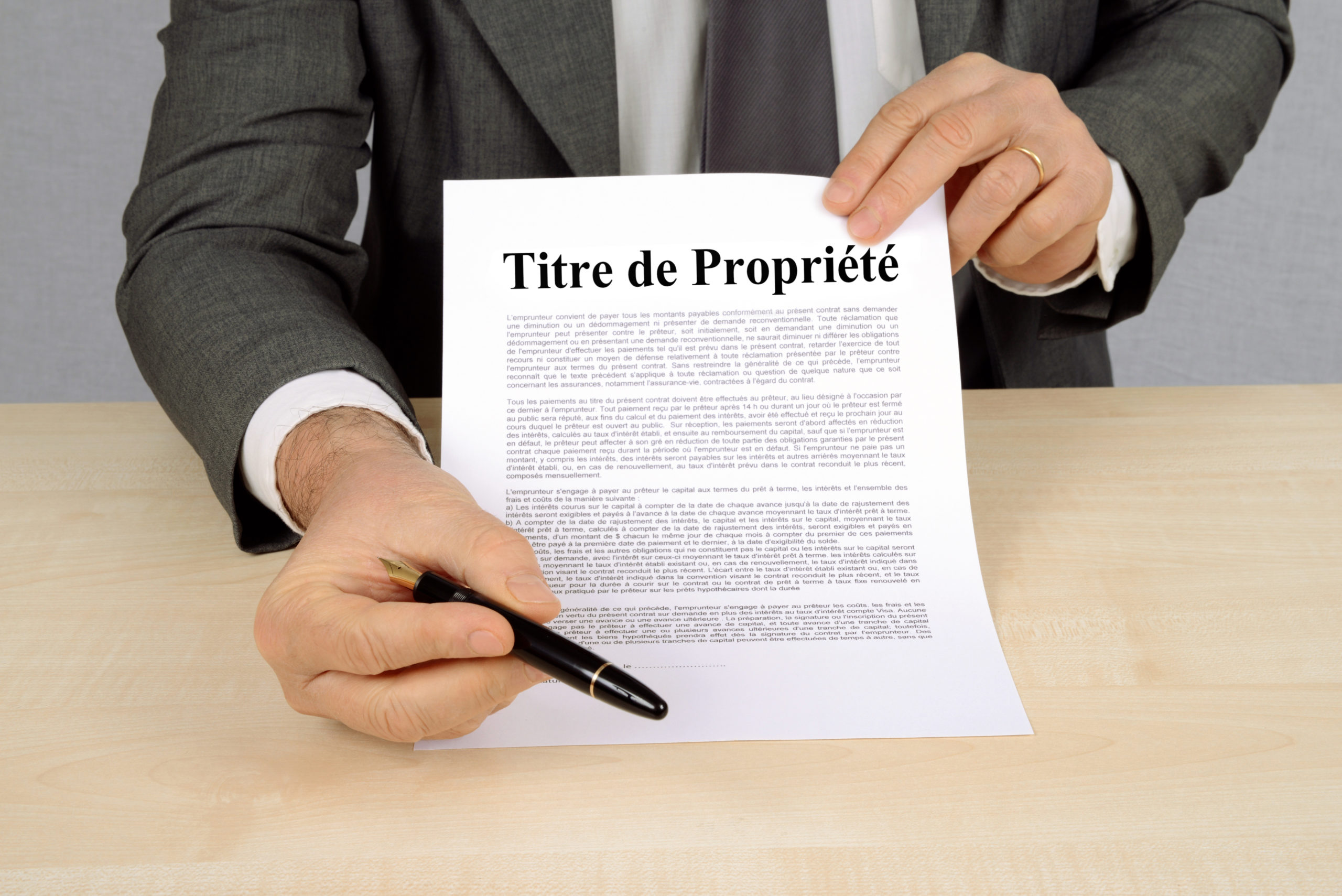
A document of capital importance, the property title confers a legal right to a property and attests to its possession by a natural or legal person. Necessarily in writing, it sets out the owner’s rights to the building but also to the land plot and may be opposed to any contestant.
Sometimes poorly understood, the attributes of the property title are nevertheless essential, and when it is lost, the process to obtain a copy must be carried out as soon as possible. Here is an overview of the essentials to know about this document to be carefully archived.
How does the property title appear?
It is an official and authentic deed, drafted by a notary at the time of the transfer of ownership of a property. This may result from a sale, a gift or a death. If the property is new, the deed delivered at the time of the plot handover serves as the property title.
In all other cases, therefore, it is a notary who will deliver the original document, also called the ‘minute’, and must keep it for 75 years, or 100 years if a minor appears in the deed. Beyond this period, it may be transferred to the Departmental Archives or the National Archives.
Note that the purchaser of a property does not receive their property title on the day of signing the sale deed: the notary will first publish the latter with the Land Registration Service and register it with the tax authorities, which protects against any subsequent opposition to the transaction. An average delay of three months is required for the purchaser to receive the definitive title. A property certificate is nevertheless provided at the signing of the sale deed, allowing proof of the acquisition.

The content of a property title
At minimum, the property title contains enough information to precisely identify the property itself in all its components, its nature and purpose (residential, commercial, factory, etc.), as well as the plot on which it is built.
It includes:
- A precise description of the property,
- The civil status of the various parties carrying out the transaction,
- The name and full contact details of the drafting notary,
- The cadastral references,
- The date of the transaction,
- Its price,
- All the conditions, terms and charges under which the transaction takes place,
- The easements burdening the property,
- The origin of the ownership, in the title itself or in its appendices.
The possession history of the property is recorded for at least the last 30 years, in great detail: beyond the owners’ names, it often includes their age, nationality and even their profession.
The details of the taxation collected during the transaction will also be specified. As for the appendices, they will include notably the various mandatory diagnostics, updated planning documents and any document attesting to the modifications made to the property during previous ownerships.
Finally, note that possession of a property does not always allow us to dispose of it as we wish: all or part of the property may be listed as a historic monument or entered in the supplementary inventory of historic monuments. This constitutes a public utility easement attached to the property and published at the land registry.

What to do in case of loss?
The property title is essential for any procedure related to the property, particularly its resale or the renegotiation of your mortgage for example. If it remains unfound in your archives, you can contact the notary who produced the deed, who keeps a copy as we have seen. This request will, however, incur costs.
Second solution: make a request for a copy of the property title with the Land Registration Service, in person or online. The copy is also paid for, for an amount not exceeding 30 euros in the worst case.
Note that the cost of the request, in either case, does not constitute a sale as such: property titles are classified as ‘non-commercial’. The payment of a sum then corresponds to a contribution towards the costs of unarchiving and copying.
The property title is certainly the most important document a owner possesses, without which they cannot transfer their property to a third party and therefore, convert their ownership into money if they wish.
If you are about to acquire a property, do not hesitate to prepare in advance all the documents the notary will require to prove your status (identity document, at minimum), your means to pay for the property (loan offer or savings proof) and, where applicable, the arrangement planned if you are otherwise selling another property. All these elements will serve to establish the property deed, which you should ensure to archive in a secure place in your home. Keeping a copy made by yourself with a close relative may prove reassuring, even if it is not certified authentic.