Building Your House in 8 Steps!
Want to have your house built? Here is a chronological list of steps to take to see the house of your dreams rise from the ground.
Having your home built offers many advantages: surfaces tailored to your actual needs, the ability to choose materials, location, orientation, and more. The process as a whole is, however, far more complex – and longer – than simply purchasing an existing property. Be careful not to lose your way in the steps you have undertaken and ensure you plan the construction properly to avoid any nasty surprises. Here is a chronological list of steps to take to soon and serenely move into the house of your dreams.
#1 Defining Your Budget
This is arguably the most important step: it is essential to ensure that your budget will allow you to see your project through to the end. While some prospective homeowners decide to proceed in stages, it is common for construction to be halted due to a lack of funds to continue.
Before starting any process, therefore, ensure that your savings and borrowing capacity will be able to cover:
- the purchase of the desired plot,
- its servicing,
- the construction itself,
- the finishing works,
- the furnishings,
- the decor.
All of these items must be taken into account to avoid possible disappointment, especially as a shortfall could place you in a difficult position if you have sold your previous property or are temporarily staying with relatives.
#2 Buying the Right Plot
This is not about snapping up the first plot that comes along, whose location and size interests you. Multiple factors need to be taken into account so that the plot suits your immediate project, and is also suitable for possible future modifications and resale.
As such, ensure you build in a sufficiently sought-after – and up-and-coming – area so that your house retains reasonable value. Locate yourself near the sought-after amenities: schools, leisure facilities, transport and other public services. Moving away from the town can be a good idea, however be careful not to end up isolated.
In the case of a purchase within a development, you will have the assurance that the plot is serviced. If not, you will need to verify its buildability and the cost of servicing it. The local planning rules should also be consulted with the utmost care to define your scope for action.
Finally, the nature of the soil and natural risks recorded nearby will indicate whether it is advisable to build in that location.
#3 Choosing a Building Company
You can here opt to use an architect, a specialised project manager, or supervise the works yourself. In all cases, the companies working on the site should be selected carefully, to ensure the quality of their work and the proper coordination of their interventions. For example, a plasterer present before the plumbing and electrical work could well cause you unpleasant surprises.
For security, you can proceed like two-thirds of the French: use a house builder, who will carry out the entire construction up to the finishing stage and will guarantee the timescales, the quality of the site and the overall cost. Their work is governed in this sense by a contract for the construction of an individual house (CCMI) defined by the 1990 Act.
To choose the right company, you can rely on its reputation and the reviews posted about it online. The certifications it has obtained also constitute a significant indicator, as they assure you of compliance with standards in terms of safety, but also energy consumption. The NF Habitat standard is, in this regard, the most rigorous currently available.
#4 Establishing the Plans
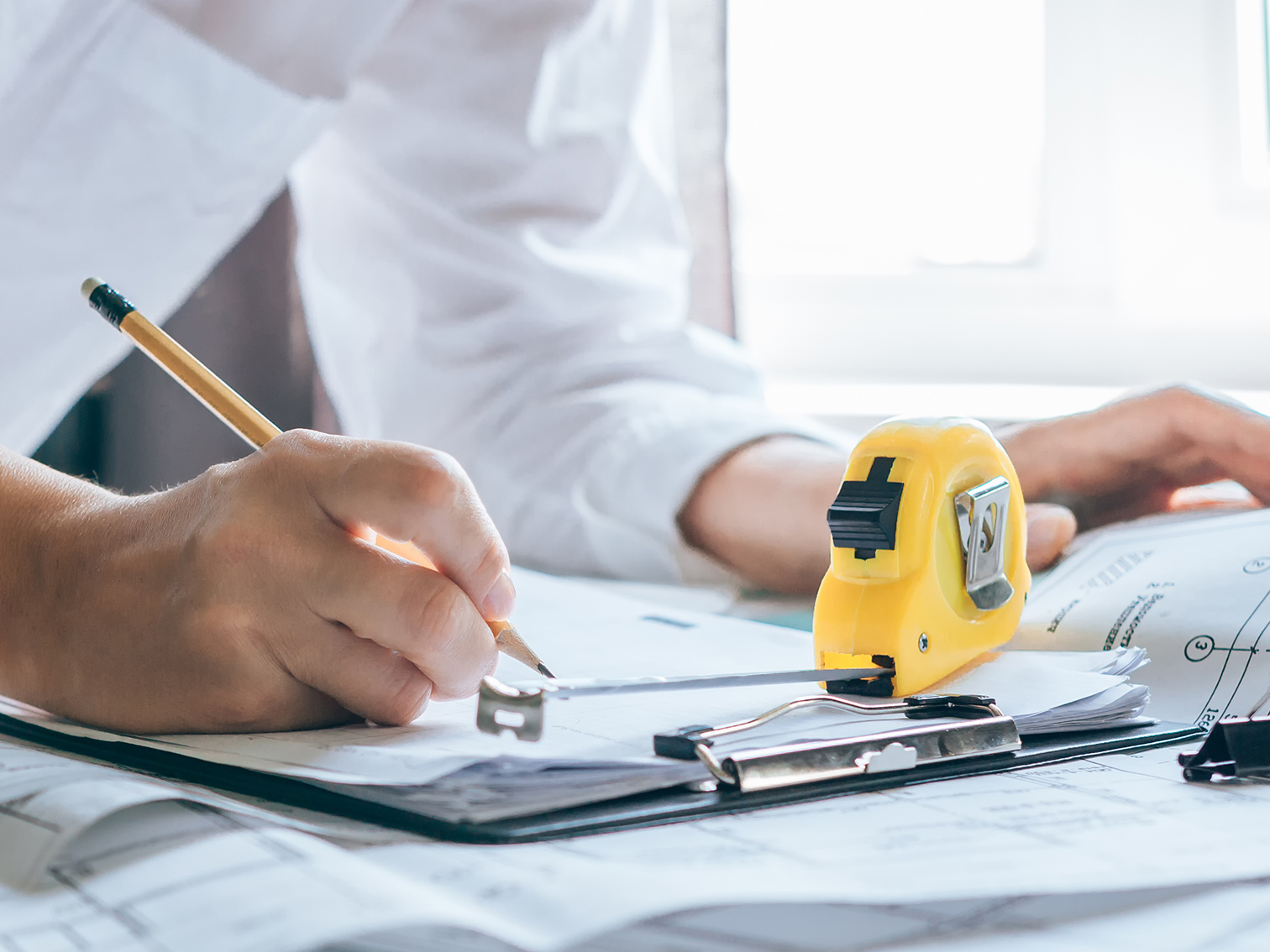
Depending on your method of operation, you will choose a house whose plans already exist in the builder’s catalogue, or have them custom-made by an architect. For greater ease and cost reduction, do check that no house in the catalogue matches your project before embarking on the creation of expensive new plans. You should also be aware that some builders can make modifications to their existing models upon request.
In all cases, you will need to ensure that the plans are applicable to the chosen plot, depending on the nature of the soil and the configuration of the subsurface.
#5 Signing the Contract with the Building Company or Companies
Vigilance is essential at this point, of course. The documents presented to you must be read with extreme care, including the small print, to verify that all your requests are taken into account, from the foundations to the roof tiles, including the quality of the joinery.
Be aware that the aforementioned 1990 Act gives you, in addition to the guarantee of an overall price and agreed timescales, the possibility of a refund of deposits and a 10-day withdrawal period. Payment is made in several instalments and occurs at the end of key stages: for example, 40% upon completion of the walls.
The builder is required to deliver a house meeting all current standards, and you may take action against them for any defects. The ten-year guarantee applies to all deliverable elements, and they cannot under any circumstances contract otherwise.
#6 Obtaining Planning Permission
Once the project is well and truly finalised, you will need to obtain the holy grail: planning permission, granted by the local council where the construction will take place. Several possibilities: you use a builder, they will take care of everything. You are assisted by an architect, they can take charge of it. Otherwise, you will need to compile the application and submit it to the council.
The timeframe for obtaining permission is highly variable, from 15 days to 3 months, particularly if the plot is located in a protected area. If a historic monument graces the neighbourhood, you will also likely need to seek the advice of a Buildings Architect, who may influence the materials used or their colour, for example.
#7 Securing the Financing
This is the time to return to your bank with the contract duly signed with the builder, to release your savings and/or apply for an overall loan for the plot purchase and construction. The funds can be released in several instalments as needed.
Do not forget to check for any possible funding assistance, such as a zero-rate loan. Mortgage insurance can also prove costly. However, the Hamon Act allows you to change it freely within twelve months of signing the loan offer.
#8 Becoming a Property Owner!
This final step can be broken down into two distinct parts: monitoring the rise of your future home, and actually taking possession of it.
Be aware that a site visit is mandatory with each payment request: you note the progress and pay for the works carried out accordingly. The site is not freely accessible to you, for obvious safety reasons. A site meeting must be organised with the builder, and you will be prohibited from making any requests to the workers outside of the official meeting.
Upon delivery of the house, you will need to sign a completion certificate, which will mark the legal transfer of the construction to your responsibility. A condition report must be carried out, following which you may make reservations about one element or another. 5% of the price may be retained, giving you time to bring in an expert to resolve any doubts.
You are now ready to move in and add your personal touch to the decor. Depending on the extent of the builder’s involvement, this may mean hanging pictures, or carrying out all of the interior painting. Likewise, fixtures such as the kitchen may be included, or not. One thing is certain: you are now at home!