Saumur Castle, a museum of art and war
It is a castle on the banks of the Loire, which illuminates the town it overlooks with its immaculate whiteness and the appearance of its towers topped with slate roofs. For more than ten centuries the site has been fortified by successive lords who saw in the panorama offered over Maine-et-Loire an obvious strategic position. Listed as a UNESCO World Heritage Site as well as a historic monument, Saumur remains a wonder to be admired without reservation, with the highlight of unique artistic collections conserved in the museum housed there. Focus on Saumur Castle, its attractions and its turbulent evolution.
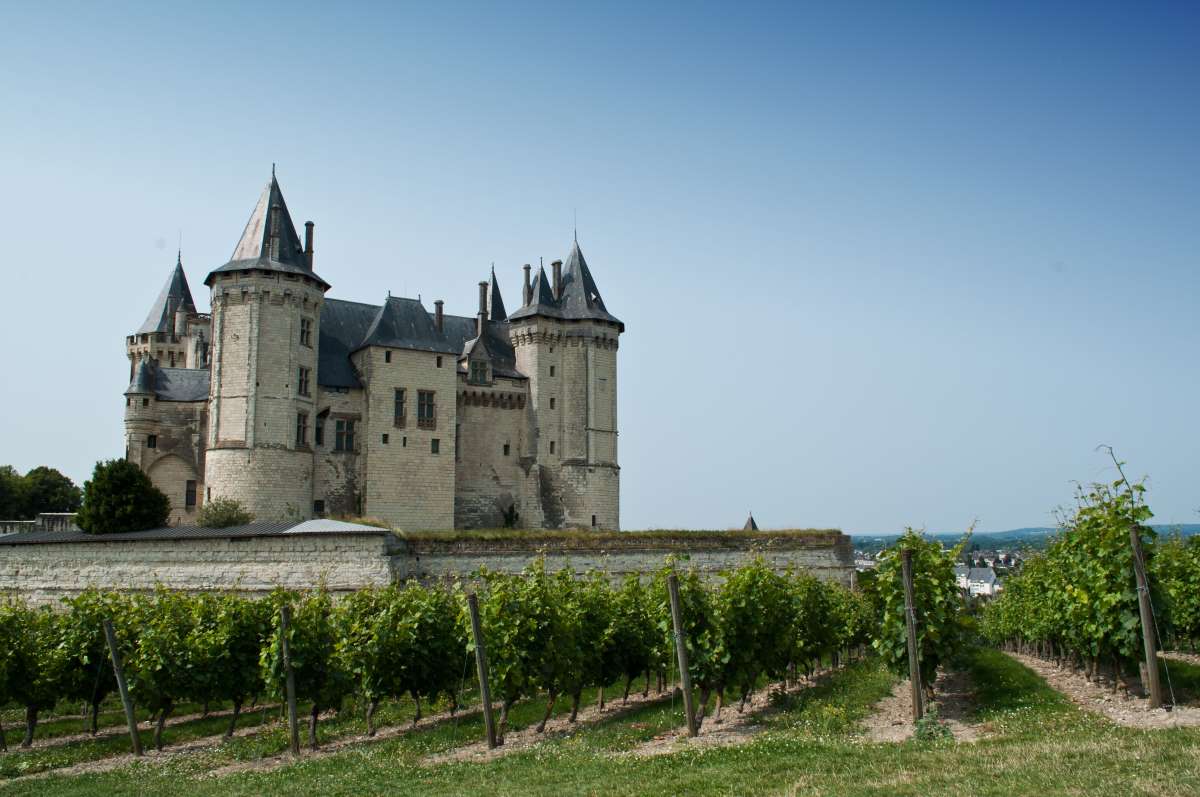
It is a castle on the banks of the Loire, which illuminates the town it overlooks with its immaculate whiteness and the appearance of its towers topped with slate roofs. For more than ten centuries the site has been fortified by successive lords who saw in the panorama offered over the Maine-et-Loire, an obvious strategic position. Listed as UNESCO World Heritage as well as a historic monument, Saumur remains a wonder to be admired without reservation, with the highlight of unique artistic collections conserved in the museum housed there. Focus on Saumur Castle, its attractions and its turbulent evolution.
A constant militarisation until the end of the 19th century
The site’s second military life quickly came into being, with the construction of a keep and buttresses interspersed with four towers, which constitute the base of the castle we know today. A succession of modifications were then carried out over time. King Saint-Louis had the fortress raised in 1227, while Louis I of Anjou replaced the old towers with new octagonal ones. The site then became a place of pleasure and René d’Anjou worked to improve its comfort. However, it was subsequently more or less abandoned for over 100 years.
The handing over of the town and castle to the Protestant party in 1589 allowed Philippe Duplessis-Mornay, an advisor to Henri IV, to settle there. He carried out numerous restorations and had the current fortifications raised. If Louis XIV and Mazarin still used the fortress, it nevertheless experienced another period of abandonment. It would not be until 1810 that it became a prison under Napoleon’s initiative. Just four years later, Louis XVIII made it an arms depot whose regular explosions annoyed the people of Saumur.
In 1889, all military use was abandoned. The Town of Saumur bought the fortress from the State in 1906 and installed its municipal museum there. It subsequently benefited from several restorations, notably after the Second World War and more recently, around the year 2000.
A warlike yet elegant castle
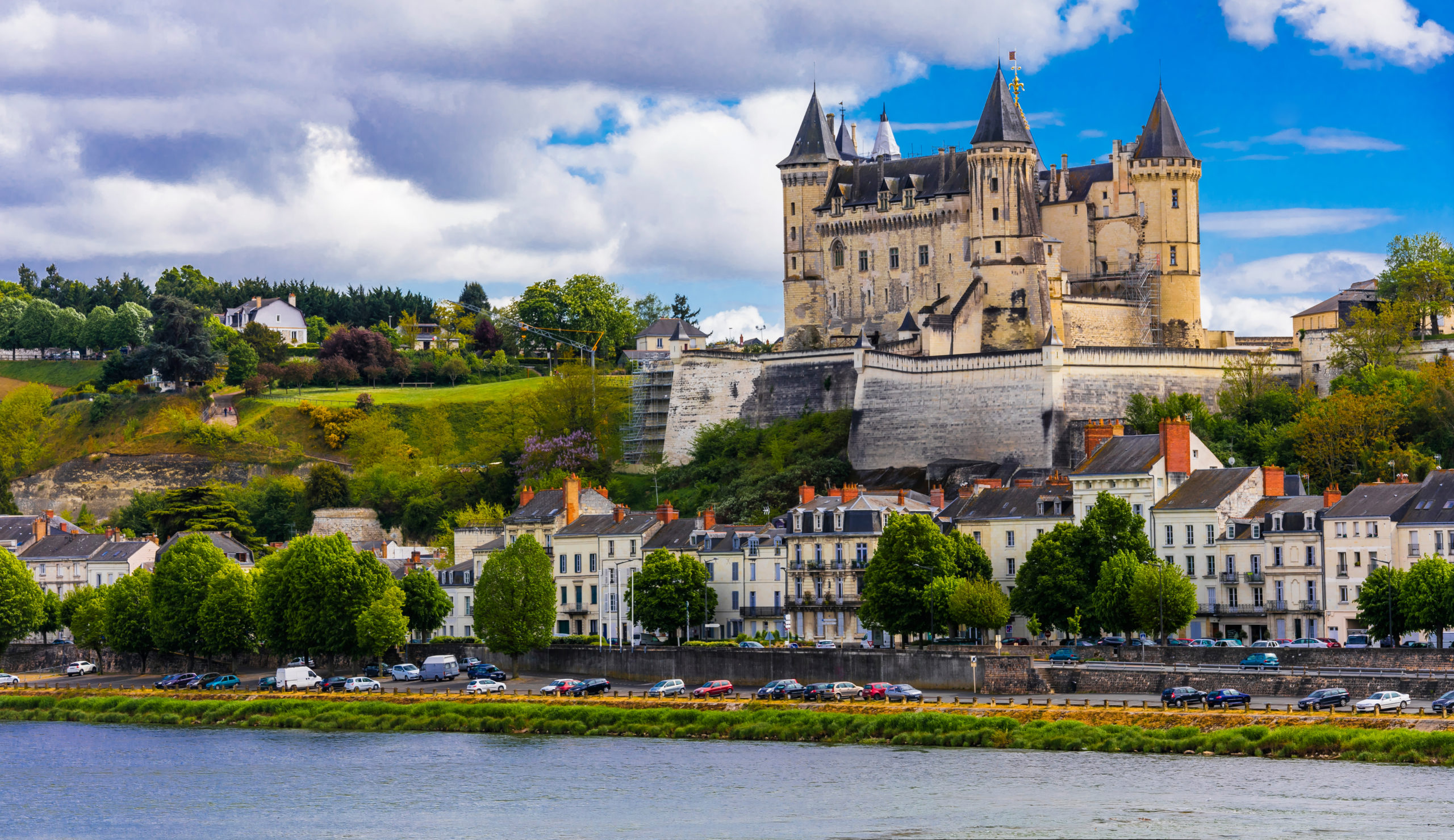
Like Rome, Saumur was not built in a day. Originally, the “Mur de Boile” of the 10th century delineated with its kilometre of length a space of approximately 6 hectares. Several other more restricted enclosures then came into being until the 16th century. The first tower erected did not retain its initial appearance for long, while fill transformed its ground floor into a basement. This was only the beginning of modifications that accentuated in turn the defences of the site, and its comfort. A Romanesque tower in the 12th century, a Roman keep in the following century, then four massive round towers covered with slate and linked by curtain walls, contributed to giving it the admirable aspect that can be contemplated today, of a rather Renaissance style.
If the owners always wished to make it a comtal castle worthy of France, it was above all the climate of war against the English that pushed to reinforce the walls and erect towers. In addition to the multiplication of enclosures, the portal des Champs was raised, the low windows were fitted with bars and the keep’s entrance was protected by a drawbridge. In parallel, prestige remained an objective: statues were placed, an honour staircase leading to the great hall was installed and numerous ornaments such as belvederes must have existed, of which no trace remains today.
Saumur Castle today
If your steps lead you to Saumur, two wonders await you: the viewpoint, and rich collections displayed in the museum. Decorative arts, fine arts, ethnology and natural sciences are represented there, with the highlight of one of the finest collections of ceramics in the country and unique tapestries. The “Horse” collection on the second floor brings together old pieces of horse harnassing, veterinary or farriery works, as well as equine prints.
The architectural ensemble of the castle is also worth a look and tells the fascinating story of the regional past. Of the Abbey of Saint-Florent, which was one of the most important in western France until the 16th century, only a monument known as the “abbatial” remains, a vestige of the old abbey church. The defensive towers and their arrow slits confer a majestic air on the building, reinforcing the impression of quiet strength of a high-perched fortress, which nevertheless does not look down on its visitors.
Regular entertainment is offered for children, and families are invited to picnic in the castle park freely, notably in summer period during the weekly evenings offering an open-air cinema screening. Set off to conquer Saumur Castle!