Neighbourhood disputes: an overview of the rules
Anyone may have suffered from a neighbour who does not share the same views on various aspects of living together.

Just as with one’s family, one does not always choose one’s neighbours. Anyone may have suffered from a neighbour who does not share the same views on various aspects of living together. Disagreements that may lead to a more or less significant dispute or cause inconvenience. Before embarking on your personal vendetta, let us review the situations that the law considers to be neighbourhood disputes and which may give you legitimate cause for complaint.
The concept of neighbourhood dispute
The first thing to know is that neighbourhood dispute is defined by no law. When called upon, the courts instead rely on article 544 of the Civil Code, which states that “ownership is the right to enjoy and dispose of things in the most absolute manner, provided that one does not make use of them prohibited by laws or regulations”.
The Court of Cassation has since established that “no one must cause another abnormal neighbourhood disturbance or one exceeding the normal inconveniences of neighbourhood” (CC, Civil Chamber 2, 19 November 1986, 84-16.379.).
The peaceful enjoyment of your home is therefore a right of which no one may deprive you. However, proximity to others necessitates a degree of tolerance regarding the needs and choices made by others. The question is to determine from what point an act or situation becomes sufficiently harmful to constitute a public order disturbance that should be stopped.
Normal vs abnormal disturbances
For each case submitted to the courts, it is necessary to distinguish whether the nuisance suffered truly constitutes an abnormal disturbance, or simply insufficient tolerance on the part of the complainant. For example, mowing one’s lawn on weekdays and during daytime hours is entirely permitted and cannot form the basis for a complaint: this is a normal neighbourhood disturbance, which may be perceived as a nuisance by neighbours. A fair balance must be found between the necessity of mowing and the peace to which neighbours are entitled.
Another disturbance frequently raised before the courts is the reduction of sunlight on a plot due to a neighbour’s overgrowth or the erection of a new building. Again, each case will be examined independently to determine whether the shading genuinely prevents the neighbour from enjoying sunlight in their garden. For the rules cannot be absolute: even when planted far from the boundary between properties, a tree may cause prejudice to neighbours, which will be condemned by the competent jurisdiction.
Preventive rules concerning neighbourhood disturbance
In order to minimise court proceedings, the Civil Code and case law – or failing that, local authorities directly – have established rules for living together.
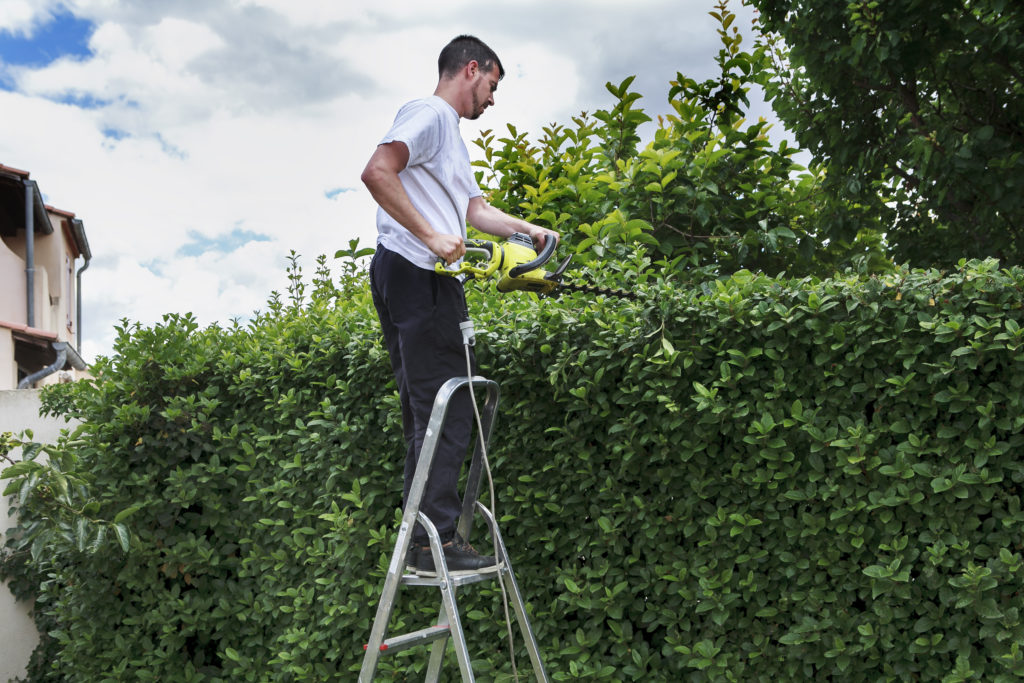
A schedule has been set for noise-generating activities – after 10pm in the evening and Sunday afternoon are generally prohibited. Furthermore, article 671 of the Civil Code states that plantings must observe a distance from the neighbouring fence, varying according to the type of planting from 50 centimetres to 2 metres, and will also depend on the local by-laws. Owners of vegetation are also invited under article 673 to trim branches so as not to allow them to encroach on the neighbouring plot.
For all other more specific cases, such as the possession of a particular animal, the practice of a troublesome activity, or daily life in the flat above, it will be for the courts to decide on a case-by-case basis whether the disturbance is abnormal or not. One’s freedom ends where that of others begins, but one cannot prevent neighbours from living normally even if it impacts one’s own peace.
In the majority of cases, it is preferable to proceed with conciliation rather than court action, which is costly and often lengthy. Please note that even the rules cited remain subject to the judge’s assessment, who will evaluate whether the nuisance is truly prejudicial to the complainant. To return to the example of the shading tree, this cannot be felled if the neighbour nonetheless has sufficient sunny area on their land. Common sense always prevails in matters of neighbourhood disturbance, so ensure you protect yourself before complaining!