Property purchase: choose new or old?
Finding the ideal home is not an end in itself without a journey filled with questions. Financing, location and required floor area, but also the type of property, brand new or already existing. Major differences play in favour of one or the other of the options,…
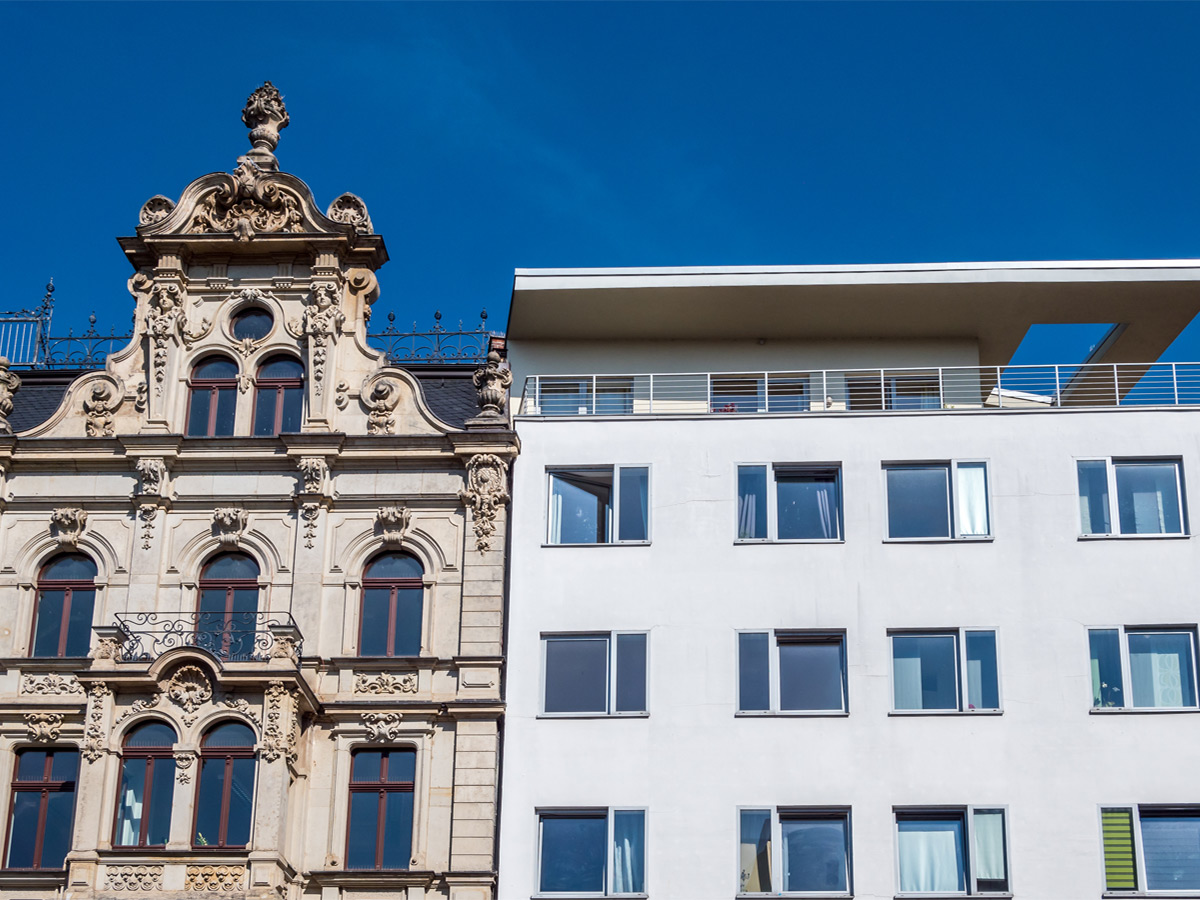
Finding the ideal home is not an end in itself without a journey filled with questions. Financing, location and required floor area, but also the type of property, brand new or already existing. Major differences play in favour of one or the other of the options, and the choice should be guided by the points most important to each buyer according to their situation. Let us list the elements on which the decision can be based.
The delivery timeframe: advantage to old
Purchasing new is not to be considered for buyers in a hurry. Off-plan, it will take at least a year before moving in. If the building is already under construction, the timeframe will largely exceed 6 months nonetheless.
In cases where the buyer is participating in a development programme enabling them to reduce the purchase price through economies of scale achieved by the developer, positioning as early as possible proves beneficial: among the housing units to be built, some benefit from greater calm, better orientation, larger land area, etc. Quite simply, the best-served will wait more than a year after signing the sale contract.
In old property however, no surprise: unless negotiated otherwise, the timeframe is 3 months between signing the preliminary contract and handing over the keys. The decision between the two options will largely depend on the buyer’s life circumstances, who may wish to purchase quickly if they are staying with someone else or expecting a happy event for example.
The price: old has the edge, new holds its own
The advertised price of a new property may raise eyebrows: it will generally be positioned 20 to 40% more expensive than an old property of the same type and floor area. Over the odds? Not necessarily, as new property offers both advantages and financial gains that seriously narrow the gap.
Yes, for tighter budgets, purchasing old will prove less expensive and the choice will quickly become obvious. For larger budgets however, a closer look is warranted. A new purchase allows for reduced notary fees (around 4%), an argument to which is added an exemption from council tax for 2 years.
Finally, a new property will offer latest-generation thermal installation, (generally) more economical than that of an old dwelling. Furthermore, no renovation or works costs will be required for a long period.
The balance needs to be studied on a case-by-case basis, but it transpires that the price difference is often recoverable in the years following acquisition, through measurable savings.
The condition of the property: new is unbeatable
This seems obvious, but nonetheless deserves to be highlighted. When purchasing old, the property may suffer from the wear of its years of existence whereas new property will present itself in its best light.
This rule may however suffer exceptions, if the new property turns out to have defects or faults that could spoil the joy of moving in. The major difference is the existence of the ten-year structural guarantee, which will allow the buyer of new property to demand the restoration to perfect condition of all structural and secondary works elements for a full decade. Old property does not enjoy the same advantage, with the buyer having to settle for a purchase “as is”. While certain hidden defects may give rise to repair, it is better to be able to judge the condition of the property and its main (and expensive if replacement is to be considered) components before signing the preliminary contract!
Add to this that old property may, in its layout, no longer meet modern expectations. Works are then to be planned, sources of worry and significant expenditure – which may however form part of a capital appreciation or interest strategy, quite simply.
Location: old offers more possibilities
If finding the dream property means acquisition in a specific district or even street, the buyer would do well to turn to old property! Indeed, the supply is ten times greater than for new-build housing, with the possibility of getting closer to the preferred sector as a result.
New developments driven by developers often constitute emerging districts, far from small shops and other amenities, which are not the kind to dream about due to their location. If it is the acquisition of a building plot, once again it is the market supply that will decide for the buyer. A good point for old on this criterion!
Result: there is no good or bad situation
Other criteria may also come into play, such as the cost of living within the property. Old property may thus cost more in terms of energy bills as it does not meet recent standards, but will prove easier to make profitable – as it is cheaper initially – if the purpose of acquisition is a buy-to-let investment particularly. In all cases, the owner remains responsible for replacing equipment (boiler and hot water cylinder) representing a potentially significant investment that must be considered from the time of purchase: new offers more years of peace of mind. The reasoning is the same for roofing and joinery.
New property’s fiscal advantages may be challenged, aside from the lower price of old property, by fiscal benefits granted to investors. The purpose of the acquisition will enable arbitration, depending on whether the buyer prioritises personal comfort or the profitability of the purchase.
Finally, property remains also a matter of taste. Everyone will not be won over by a new build, judged cold and soulless by some while others will see a cocoon to dress to their own image. Old property and its charm, expressed sometimes by beams and fireplaces, sometimes by the quirky nature of the construction, still has its followers. It is the eternal battle of passion against reason.
Both new and old property can prove interesting to purchase, financially or for occupation comfort: it is truly necessary to build a project according to each person’s aspirations and requirements. Your move!