Le Régent, diamond of excess
Among the jewels offered to mankind by nature, the white diamond named Le Régent is undoubtedly one of the most fabulous.
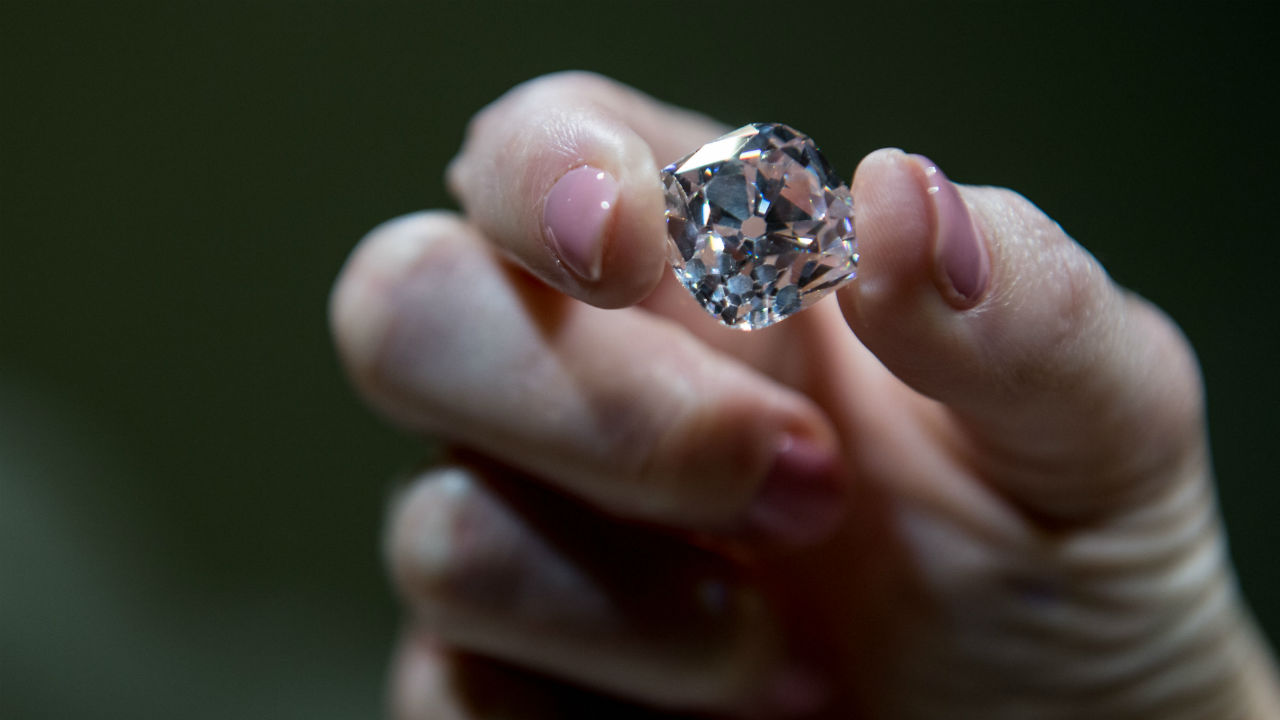
Among the jewels offered to mankind by nature, the white diamond named Le Régent is undoubtedly one of the most fabulous. A candidate for the record of the most imposing diamond, it was the object of numerous covetousness by French kings in particular, before ending its journey at the Louvre Museum where it spends (probably) happy days. A look back at the epic of this giant of the mineral kingdom.
A long journey to France
Over three centuries have passed since a slave laid hands, in 1698 in India, on an extraordinary gemstone of 426 carats (just over 80 grams) which proved to be the largest white diamond in existence at the time. Having concealed it under a bandage, the slave attempted according to the legend to use it to buy his freedom from a sailor who instead killed him and sold the object to British Governor Thomas Pitt.
It therefore naturally reached England, where the London jeweller Harris cut it in 1704, into a magnificent brilliant of 140.5 carats nicknamed the Pitt during its official presentations in Europe. The fragments obtained during the transformation were for their part sold to Tsar Peter the Great and took the road to Russia.
After a first refusal to purchase by Louis XIV, one had to wait until 1771 for the diamond to become property of France, when the Regent Philippe d’Orléans, on the advice of Saint-Simon, acquired it and gave it its definitive nickname. The transaction cost the crown the sum of 650,000 livres, to acquire what from then on became an emblem of French royalty.
Prestigious owners
Louis XV first wore Le Régent on his headdress during a visit to the Turkish embassy, before reaching majority and setting it on his crown on the occasion of his coronation in 1722. He kept the habit of wearing it regularly on his hat throughout his reign.
Thereafter, Louis XVI – and Marie-Antoinette according to stories – liked to adorn themselves with the diamond on various occasions, and the monarch, grandson of Louis XV, wore it proudly on the occasion of his coronation, but also of the first session of the Estates General.
The Revolution brought new adventures to the life of Le Régent: first exhibited for all to see in 1791 at the Garde-Meuble national, it inevitably ended up being stolen in 1792 (along with the Bleu de France among others) then found again in 1793 hidden in the framework of a hotel on Avenue Montaigne. The Directory and the Consulate pawned it on several occasions in the following years, until Napoleon got his hands on it in 1801.
First set on his sword as First Consul by the three goldsmiths Odiot, Boutet and Nitot, it followed the evolution of its owner and was integrated in 1812 into the sword of Emperor Napoleon I.
New upheaval at the defeat of the First Empire, when Marie-Louise of Austria took the precious diamond with her on 29 March 1814. Fortunately for our country, her father Emperor Francis I of Austria decided to return this symbol to France a few days later. It then found its place alongside the royalty under the Restoration, on the crowns of Louis XVIII and Charles X. Empress Eugénie, for her part, displayed it at balls at the Tuileries, set on the Greek-style band of her crown.
Towards the Louvre Museum
The auction of the crown jewels in 1887 almost offered for sale Le Régent among other wonders purchased for the most part by the jewellers Boucheron and Bapst or by the American Tiffany & Co who generally recovered the stones to the detriment of the parures. Fortunately our national diamond escaped it and kept its place alongside the Republic.
During the Second World War, it was hidden in the plaster of one of the chimneys of Chambord Castle and once again avoided being taken far from France by crossing the Rhine.
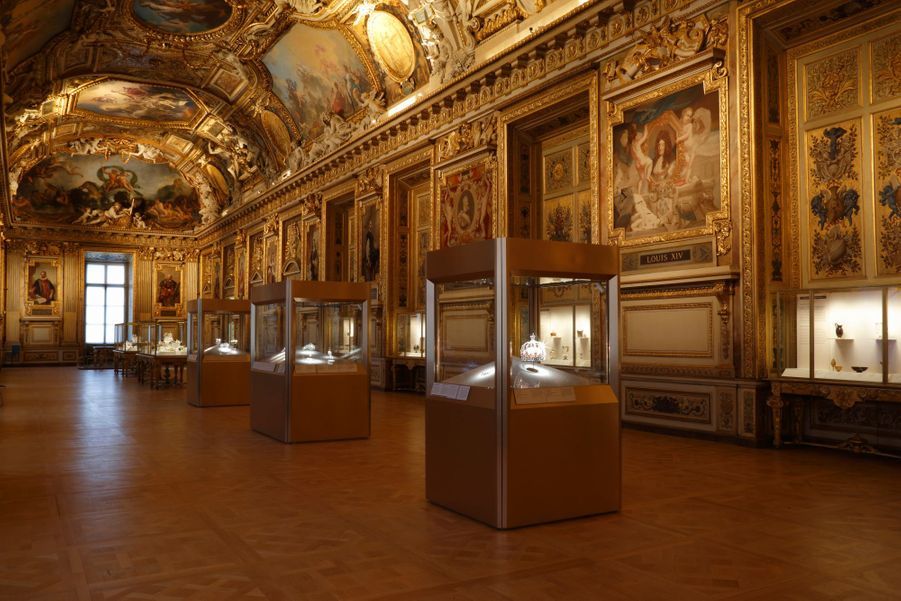
Finally, as a restful finality after so many emotions certainly felt by its owners if not by the diamond, Le Régent was entrusted to the Louvre Museum, where it rests quietly in the Apollo Gallery. You can find it there under inventory number MV 1017.
Formidable journey that of Le Régent, which will remain forever linked to the History of France. Its purity and the quality of the cutting work that gave it life make it certainly one of the most beautiful stones on the planet. To be admired without moderation!
Read also: “A magical weekend in Carcassonne (and surroundings)!”