Le Déjeuner sur l'herbe, a work to discover at the Musée d'Orsay
Completed in 1863 thanks to the inspiration of painter Edouard Manet, Le Déjeuner sur l'herbe is today on display at the Musée d'Orsay.
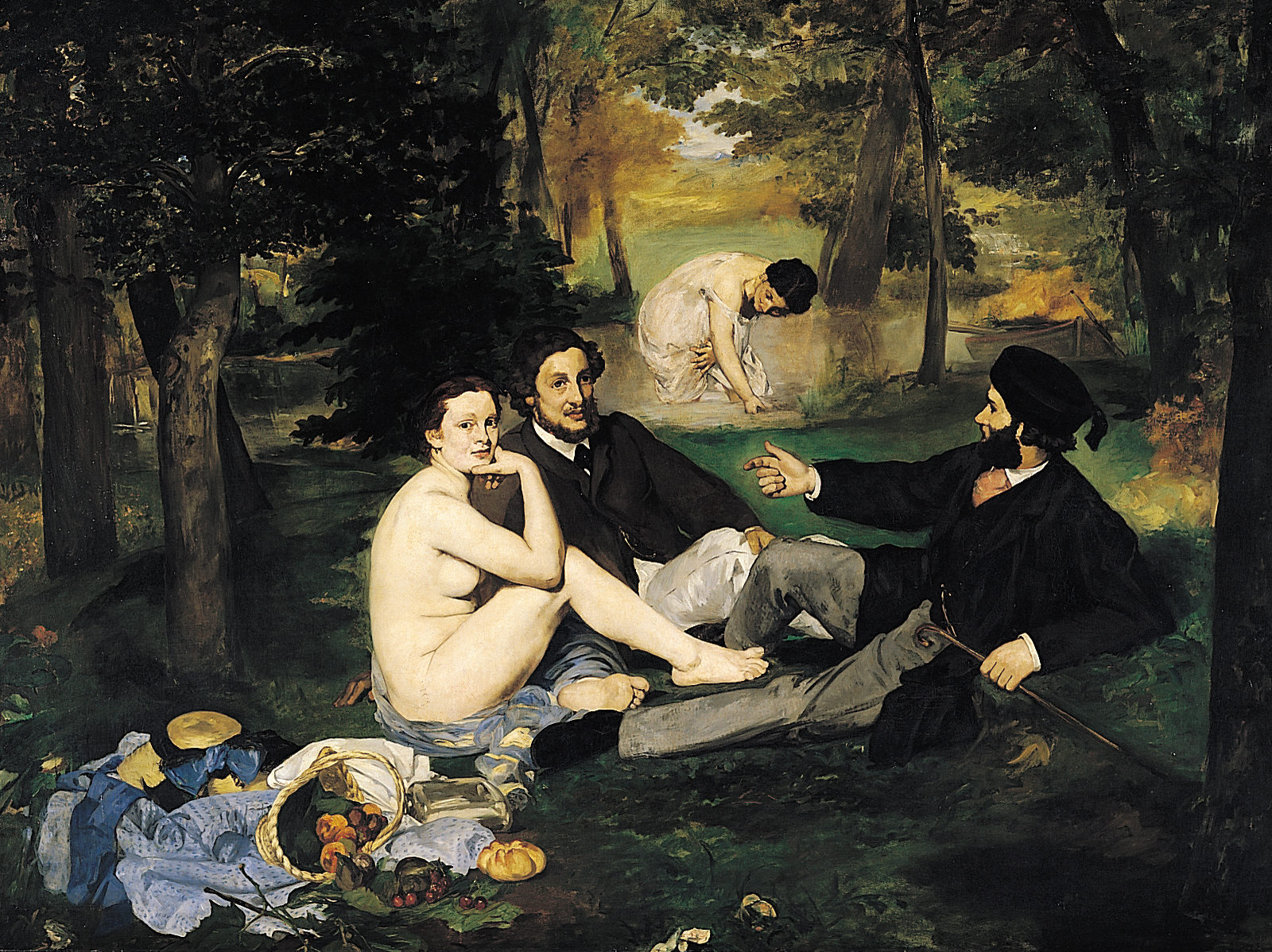
Completed in 1863 thanks to the inspiration of painter Edouard Manet, Le Déjeuner sur l’herbe is today on display at the Musée d’Orsay. Controversial following its first exhibitions, this work initially called Le Bain then La Partie Carrée is remarkable for the quality of its execution and contrasts with the tradition of the period.
A painting that overturns established codes
At first glance, Le Déjeuner sur l’herbe represents a joyful picnic scene in a woodland clearing. Two fully clothed men accompany a naked woman who looks at the viewer, while another woman bathes in the lake in the background. The victuals are visible in the foreground, arranged or overturned on scattered clothing. Studied by a painter, the work brings together a still life, portraits and a landscape.
With his desire for rupture, Manet references the classics of his masters but transgresses all the rules: perspectives not adhered to, crude contrasts preferred to careful gradations, a barely sketched landscape. The painter seeks to caricature the bourgeois sexuality of his era concealed beneath affected romanticism.
Exhibited at the Salon des refusés in May 1863, the canvas created an aesthetic and moral scandal. The overturned basket appears as a symbol of lust and the transition from allegory to erotism.
The brutal reality of the woman asserting her nakedness coupled with the break with the painting codes of the period were decried by critics and the work was withdrawn from the Salon.
Claude Manet, a progressive artist
A precursor to modern painting which he freed from academicism – the taste for historical or oriental representations – Claude Manet was a painter born in 1832 in Paris, where he died in 1883. While he drew closer to impressionism through his chosen themes, those who consider him one of the fathers of this movement do so incorrectly: he distinguishes himself through his concern for realism and his refusal to use light treatment techniques.
Manet was rejected from official exhibitions following the scandal surrounding his paintings Lola de Valence, La Femme veuve, Combat de taureau, Le Déjeuner sur l’herbe and Olympia. For the latter, he was defended against his detractors by Émile Zola whose portrait he painted. He counted impressionist artists among his friends, notably Claude Monet, Auguste Renoir and Berthe Morisot. Through contact with them, he abandoned studio painting for painting en plein air in Argenteuil and Gennevilliers.
Still lifes, previously mainly decorative, owe to Manet their gaining in nobility. They are adorned with dissonant colours, as evidenced by his work L’asperge. The painter also produced many portraits of men and women. His death at 51 from syphilis and gangrene left more than 400 orphaned canvases.
The Musée d’Orsay: a must-see in Paris
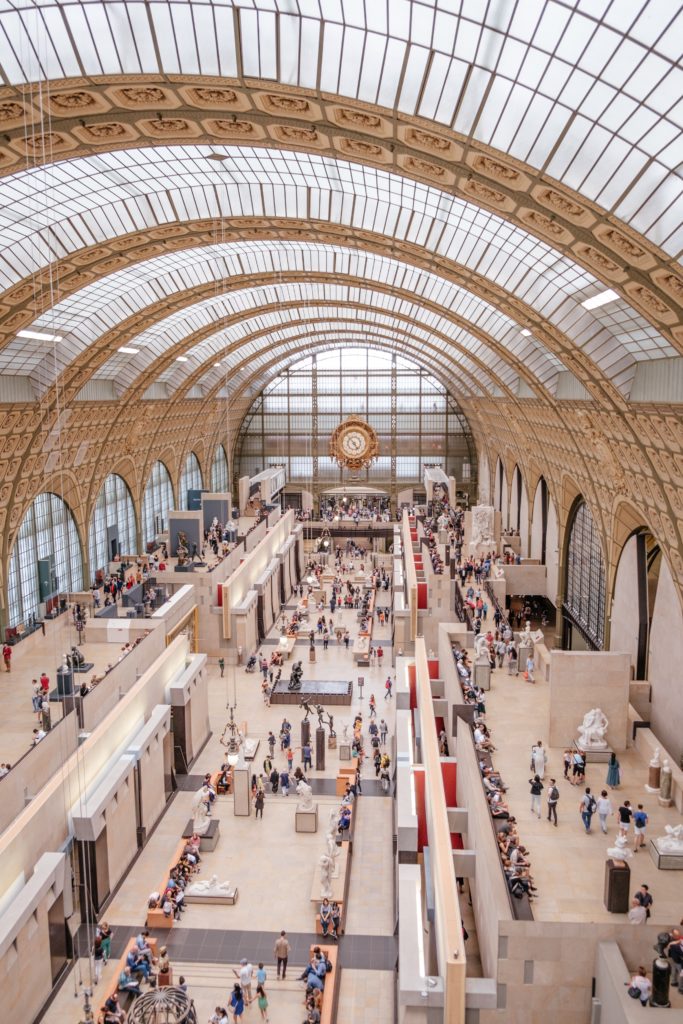
A few words about this Parisian museum which houses, alongside Le Déjeuner sur l’herbe, a collection presenting Western art between 1848 and 1914 in all its diversity. Painting, sculpture, graphic arts, decorative arts, architecture and photography are brought together across some 57,400 m² to form one of the largest European museums dealing with this period.
Opened in 1986 on the initiative of Valéry Giscard d’Estaing, it occupies the former Orsay station built by Victor Laloux between 1898 and 1900 on the site of the Orsay palace constructed in 1810 but burned during the Paris Commune of 1871.
Among the painting collections, we can note the presence of 1,100 impressionist and post-impressionist canvases. Notable sculptures are also presented, such as Pénélope endormie by Jules Cavelier or La Petite Danseuse de quatorze ans by Edgar Degas, not to mention those of Rodin or Camille Claudel. Finally, let us cite the photography collection which numbers more than 44,000 works. It is moreover the Musée d’Orsay that inaugurated the presence of this artistic medium in a museum.
Claude Manet marked his era, both through his vision of painting and the new ideas he brought forward, however disturbing they may have seemed at first glance. The Musée d’Orsay today houses 39 paintings and 12 pastels by this exceptional artist. Le Déjeuner sur l’herbe remains a symbol of his work, to be admired whenever possible!