Château de Vaux-le-Vicomte: a tourist wonder near Paris
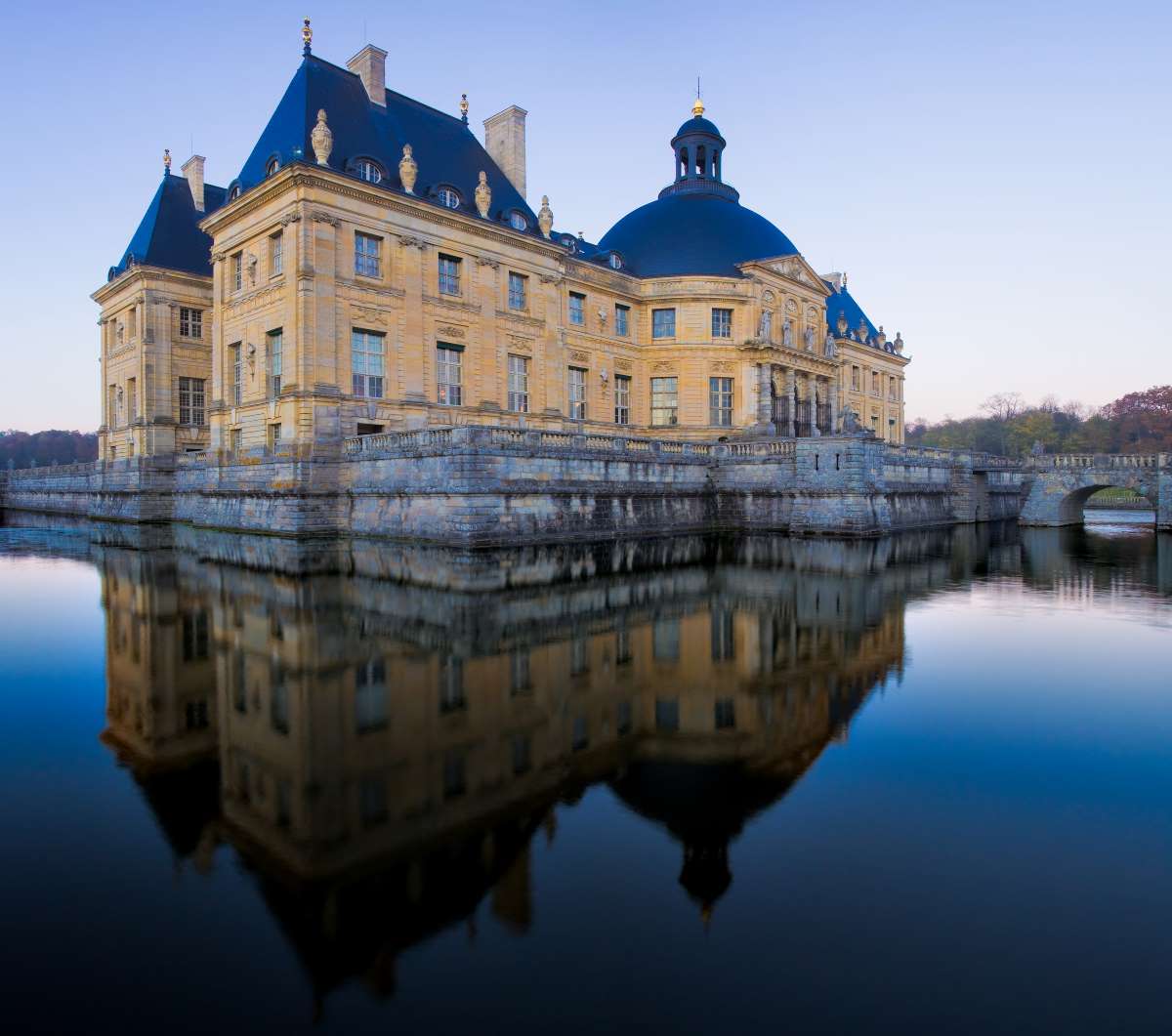
In Seine-et-Marne, less than 50 kilometres from the capital, you will find a castle whose certain features are capable of rival Versailles. And for good reason! The architecture of Château de Vaux-le-Vicomte served as a model for Versailles, whose construction took place several years later. A venue for festivities, its halls welcomed during their glorious days the most sumptuous and sought-after evenings of the kingdom, to the point that Jean de la Fontaine and Madeleine de Scudéry evoke them in their writings. Looking back at the turbulent history of Vaux-le-Vicomte, a unique residence to be admired without reservation should the opportunity arise.
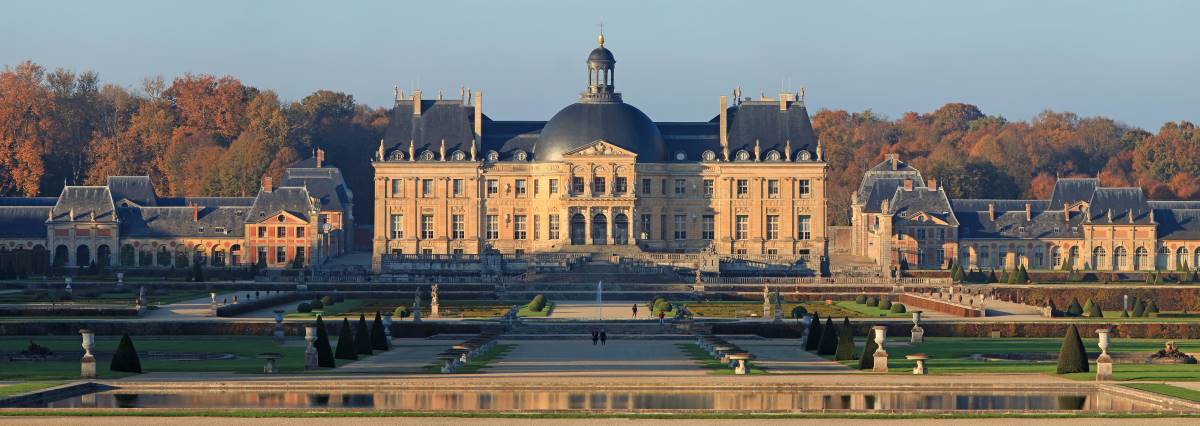
In Seine-et-Marne, less than 50 kilometres from the capital, you will find a castle whose certain features are capable of rival Versailles. And for good reason! The architecture of Château de Vaux-le-Vicomte served as a model for Versailles, whose construction took place a few years later. A venue for festivities, its halls welcomed during their glorious days the most sumptuous and sought-after evenings of the kingdom, to the point that Jean de la Fontaine and Madeleine de Scudéry evoke them in their writings. Looking back at the turbulent history of Vaux-le-Vicomte, a unique residence to be admired without reservation should the opportunity arise.
A castle born from the greatest talents of the era
The Superintendent of Finances for Louis XIV, Nicolas Fouquet, decided in 1656 to have built on his lands at Maincy near Melun a luxurious residence. Desirous of producing an architectural masterpiece, certainly with the aim of impressing the King and the Court, he gathered around him the best minds, a team already responsible for the wings of Vincennes castle.
The castle was thus designed by the King’s first architect, Louis le Vau, then built by master mason Michel Villedo, decorated by Charles Le Brun, founder of the Academy of Painting, to finally be beautified by landscape architect André le Nôtre, Controller General of the King’s buildings. The resulting castle still astounds our era: this model of classicism completed in 1661 provides French heritage with one of its most remarkable jewels.
No fewer than 300,000 people admire Vaux-le-Vicomte each year, guided by 75 employees: it is the largest private property in France, classified as a historic monument since 1939.
The sad fate of its owner
Fortified in his social position and desirous no doubt of continuously strengthening his influence, Nicolas Fouquet organised many festivities at Vaux-le-Vicomte whose opulence was in no way inferior to those given by Louis XIV. The pleasure was short-lived, however, for one does not so easily rival the King – at least, not without suffering the consequences.
One evening in August 1661, the monarch was invited to one of these festivities, which was intended to be the most sumptuous on this occasion. A cold meal was offered, in the form of a buffet, innovative at the time. A theatre performance and a firework display were among the many entertainments, which that evening could be attended by Molière, La Fontaine, Corneille or the architect Le Vau.
This display of luxury sealed Fouquet’s downfall, which then bruised the King’s ego. The Controller General of Finances, Colbert, moreover encouraged Louis XIV to be wary of this superintendent who was a little too powerful and whose excessive enrichment raised questions regarding the misappropriation of the kingdom’s interests.
Nicolas Fouquet was arrested by D’Artagnan on 5 September 1661. After three years of imprisonment, he was sentenced to banishment, but nevertheless ended his days in the Alpine fortress of Pignerol. A gesture from Louis XIV, perhaps seized by a pang of remorse. The superintendent died in that place in 1680.
Vaux-le-Vicomte survives Fouquet
The arrest of Nicolas Fouquet led to the suspension of work on the castle, and seals were affixed for investigation. From 1665, the furniture was put up for auction, after Louis XIV had taken many precious objects for himself, the Louvre and the Tuileries. The estate and castle were nevertheless returned to the superintendent’s wife in 1673, on the condition that she was able to pay a substantial sum of money within ten years.
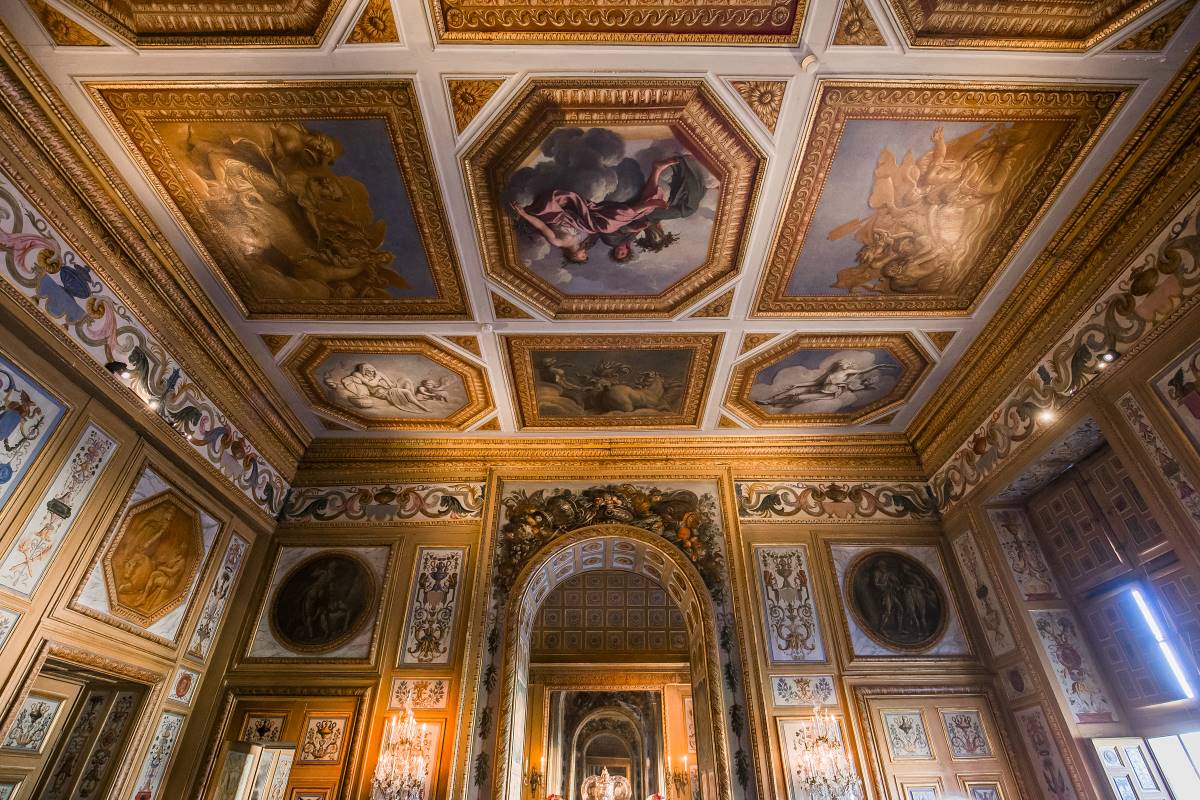
The 18th century and the following one mark a period of instability for the residence, which was bought by Marshal de Villars in 1705 after he obtained the title of Duke. He changed the name of the estate to Vaux-le-Villars. In 1764, the castle was transferred to the Duke de Praslin and his family kept it until 1875 before putting it up for public auction. Vaux-le-Vicomte was then but a shadow of itself, deprived of its furniture and interior decoration, and its sublime gardens left abandoned.
A lengthy restoration was undertaken by the art lover who became its purchaser, Alfred Sommier. His family still owns the estate to this day, and all his descendants, Patrice and Cristina de Vogüé at the forefront and their children today, continue the work of their ancestor.
Many riches to discover
Increasingly important parts of the castle have been opened to the public over time, in order to fund the various restorations and acquire what to furnish and decorate it. The gardens rank among the most beautiful in France and foreign personalities request visits, including Elizabeth II particularly. They cover 500 hectares and are surrounded by a surrounding wall 13 kilometres long protecting basins, statues and other impressive tree alignments. The one of 257 plane trees, forming an avenue six metres wide covered with their branches, is classified as a historic monument as it is so majestic.
The castle became accessible to the public in 1968, and Patrice de Vogüé decided on the installation of a Carriage Museum in the stables, housing antique carriages. Film has taken an interest in the estate: no fewer than 50 film and television productions shot scenes there in the 20th century.
The “Grand Siècle” day has enriched the annual programme of festivities since 2005. Falconry demonstrations, costumes on display and lunch on the grass allow a genuine immersive plunge to relive scenes from another era. Many other activities are organised throughout the year. A permanent collection, an audio tour and a panoramic view of the estate from the lantern completed, among other things, the interest of visiting this unique place.
If it is situated near the Seine rather than along the Loire, Château de Vaux-le-Vicomte has nothing to envy to the wonderful buildings gracing the banks of that river: enthusiasts of the genre will certainly not regret devoting a day to it, or more. Please note, the reopening of the estate for the 2022 season is planned for 2 April. Enjoy your visit!