Blois Castle, or the Renaissance of the Kings of France
Blois Castle is an essential history book for those curious about the history of the Kings of France.
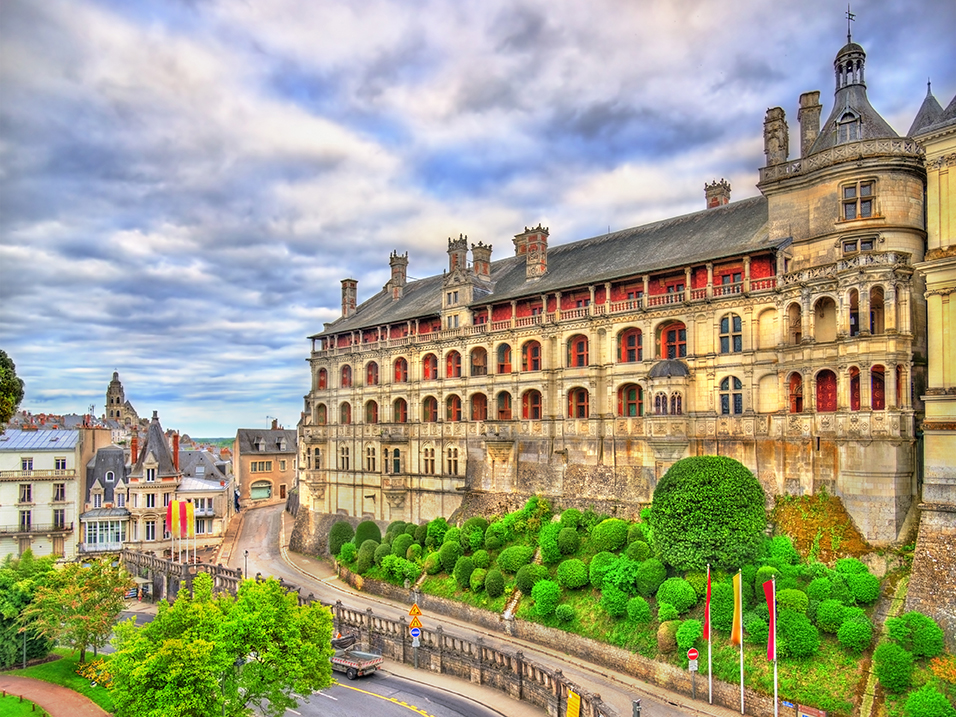
Blois Castle is an essential history book for those curious about the history of the Kings of France. Four facades trace the evolution of architecture from the 13th to the 17th century, whilst evoking the lives of seventeen of our royal sovereigns for whom it was the favourite residence during the Renaissance. Let us immerse ourselves in the heart of Loir-et-Cher, to discover the historical riches of this castle which was attacked by the Vikings at the beginning of its history.
A warlike history in the Middle Ages
The region, in the hands of the counts of Blois from the Middle Ages, contains numerous fortresses including that of Blois, destroyed by the terrible men from the North in 854. The one we know today gradually rose up, over the course of its history punctuated by sumptuous feasts as well as bloody murders.
It is in the 10th century that the first great tower is erected, on the initiative of Thibault the Trickster. Saint-Sauveur Collegiate Church is built in the forecourt in the 12th century, a chapel and other useful buildings completing the ensemble. The castle is then the subject of multiple modifications aimed at transforming it into a royal residence from the 15th century onwards.
The Blois-Chatillon family sells the estate in 1392 to Louis d’Orléans, assassinated fifteen years later on the orders of Jean Sans Peur. His son, Charles d’Orléans, is captured during the Battle of Azincourt in 1415. He returns 25 years later to organise his court at Blois, surrounding himself with men of letters. In the meantime, it is at Blois that Joan of Arc was blessed by the archbishop-duke of Reims, Regnault de Chartres, in 1429 just before her departure to lift the siege of Orléans.
The residence of the Kings of France during the Renaissance
The turn towards the Renaissance period occurs at this time, and Charles d’Orléans destroys part of the old castle to modernise it and adapt it to the desired life, more focused on pleasure than war. His son Louis d’Orléans, who became King of France under the name of Louis XII, makes it his royal residence at the expense of Amboise Castle. It is at the beginning of the 1500s that he imposes the Gothic style on the architecture of the place, accompanied by his wife Anne de Bretagne who dies there in 1514.
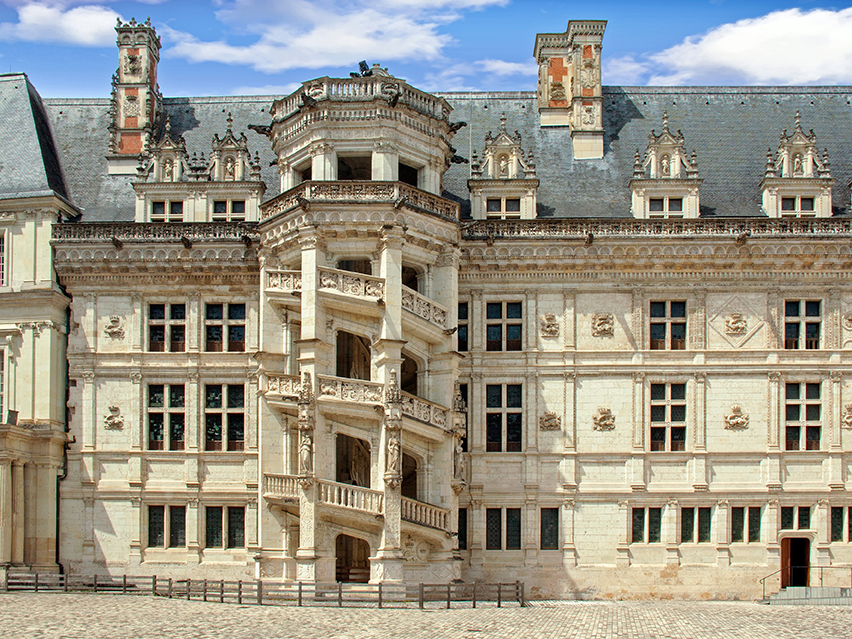
The 16th century is then rich with a history of diplomatic meetings, marriages and murders of royal enemies. While Francis I neglects it somewhat in favour of Fontainebleau, within which he founds what will become the National Library, Blois is not abandoned. The sovereign is even responsible for the transformation of a wing towards the Renaissance style and leaves his name to a monumental staircase. Many royal offspring are also raised there, up until Catherine de Medici.
It is also at Blois that the Placards affair - the posting of posters against the mass even on the door of the King’s chamber - launches the repression of Protestantism which had previously been tolerated.
Henri II, Francis II and Charles IX occupy it successively. Henry of Navarre, future Henry IV, becomes engaged there with Marguerite de France, and Henry III convenes the Estates General there in 1588-1589.
Progressive abandonment under the Ancien Régime
The symbol is there: even the new constructions requested by Henry IV end up collapsing in the 18th century. At the sovereign’s death, Blois is in turn inhabited by his widow Marie de Medici, Richelieu and receives brief royal passages before being given as a wedding gift to Gaston d’Orléans who dies there in 1660, not without having undertaken new construction projects left unfinished for lack of means. It is then that the castle is abandoned.
Neglected by Louis XIV, the former royal residence is sold to former servants who divide the living space into small apartments. Louis XVI attempts to sell it as its upkeep is costly, but in the absence of buyers it is the Royal-Comtois regiment which installs itself there.
Pillaged during the Revolution, the castle is nevertheless sold by Napoleon I to the town of Blois in 1810. It remains used as a barracks but partly opened to the public, notably allowing Victor Hugo, Honoré de Balzac and Alexandre Dumas to discover it.
Blois today
Classified as a historic monument since 1840, Blois Castle is gradually restored after the initial impetus given by Prosper Mérimée. From 1850 it houses the Blois Museum of Fine Arts, within the Francis I wing and then the Louis XII wing. Despite destruction from the bombings of the Second World War, successive renovations allow us to admire what Blois Castle really was: the symbol of the power and daily life of seven Kings and ten Queens of France.
The secrets of the Court are today explained during the visit, between machinations and power games. To discover: 17 state apartment rooms, 9 rooms dedicated to the Fine Arts museum and other surprising spaces, such as the Estates General hall with its impressive surface area of 540 square metres. Floral motifs, monograms, candelabras and other unique decorative elements will delight the eyes and will plunge visitors into another time.
Sound and light shows await the visitor to highlight the richness of the facades, and other events within and around the castle will complete a well-filled visit day. On leaving, we should mention the interest of a stop at the Magic House located opposite the castle. Unique in Europe, it offers a range of spectacular activities and discoveries across no less than 2,000 square metres, allowing visitors to move from historical reality to fantastic illusion.
The incredible historical richness of Blois Castle is written on its walls. Across the epochs, each is recounted by a facade of the castle which can boast not only the vestiges of the feudal fortress, but also facades in Gothic, Renaissance and classical styles. Highlighting the entire history of the Loire castles and allowing a better understanding of the history and destiny of our former Kings, Blois should undoubtedly constitute the first step in a journey to discover these wonders which shaped our destiny!