The Château des Ducs de Bretagne, a Nantais marvel
Nestled in the heart of the medieval quarter, a royal residence bearing witness to a multitude of historical events, the Château des Ducs de Bretagne is a jewel of the city's urban heritage in Nantes.
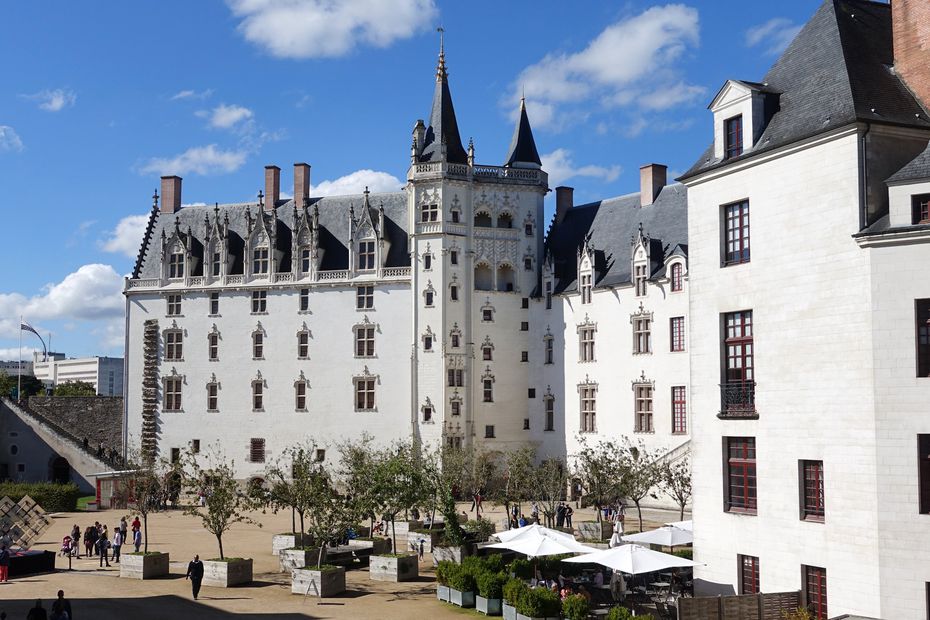
Nestled in the heart of the medieval quarter, a royal residence bearing witness to a multitude of historical events, the Château des Ducs de Bretagne is a jewel of the city’s urban heritage in Nantes. Listed as a historic monument since 1862, it is labelled for its accessibility for people with disabilities. Let us take a look at its qualities and history, which are well worth the detour!
A history symbolising Brittany’s attachment to France
Originally a defensive base for Nantes built from the 13th century onwards by the dukes of Brittany, the castle is a flagship used both as the main ducal residence and as a fortress housing a garrison that opposed the King of France during the Mad War. This fortress was destroyed at the end of the 15th century by François II, the last duke of independent Brittany, who built in its place the castle visible today.
François II’s daughter, Anne de Brittany, was married twice to the French crown represented by Charles VIII and Louis XII. These marriages allowed François I to permanently bind Brittany to France thanks to the “Edict of Union of Nantes” in 1532, not to be confused with the “Edict of Nantes” in 1598 ending the religious wars.
Thereafter a royal fortress, the castle welcomed all the Kings of France within its walls during their Breton stays. A state prison, barracks and military arsenal, it resisted the French Revolution only to be largely destroyed by the explosion of the powder store in 1800.
The military functions of the site were gradually abandoned in favour of heritage interest. After some restorations, the property was transferred to the city of Nantes in 1915.
An architecture with two faces
Since the dawn of its construction begun with the New Tower whose foundations are still visible, the castle has retained from its warlike era the external appearance of a fortified castle: moats crossed by a drawbridge surround a thick enclosure wall fitted with seven towers. Before being filled in, the Loire otherwise flowed at the foot of the schist and granite ramparts.
Inside, the panorama changes completely. From the courtyard, the tuffeum facades of the lodgings are particularly visible. The multiple transformations and embellishments made over the centuries reveal several welcoming buildings: the Château des Ducs de Bretagne was mainly intended to host the dukes and Kings of France.
With their Renaissance-inspired loggias, the lodgings are the most imposing buildings. The Grand Lodging and the Grand Government were the first built by François II and backed against the curtain wall. Overall, all the palace lodgings are grouped along the ramparts, suggesting inspiration from the Château de Langeais or that of Châteaudun.
Each constituent element presents unique specificities, which give the site particular richness. The buildings are of dazzling whiteness. The Grand Lodging features five dormer windows and windows decorated with plant motifs. That in the centre is the symbol of the union between Brittany and France: the greyhound of Anne of Brittany facing the porcupine of Louis XII can be seen sculpted there. The Horseshoe Tower takes its name from the shape of the rocky spur on which it is built. Multiple architectural surprises thus await curious visitors.
The Château des Ducs de Bretagne today: a modern museum
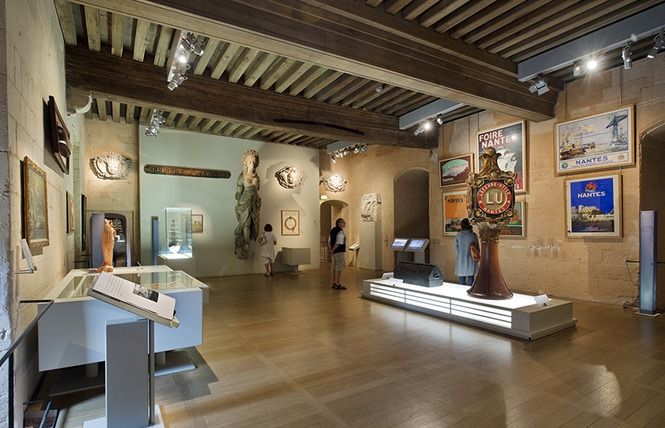
The castle was converted into a municipal museum as early as 1924, with two separate museums dealing with the region’s folk arts and the maritime history of Nantes. Towards the end of the previous century, they presented the same aspect as the castle: run-down. A renovation of more than 15 years between 1990 and 2007 gave it a new face, and by visiting today, you will discover the Nantes History Museum.
A modern jewel equipped with the latest digital technologies, you can admire no fewer than 1,150 works tracing the life and history of the city of Nantes from antiquity across 32 rooms. Four major themes are presented there:
- The black slave trade and slavery
- The two world wars
- Industrialisation
- The Château des Ducs de Bretagne
You can also discover temporary exhibitions, sometimes at night! It is worth noting that the museum is seeking to modernise its approach, thanks to the “global history” concept highlighting historical elements with events and the vision of the different parts of the world. This is to enable perspective-taking and better understanding.
An essential Nantais site, the Château des Ducs de Bretagne exudes a majesty proudly symbolising the union of Brittany with our country. Immersed in contemplation, one would almost expect to encounter Anne of Brittany on the arm of the King of France! Finally, the three hours you will devote to visiting its museum will be well spent: its historical richness is incredible.
You should also read: “The Château de Chinon at the heart of the History of France”