The VAL D'EURE & VESGRE area: a haven of peace west of Paris
At the heart of two valleys, between Île-de-France and Normandy, the VAL D'EURE & VESGRE area opens the door to multi-faceted tourism.
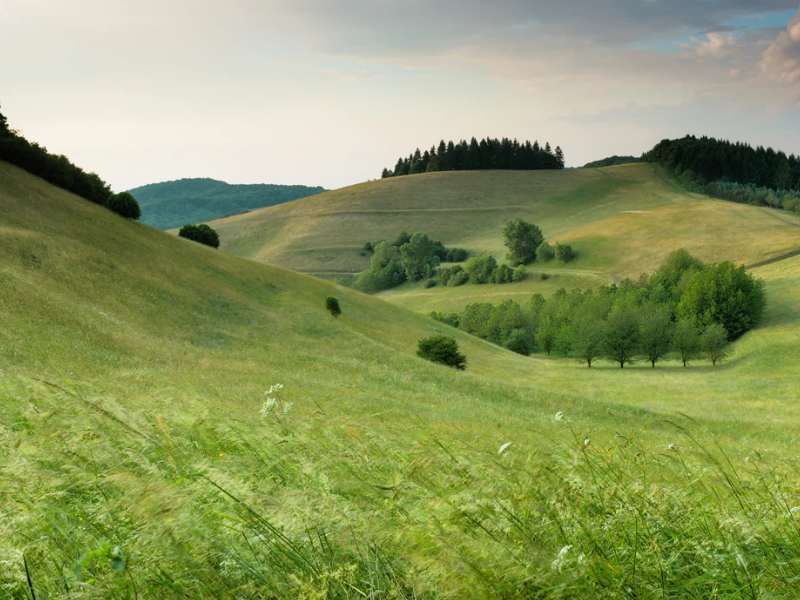
At the heart of two valleys, between Île-de-France and Normandy, the VAL D’EURE & VESGRE area opens the door to multi-faceted tourism. Rich in heritage of great historical and architectural value, in rolling countryside that invites rest and strolling, in lively market towns and peaceful villages, these valleys offer relaxation, leisure and tourism. The towns and villages follow one another, bearing witness to the great moments in French history. Both banks of the Eure are lined with the ruins of fortified castles, guarding the border at the time when Normandy was still English. Enthusiasts of history and archaeology can satisfy their passion here. Whether on foot along the hiking trails or by bicycle, in the countryside or in the regional forest, on horseback along the woodland tracks or by car on an exceptional network of minor roads, discover this region located on the outskirts of Paris and neighbouring Chartres. Connected to Paris by two motorways, close to Versailles, Rambouillet, Chartres, Maintenon, Dreux and Giverny (town housing Monet’s gardens and the American museum), this diverse location can serve as a starting point for many other excursions in the surrounding area.
Whatever your mode of transport, you can discover this generous countryside and its treasures through visits to: – Anet and its magnificent 16th-century château, – Ivry la Bataille and its castle dating from the year one thousand, – Ezy, the capital of the comb industry in the 19th century, – The green avenues of the regional forest, and at its heart Rouvres, a magical druid circle and its church featuring very beautiful sundials, – The ruins of the Château de la Robertière, a hunting residence of the Counts of Dreux, and an extraordinary encounter with the herd led by its leader, a magnificent ten-point stag, – Oulins and its pond to fully enjoy walks and fishing trips, games for your children and for picnicking (restaurants on site); – Boncourt, a charming village, a domain of botany and geology with its wild orchids and the Vallée des Cailles classified by the Conservatoire du Patrimoine Naturel, – The mysterious Cistercian Abbey of Le Breuil Benoit and its Pentecost concerts – The Château de Sorel whose magnificent portal resembles that of the castle in Sleeping Beauty.
The château built at Anet by Diane de Poitiers in 1560 represents power and love, but above all it is a masterpiece of the French Renaissance. When the nobility followed Louis XII and then Francis I for the Italian wars, they discovered palaces open to nature, surrounded by flourishing gardens. On returning to France, these knights transformed their dark fortified castles; and their Kings, Louis XII and especially Francis I, built open palaces on the banks of the Loire.
EZY SUR EURE This town located opposite Anet, on the opposite bank, was in the 19th century the French capital of comb manufacturers and headpieces. At the time, Ezy was a village of farmers, fishermen, flax combers, who invested in vine cultivation brought by the Romans. It was the same throughout the region, until the phylloxera killed the vines. But very quickly, the inhabitants turned to a new craft, comb-making. Ezy has preserved the memory of these small workshops and the Association du Musée du Peigne et des parures de tête is a place not to be missed. Discovering the workshops shows just how difficult the task and working conditions were for male and female workers; the exhibition, which features very fine pieces, reveals the other side of the scene. The town is abundantly flowered, expanding rapidly and benefits from a solid commercial fabric. Its Sunday market is not only a meeting point for housewives, but also the morning stroll of very many tourists and residents of the region.
By crossing the Eure, you change era and atmosphere. The Eure was long a fiercely disputed border between the Kingdom of France and Normandy, possession of the King of England. On each of its banks stand the ruins of fortified castles that ensured its defence.
The ruins of Ivry Castle proudly dominate the town. These ruins were restored by an association of volunteers, founded in the 1960s. Chaired by Mr Robert Baudet, deputy mayor during Madame Schad’s term of office, and passionate about safeguarding these ruins, he obtained that the municipality undertake works which continued under his successor’s term. In 1990, the castle was classified as a Historic Monument. Major consolidation works were carried out between 1995 and 2000, under the term of office of Mr Robert Bricaud. After a survey in 2006, the department’s archaeological services undertook an excavation campaign, which resumes each year in August. It can be presumed that numerous discoveries will be made by carrying out deeper excavations.
“It is built on a mound surrounded by a ditch through which the Eure passes. It presents, apparently, classical dispositions with a high enclosure and a lower courtyard whose date of construction is not completely established. But the great rectangular tower, which was partly buried by later developments at the summit of the mound, probably shows the vestiges of the oldest Norman stone keep. It was erected under the authority of Duke Richard I, by his half-brother Raoul d’Ivry.”
The site is accessible starting from the Church square, which is itself very interesting. The town of Ivry-la-Bataille owes its name to one of the last battles of Henry of Navarre against the Ligueurs, commanded by the Duke of Mayenne, to conquer the throne of France, which rightfully belonged to him. This battle took place more precisely in 1590 in the plain of Epieds, above Ivry and a memorial stele perpetuates the memory of this important battle.
Real estate adviser Sextant France, I offer a wide selection of properties in the Yvelines and Eure-et-Loir, from charming pieds-à-terre to townhouses, via historic castles or traditional residences.
Do not hesitate to contact me and share your project, I will do everything to find the property best matching your expectations. I put at your disposal a catalogue of real estate properties located in the Val d’Eure et Vesgre that you can consult by clicking here.
Didier Lacour – Tel: 06 09 31 43 11 – [email protected]