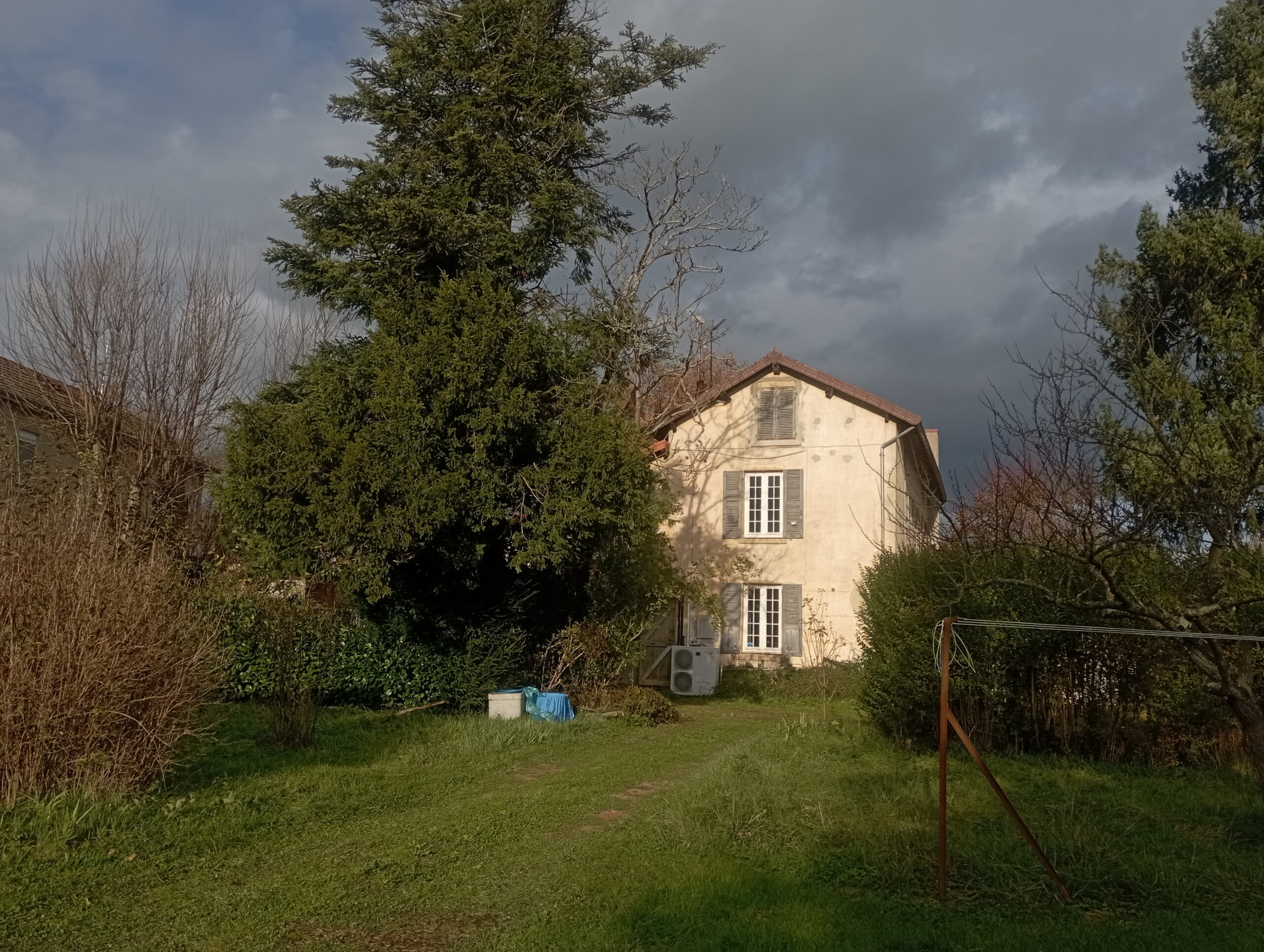
Amboise Castle, a gem of royal elegance
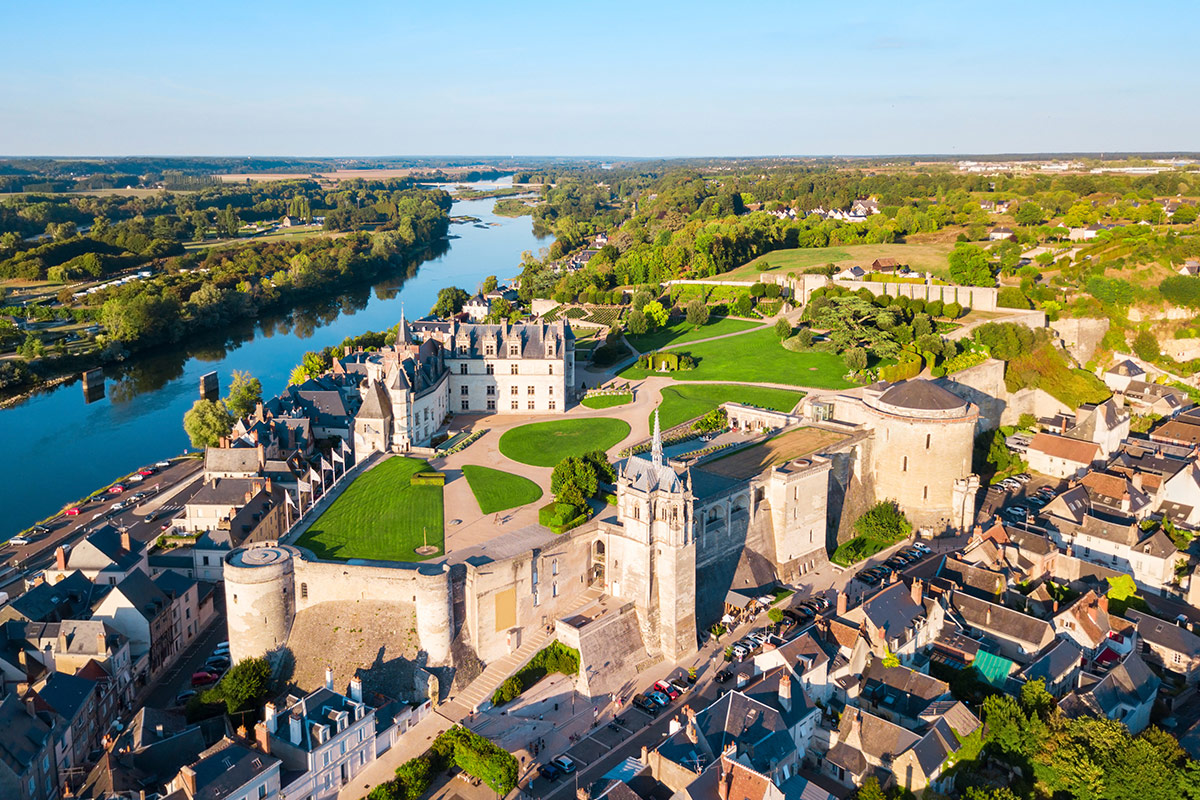
The château d'Amboise is remarkable as a former residence of the Kings of France, but it takes its name from the powerful family that owned it for more than four centuries before that. Located in Indre-et-Loire, not far from Tours, the residence presents an aspect of rare elegance even for a Loire valley château. Its position overlooking the river of the same name completes the majestic atmosphere that makes tourists dream. A look back at the eventful history of this site, occupied since prehistoric times!
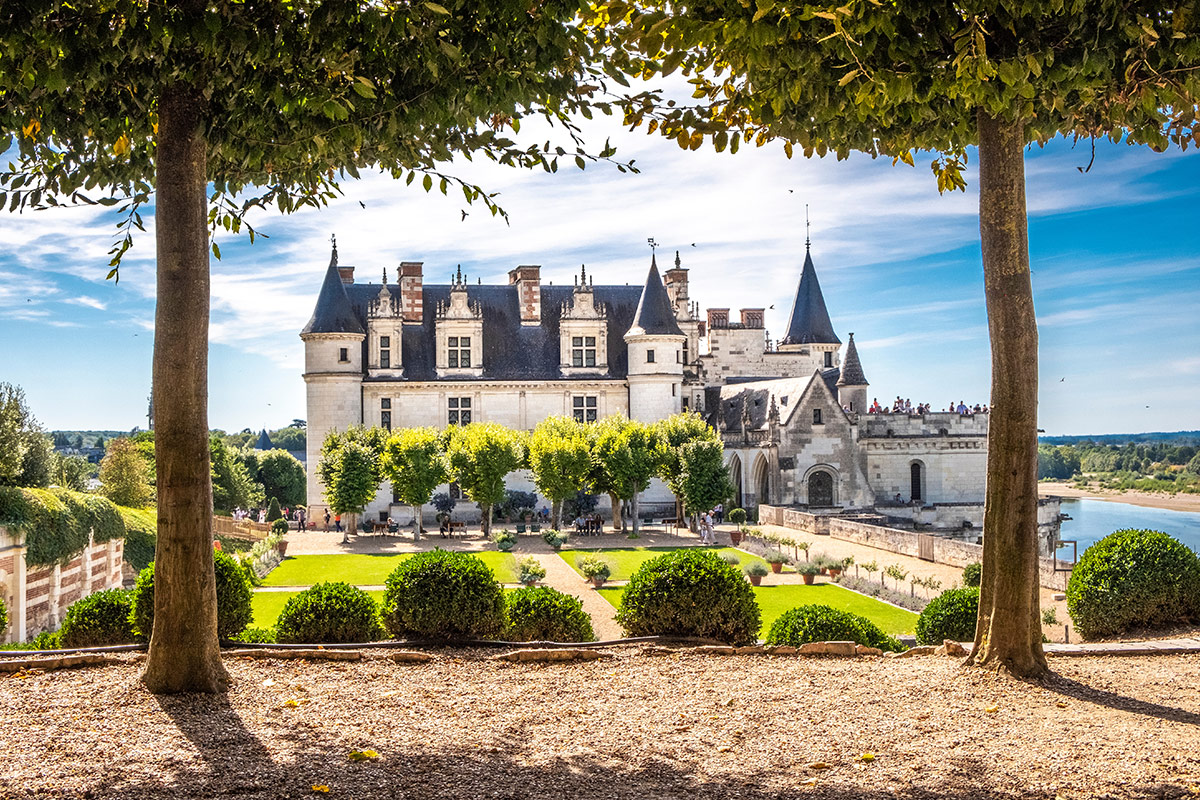
If the château d’Amboise is remarkable as a former residence of the Kings of France, it takes its name from the powerful family that owned it for more than four centuries before that. Located in Indre-et-Loire, not far from Tours, the residence presents an aspect of rare elegance even for a Loire valley château. Its position overlooking the river of the same name completes the conferring on the place a majestic atmosphere that makes tourists dream. A look back at the eventful history of this site, occupied since prehistory!
A remarkable fortress that became a royal fortress
This is how three years after a meeting in the year 504 and at this place between rivals Clovis I and Alaric II, respectively kings of the Franks and the Visigoths, the latter were defeated not far away and abandoned the Loire to retreat southwards.
The town of Amboise was then pillaged twice in the 9th century during the Norman invasions: the central power subsequently decided to help the inhabitants better protect themselves. Under the leadership of Charles II the Bald (king of the Franks) and Louis II the Stammerer, Adalard, Archbishop of Tours whose family controlled Amboise, appointed Count Ingelger, husband of his niece Adelais, to head the town. The fortifications were strengthened and Amboise became the best-protected fortress in the west of the country from the 10th century.
The next upheaval occurred in the 15th century, when the château d’Amboise was confiscated by the crown after its owner plotted against a favourite of Charles VII, quickly unmasked. In the following decades, the fortress was appreciated by great names such as Louis XI, his mother Marie d’Anjou, the Dauphin Charles VIII who would choose Amboise as his main residence, or even a certain Francis I who was educated there.
An architecture that was enriched by the monarchs
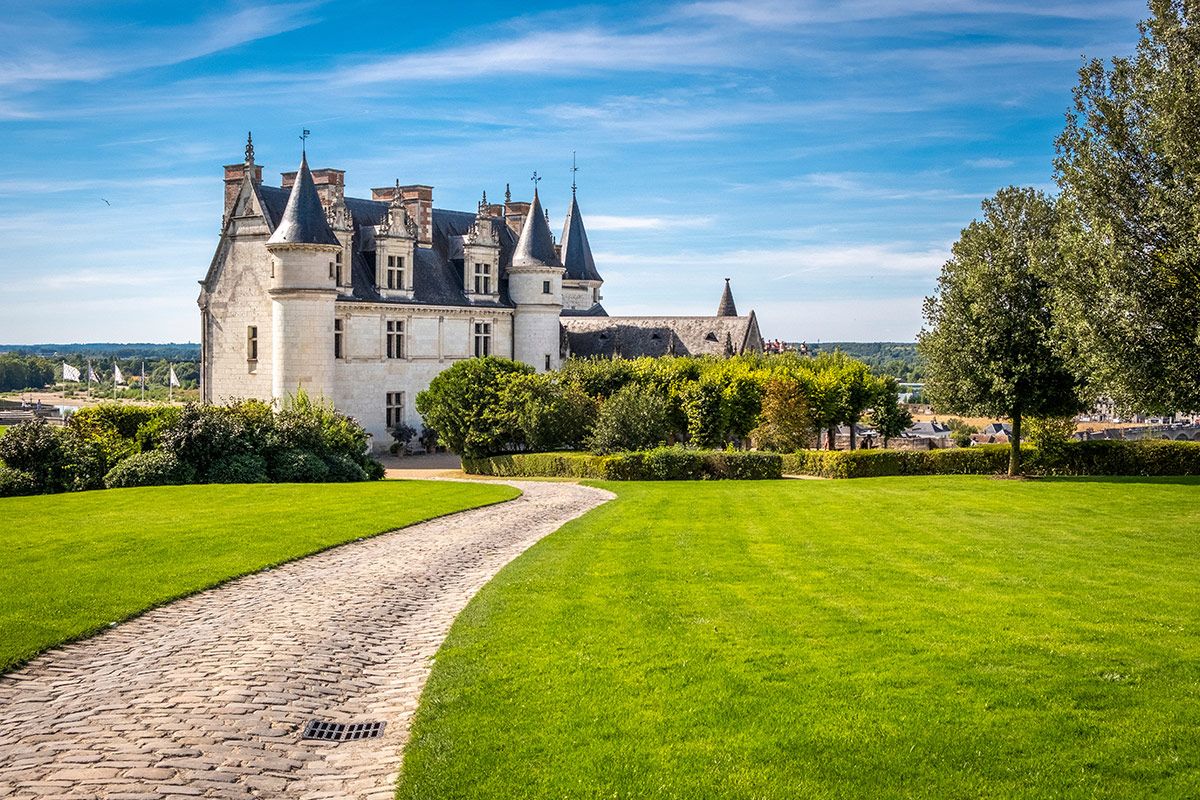
Wishing to transform Amboise into a royal residence worthy of the name, Charles VIII had the Saint-Hubert Chapel, the Gothic wing Charles VIII and the two cavalry towers built, in addition to the development of the park. As an anecdote, the sovereign died in 1498 of a cerebral haemorrhage after hitting his head on the stone lintel of a door that was too low.
His cousin and successor Charles VII continued his work and had another wing built, this time in the Renaissance style.
During the reign of Francis I, from 1515 until 1547, royal stays spaced out somewhat, but construction continued with the completion of the Heurtault tower and the redesign of the Louis XII wing. The King nevertheless preferred to go to Chambord or Fontainebleau. This did not prevent him from inviting Leonardo da Vinci to stay at Clos Lucé, in the village of Amboise right next to the castle. Legend has it that a secret tunnel connects the two buildings, which has never been found to this day. The famous painter died in Amboise in 1519.
Henri II continued the enlargement of the castle with new buildings, before the occurrence of the Amboise Conspiracy during the very brief reign of Francis II: the attempted abduction of the King was the starting point of the Wars of Religion.
The life of the château d’Amboise from then until today is then less glorious. From the beginning of the reign of Henry III in 1574, the fortress was abandoned and became a royal prison. Despite a passage of the castle between the hands of the Duke of Orleans Gaston de France, King Louis XIV ordered that the fortress’s prison function be restored, and he imprisoned there notably Nicolas Fouquet, superintendent of Finances and builder of another gem of French architecture: the château de Vaux-le-Vicomte. The State eventually became owner of the entire fortified complex and entrusted it to owners unable to carry out the necessary restorations: a large part of it was destroyed under the First Empire. The castle changed hands several times between the State and certain dukes, notably Henri d’Orléans in 1873 who transformed it into a retirement home. A century later, the State granted the fortress to the Saint-Louis Foundation, which still owns it to this day.
It should be noted that the mixture of styles and the decorative richness of the various constructions makes the château d’Amboise, despite past destructions, a building of quite remarkable architectural interest.
Visit Amboise!
During your discovery of the castle, guided tours will be offered to you, as well as a “histopad” tablet that enriches the route through augmented reality.
A somewhat particular – and exceptional – visit could allow you to penetrate the heart of the underground passages and towers of the medieval fortress located beneath the Renaissance-style Royal Lodge. During the excursion, you will pass through the ditches of the old dungeon and even, the rooms of the stone deposits…
Many activities are offered, for example the “Candlelight Night Walks” which await you still during the All Saints’ and Christmas holidays in 2022. “Sound and light” shows, summer concerts, Renaissance balls or even, nocturnal shows are only part of the festivities accessible during certain periods of the year.
Do not hesitate any longer to plan your visit to the Château d’Amboise, it is even possible for you to book online and thus ensure that you are received as you should be, without waiting!