Buying property: in Paris or in the outer suburbs?
The dream home can take various forms: tastes and colours... But for those looking to make a sensible and effective property investment in terms of living comfort and long-term returns, the equation can prove complex in the Paris region. With a view to...
The dream home can take various forms: tastes and colours… But for those looking to make a sensible and effective property investment in terms of living comfort and long-term returns, the equation can prove complex in the Paris region. With a view to living there or letting, the buyer will need to ask the right questions and act according to their needs or budget. Buy in Paris or in the outer suburbs? Each person must provide their own answer according to various criteria.
A question of budget
Before any other consideration, the budget will determine – according to the desired floor area – the options available to the buyer. Paris proves, unsurprisingly, more expensive than the towns in the outer suburbs, which generally allow you to settle a few metro stations from the capital for a sometimes much more reasonable budget.
As examples, in certain towns like Clichy-sous-Bois or Villepinte, the price per square metre, recorded before the health crisis, was around £2,000. Other towns like Nanterre or Arcueil offer housing at around £5,000 per square metre, prices which average £10,000 in Neuilly-sur-Seine.
In central Paris, prices start at around £9,000 per square metre (with exceptions) in the least expensive arrondissements, and can rise to £16,000 per square metre in the most sought-after neighbourhoods, such as Saint-Germain-des-Prés or the Champs-Élysées.
Even from a purely accounting perspective, it isn’t necessarily relevant to search for the cheapest. The constant and strong price evolution in Paris, due to the imbalance between rare supply and extremely high demand, allows for capital gains even in the short term, and ensures a quick and easy resale in the majority of cases. If the means are there, Paris therefore seems the better option.
Adapting one’s project to real needs
Having the will to make the best investment is commendable, yet this must meet the buyer’s daily life needs – as an owner-occupier, naturally. On this point, several angles require consideration.
The property’s floor area first: a family with two children will barely fit in a two-room Paris flat, while the suburbs can offer, for the same price, two additional rooms or even outside space. A sufficiently spacious living area, and the lockdowns experienced since March 2020 have clearly demonstrated this, is essential for wellbeing.
The environment equally matters, and the buyer must take a step back on their entire lifestyle to determine the type of neighbourhood best suited to satisfying them. A lively neighbourhood allows for easy outings on foot, but won’t be recommended for a resident sensitive to noise. Local shops may be important for some, and enable them to do without a car. Dog owners would be well advised to ensure green spaces are nearby.
Each person can then, according to their interests, wish to move closer to various facilities: the Seine banks, sports halls, universities, and so on.
Ultimately, Paris will be more suitable for finding employment. In this context, a suburban resident must accept a longer commute to get there, under difficult traffic conditions or on crowded public transport. Depending on their hours and appetite for travel, the buyer can choose whether or not to move away from their workplace.
Quality of life
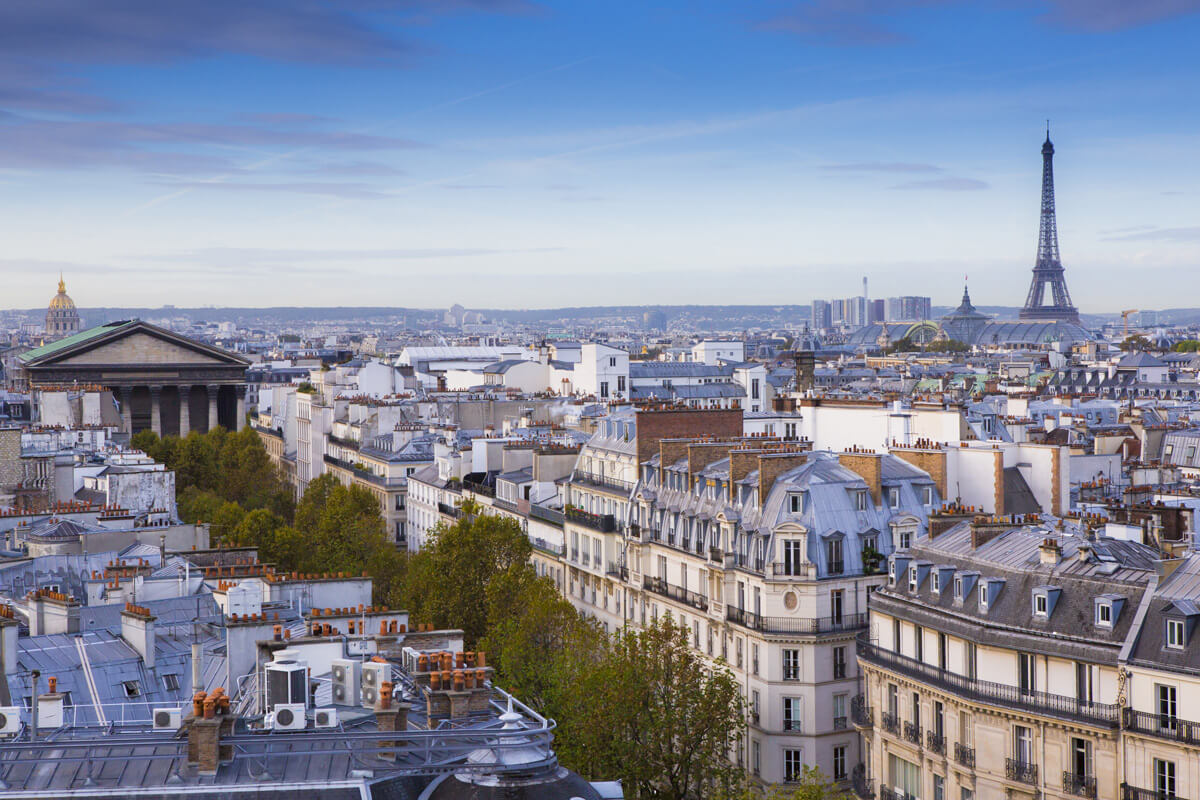
On this aspect, Paris wins all the votes for those seeking a life rich in outings: bars and restaurants, museums, operas, cinemas, but also luxury boutiques and universities are found there in great numbers. The different arrondissements and neighbourhoods offer different lifestyles, thanks to lively or quiet streets, varied architectural styles, diverse cultural offerings or the presence of spacious green spaces.
In the suburbs, many towns remain in the dormitory town mindset, which will suit those seeking permanent activities less. However, note that more and more municipalities are reinventing themselves and expanding their facilities: a dynamism that makes them more attractive and creates a virtuous cycle of new residents arriving, who in turn contribute to new development possibilities.
Ultimately, the suburbs will offer superior comfort (for the same price) within the dwelling. The inner suburbs, compared to Paris, will constitute a much better choice for a buyer seeking spacious rooms, pleasant outside space and greenery. Additionally, car owners will have far less difficulty parking there.
Acquiring property in the inner suburbs sometimes proves a second choice when the budget doesn’t allow settling in Paris. However, this option offers advantages to consider: it will be easier and quicker to find a property meeting the various criteria of buyers, with more supply and less competition. For an investor, returns remain on track, and rental vacancies are rare closest to the capital.
Finding a happy medium can mean settling a few hundred metres from Paris, to benefit from the capital’s advantages at suburban prices. One thing is certain: becoming a property owner in Paris or around it isn’t something done on a whim. Happy thinking!