
|
You can have a look at our Town Property Guides:
An exceptional historical and artistic heritage
The Brittany of Chateaux Brittany has 4000 chateaux, manors and stately homes built in the Middle Ages, the Renaissance and subsequent centuries. Feudal struggles throughout the Middle Ages in particular, made Brittany the site of many bloody battles for English and French invaders and as a result a defensive ring of castles was constructed. These fortresses, built in granite, are now a witness to this era and are famous for their architectural diversity.
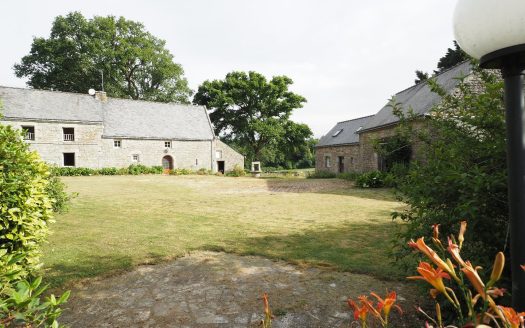
The Residences and Chateaux of the Dukes of Brittany are marked by the history of the Duchy. At the time of the Renaissance, rich Breton aristocrats had luxurious residences built such as the Chateau de Kerjean in Finistère. A few other great families also constructed defensive edifices on their land, but frequently they preferred small fortified manor houses, the fiefs of local lords who protected their modest estates. Literary Chateaux Many Breton chateaux are proud to have been owned or occupied by famous writers. The French writer François-Rene de Chateaubriand, for example, spent some of his childhood at the Chateau of Combourg, bought by his father in 1761. This Chateau, now known as “ The Cradle of Romanticism”, is still owned by the family. The Chateau of Rochers-Sevigne at Vitre is the place where the Marquise de Sevigne retired following the death of her husband. From there she wrote 267 letters to her daughter, Mme de Grigan, which can be read in the famous “Lettres de Madame de Sevigne .”
The Mystery of the Megaliths Humans have occupied Armorica since the Palaeolithic era. Living originally as hunter gatherers, the population became settled in the Neolithic period (around 4500 BC), gradually mastering the techniques of raising livestock, cultivating crops and building. This was the civilisation that created the tradition of standing stones. Most of the megaliths (dolmens, tumulus, and menhirs) were constructed between 4500 and 200 BC. With almost 3000 standing stones spread over several sites, Carnac displays some of the greatest vestiges of megalithic art.
The Breton Legends Brittany is well known for it’s numerous legends; Merlin the Enchanter and Tristan and Iseult are among the most famous.
Merlin the Enchanter
Tristan, Prince of Leon was sent by his Uncle Marc, King of Cornouailles, to bring Iseult back from Ireland to marry Marc. On board the ship, Tristan and Iseult mistakenly drink a love potion intended to bind Iseult to her betrothed for ever. A passionate love develops between the pair. Endings to the story vary; in some versions Tristan is killed by Marc, enraged by his betrayal; in others Tristan marries and dies at his Chateau in Brittany. Whatever the outcome, Iseult invariably follows Tristan to the grave. Wagner’s opera and the book by Joseph Bedier both celebrate this great love drama.
In contrast, the hilly Monts d’Arree boast heathlands dotted with eroded rocky peaks. This wild and mysterious country is the birthplace of Breton witchcraft, and, according to Celtic folklore, the gate to Cold Hell. Themed walks take visitors in search of the mischievous korrigans around Brennilis Lake and the Yeun-Elez peat bogs. And there are also moonlit and musical walks to the sound of the biniou bagpipes and clarinet. Alternatively, for the ultimate nature experience, head for the Monts d’Arree peaks at daybreak and watch the sun rise.
Thalassotherapy
Gastronomy
The seafood platter is highly placed on the menu of classiscal Breton dishes. Varying greatly according to the coast, the season and the nature of fishing, one example is a combination of shellfish and crustaceans served on a bed of seaweed. Brittany is synonymous with relaxation, freedom and tradition and continues to make a name for itself in gastronomy, following in the footsteps of well-known chefs such as Paineau and Kerever.
"Crepes" and "galettes"…Such an institution!
Cider Brittany is also very famous for its apples and cider production
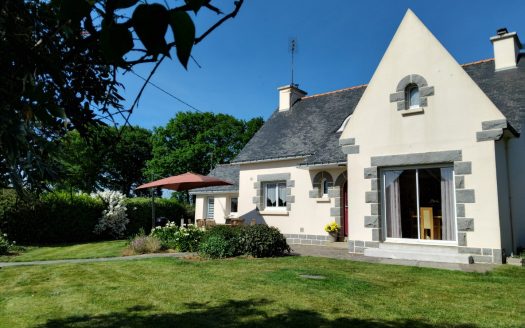
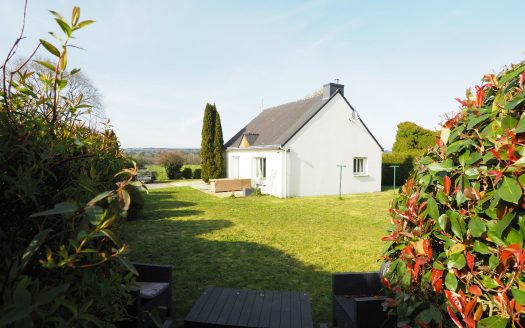
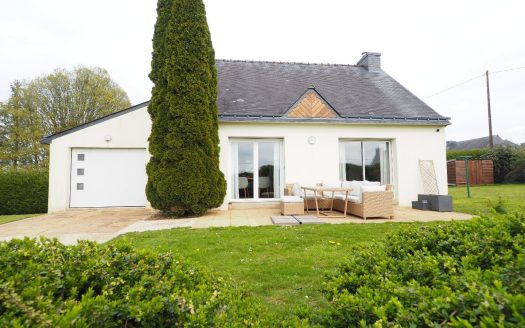
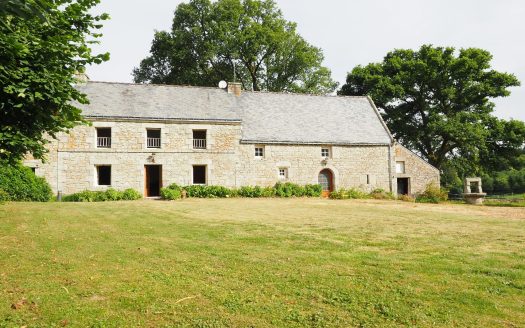
Brittany property market:A property for sale in Brittany can vary from 45,000 euros for a stone house to renovate in the centre of Brittany up to 500,000 euros for a very nice breton house with swimming pool on the seaside. Finding a property in Brittany requires time and advice that you can get for free from our consultants in charge of this area.
Useful information: Tourism office in Brittany
Maps of Brittany
George East books:
Our team of sale advisers at Sextant Properties will be happy to help you to find a property for sale in Brittany. We have a large network of estate agents in Brittany. All of them are registered estate agents and speak both French and English. Whatever kind of property you are looking for: farmhouse, longere, barn, gite, B&B, country house, mill, castle or chateau, we will do our best to find a property in Brittany matching your requirements. We offers properties for sale in Cote d'Armor, Morbihan, Ille et Vilaine and Finistere. To find out more about our properties for sale in Brittany do not hesitate to contact us.
|
|||||||||||||||||||||||||||||